
Hossam Zakaria: Ensuring HZ Legal Services FZE Becomes the Most Trusted Boutique Legal Advisory in the UAE
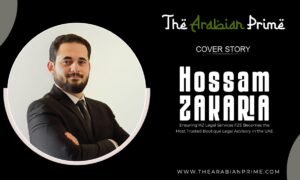
The heart of an expansive horizon vibrates with the breezy winds of change. The legal landscape of the United Arab Emirates keeps evolving like the dynamic and ambitious skyline itself. Driving progress at the core of which beats trust like heart bits are some of the most visionary leaders, like Hossam Zakaria, who are bringing innovation in legal services, making it adaptable with the changing times.
As the Deputy CEO of HZ Legal Services FZE, he is recognized in 2026 as a leader who does more than just interpret the law. He is someone who bridges the gap between traditional justice and the modern needs of a global business hub. With a career built on over sixteen years of deep experience, Hossam has dedicated himself to navigating the most complex corners of the UAE legal system for his clients. His evolution was never a straight line — it was shaped by the friction of real cases, not theory. Starting practice in 2008, in the immediate shadow of the global financial crisis, meant that from his first year, Hossam was handling debt restructurings, distressed assets, and clients whose businesses were unravelling in real time. That crucible taught him that legal excellence under pressure is a discipline, not a talent — it must be built deliberately.
The second defining moment came when Hossam chose bilingual practice as a core identity rather than a convenience. Conducting complex litigation simultaneously in Arabic and English, in Dubai Courts and DIFC Courts, forced him to think in two legal systems at once — the codified civil law tradition and the English common law framework. “That duality is not a burden; it is perhaps our firm’s greatest competitive differentiator.”
The third was the decision to build HZ Legal as a boutique of depth rather than breadth, even though he had to pursue more studies in commerce and in engineering, reaching a Master’s Degree in Law from a well-reputed university in the UK. “In a market where many firms chase volume, we chose to go deeper on fewer matters. That choice defined our culture, our client relationships, and the way we measure success,” informs Hossam, and agrees that balancing strategic growth with legal integrity and client trust was also necessary. “Integrity is the growth strategy. In legal services, reputation is the only sustainable competitive advantage,” he says, revealing that they have declined instructions that would compromise their independence or create even a perception of conflict — and in every case, that decision reinforced client trust far more than any successful outcome could. “Strategically, we grow by going deeper with existing clients rather than constantly chasing new ones. When a client entrusts us with a complex commercial dispute, we invest in understanding their business model, their risk appetite, and their sector.” That understanding allows them to advise proactively — anticipating legal exposure before it becomes a problem. That kind of trusted advisor relationship cannot be manufactured; it is earned over time through consistency, candor, and results. The governance framework we apply internally is equally important. Every significant piece of advice is reviewed, every conflict check is documented, and every client communication is treated as if it may one day be scrutinized by a court. That discipline protects the client, and it protects the firm.
The Converging Forces
Then again, there are some of the most disruptive changes redefining legal practice today. According to Hossam, three forces are converging simultaneously, and the firms that thrive will be those that engage all three rather than reacting to each in isolation.
~First, regulatory velocity. The UAE has produced more significant commercial legislation in the past five years than in the preceding decade — the new Companies Law, the updated Trademarks Decree, the Personal Data Protection Law, the CBUAE insurance regulations, and sweeping reforms across employment, insolvency, and family law. Staying current is no longer sufficient; clients need counsel who can interpret regulatory intent and translate it into operational change.
~Second, jurisdictional complexity. The coexistence of onshore UAE courts, DIFC, ADGM, and international arbitration bodies means that structuring a transaction or a dispute resolution clause today requires a strategic decision that would have been unimaginable a decade ago. Getting that decision wrong can cost clients millions.
~Third, client sophistication. Today’s corporate client arrives at our office having already read the relevant legislation, consulted AI tools, and benchmarked our advice against their in-house team.” That is not a threat — it is an opportunity for lawyers who can operate at that level of rigour.
Tech-Powered Efficiency
Hossam also ensures that HZ Legal leverages technology to improve efficiency and client outcomes. He informs that they use AI-assisted research and document analysis tools to reduce the time spent on tasks that do not require judgment, freeing their lawyers to focus entirely on the work that does — strategic analysis, advocacy, and negotiation. In practice, this means a first-pass contract review that once took four hours takes forty minutes, and the time saved is reinvested in depth of analysis rather than speed of throughput. “We have also digitized our matter management and client communication infrastructure.” Every file, every correspondence, every deadline is tracked centrally, which eliminates the administrative risk that has ended careers and reputations in our profession. However, Hossam is deliberate about one thing: “We do not adopt technology for its own sake. Every tool we deploy must demonstrably improve accuracy or client service.” The legal profession’s greatest risk with technology is not that it replaces lawyers — it is that it creates a false confidence that speed equals quality.
Redesigning Relationship
Hossam further adds that innovation in legal services in 2026 means redesigning the relationship between lawyer and client — not just the tools. “It means moving from a reactive model, where clients call us when problems arise, to a proactive partnership where we are embedded in their decision-making before legal risk materializes.” It means pricing transparency and alternative fee arrangements that align our incentives with client outcomes rather than billable hours. It means accessible, plain-language advice delivered through formats that match how their clients actually consume information. And it means building diverse teams whose different backgrounds and perspectives consistently produce better legal analysis.
At HZ Legal, Hossam and his team have introduced structured quarterly legal health reviews for key clients — a systematic examination of their contracts, regulatory exposure, and dispute readiness. That model, simple as it sounds, represents a genuine innovation in how a boutique firm delivers value.
The Intersection Point
Hossam adds that the UAE is the intersection point. “We have a legal system that is rooted in civil law traditions, operates in parallel with two world-class common law financial free zones, is a signatory to the New York Convention, and has actively positioned itself as the preferred seat for regional arbitration.” That context means that global best practice is not a foreign concept here — it is baked into the architecture of their legal system. In practice, he applies a three-layer analysis to every significant matter: the applicable UAE federal or local law, the relevant free zone framework if involved, and international standards or conventions where they intersect. “For multinational clients, this means we can bridge their global compliance requirements with UAE-specific regulatory reality — a capability that is genuinely rare and genuinely valued.”
The Core Principles
Also, there are strong leadership principles that guide Hossam in complex, high-stakes matters. First, he says, is ‘clarity under pressure.’ When a case is at its most complex — when the facts are ambiguous, the stakes are high, and the client is anxious — the most valuable thing a legal leader can do is impose structure on the chaos. That means a clear theory of the case, a clear communication plan, and a clear decision-making framework for every fork in the road.
The second principle is ‘intellectual honesty with clients.’ “I will never tell a client what they want to hear if it is not accurate.” That sometimes creates uncomfortable conversations, but it is the only basis on which genuine trust can be built. Clients who receive honest counsel — including honest assessment of risk — make better decisions and achieve better outcomes.
The third is accountability. Hossam signs his name to every significant piece of advice. That personal accountability concentrates the mind extraordinarily well.
A Future-Ready Service Model
Furthermore, Hossam ensured that HZ Legal adapted its service model to remain future-ready. “We have restructured around practices rather than departments — commercial litigation, regulatory and compliance, family and personal law, and transactional advisory — each with deep sector specialization.” This allows them to deploy the right expertise for each matter rather than fitting every instruction into a generic template. They have also invested heavily in knowledge management. Every significant matter generates institutional learning that is captured, systematized, and made available to the team. Hossam explains, “This means our collective expertise compounds over time — a junior lawyer today has access to insights it took me years to develop.”
Finally, they have deliberately built multilingual and multicultural capacity. The UAE is home to over two hundred nationalities. A firm that can advise in Arabic, English, and other languages and that understands the cultural context behind legal decisions has a structural advantage that technology cannot replicate.
Leading by Example
By modelling it personally, Hossam fosters a culture of continuous learning within his teams. He reads constantly — legislation, case law, academic commentary, and industry analysis across the sectors in which his clients operate. When the team sees that the most senior person in the room is still learning, it normalizes intellectual curiosity as a professional standard rather than an aspiration. Practically, they conduct weekly case review sessions where complex matters are discussed as learning exercises, not performance reviews. They sponsor professional development across all seniority levels, and they have a deliberate mentoring structure that pairs experience with emerging talent. The legal profession has a troubling tendency to treat knowledge as competitive currency to be hoarded — “we have built a culture where the opposite is true,” informs Hossam.
The Academic Power of Legal Thinking
Again, Hossam’s international academic background influenced his legal perspective. It gave him the ability to think comparatively. He shares, “When you study law across multiple jurisdictions, you stop treating any single system as the natural or inevitable order of things. You start asking why — why does this jurisdiction take this approach, what problem is it solving, and is there a better solution? That comparative instinct makes you a more creative and more rigorous lawyer.” It also gave Hossam networks and relationships across legal systems that he draws on regularly when cross-border matters arise. Law is ultimately a human discipline, and knowing the right person in the right jurisdiction at the right moment can be as valuable as knowing the right statute, he emphasizes.
Ethics is the Foundation of Sustainable Innovation
Also, Hossam ardently believes that ethics is not a constraint on innovation — it is the foundation that makes innovation sustainable. Every technology adoption decision in legal services must begin with the question: Does this serve the client’s interests and uphold our professional obligations? If the answer is yes, adopt it. If there is ambiguity, examine it rigorously before proceeding. The specific risks in legal tech are confidentiality, accuracy, and accountability. An AI tool that processes client data must meet the highest confidentiality standards. A responsible lawyer must verify an AI tool that generates legal analysis before it reaches a client. And when something goes wrong — as it will — the professional remains accountable, not the algorithm. “In our firm, we have a simple internal rule: no AI-generated legal advice leaves the office without senior review. That rule will not change regardless of how good the technology becomes, because professional accountability is not an inconvenience to be engineered away — it is the core of what we offer.”
Building the Next-Gen of UAE’s Legal Talent
Finally, Hossam’s long-term vision for HZ Legal is to be the most trusted boutique legal advisory firm in the UAE, not the largest, but the most trusted. “I want every client who instructs us to feel that they have access to the quality and rigour of an international firm with the responsiveness and personal commitment of a partner-led practice.” For the region, he believes they are on the threshold of a genuinely historic moment. The UAE’s legal infrastructure — its courts, its arbitration framework, its free zone legal systems — is world-class. As capital, talent, and enterprise continue to converge here, the demand for sophisticated legal counsel will grow exponentially. Firms that have invested in depth in technology and in talent will lead that growth. “My personal commitment is to continue building the next generation of UAE legal talent — practitioners who are technically excellent, bilingual, ethically grounded, and genuinely curious about the world their clients inhabit. That is the legacy I am working toward.”