
The Global Guardian – Alejandro Garcia Monterde: Navigating the Frontiers of Financial Trust
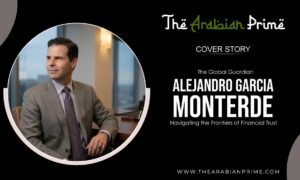
People always find the world of global finance moving like a multi-level game of high stakes. It is a realm where, in the blink of an eye, the currents of trade, the wheels of money, and the streams of trends turn tides. Especially when that realm resides in the landscape of the Middle East, risk management is the only viable solution that works. And not any risk management, but influential. So, when Alejandro Garcia Monterde, the Head of Risk Compliance MLRO, has been crowned as one of the most influential risk management leaders, there are multiple reasons behind it. First, Alejandro Garcia Monterde is a guardian of stability. Second, for more than twenty years, he has moved across continents, learning the hidden languages of risk and the delicate balance of international banking. From the bustling trade hubs of London to the emerging markets of Latin America and the CIS, he has built a reputation for seeing the patterns that others miss. Third, beyond his role as a leader in FinTech and banking strategy, Alejandro Garcia Monterde is a dedicated educator. He is a familiar face at professional conferences and academic seminars, where he shares his deep knowledge of public policy and commercial banking. He believes that the culture of risk management must be shared and nurtured across borders. And finally, as he focuses his expertise on the Middle East, he is helping to shape a financial landscape that is both innovative and secure, proving that the most effective leaders are those who never stop learning and never stop teaching. Thus, his recognition is a tribute to a man who treats risk management not just as a job, but as a commitment to the safety of the global economy.
A Journey Mapping International Dynamics
Alejandro’s journey is a rare map of international experience. He has spent nearly a decade in North America and the United Kingdom, five years in Latin America, and significant time across Europe and Central Asia. This broad path has allowed him to master the complexities of everything from private equity and hedge funds to Islamic banking and venture capital. He understands that every region has its own pulse and every market its own set of challenges. By specializing in anti-money laundering and regulatory compliance, he ensures that the institutions he serves are built on a foundation of integrity and foresight. “True risk management is about more than just checking boxes or following rules. It is about understanding the human and economic stories behind every transaction. When we look at the world through a global lens, we see that security and growth are two sides of the same coin. Our responsibility is to protect the future of finance by being ready for the shifts of tomorrow today.”
Navigating Regional Mindsets in Risk
Through his work across North America, Europe, Latin America, and Central Asia, Alejandro Garcia Monterde has discovered that risk management is as much about cultural alignment as it is about technical controls. He has observed that while North American institutions often focus on whether a decision can withstand legal scrutiny, the Middle East offers a more adaptive landscape. In this region, he has learned that trust can often outperform a rigid process and that relationships serve as a powerful tool for mitigation. He sees the Middle East as a place where ambition is high, and strategy must frequently outrun slow-moving regulations.
In contrast, Alejandro Garcia Monterde found that European environments prioritize social legitimacy and structured compromise, often moving more slowly to ensure every stakeholder is aligned. His time in Latin America taught him the value of pragmatism and resilience during political uncertainty, where the main question was simply what could be realistically executed. Meanwhile, in the CIS and Central Asia, he saw a world where risk is often tied to national priorities and sovereign agendas. In those markets, technical expertise is expected, but patience and respect are the true keys to unlocking influence.
The Dynamics of Authority and Influence
Alejandro Garcia Monterde understands that Western best practices cannot simply be transplanted into every market. They must be translated to fit local power structures. In many emerging markets, he has seen that formal compliance exists alongside hierarchy and political alignment. He has noted that ambiguity is often tolerated if there is alignment at the top levels of an organization. This allows for great speed once a decision is made, though it requires a leader who can manage systemic and reputational risks at the same time. “Risk management is not just a set of rules; it is a way of understanding how power and trust move through a society. In some places, the strongest shield is a well-documented process, but in others, it is the strength of your word and the depth of your local context. To lead effectively, you must know which world you are standing in at any given moment.”
Addressing the Compliance Hurdles of Tomorrow
As a leader in the FinTech and payments space, Alejandro Garcia Monterde points to the lack of harmonized rules across the Middle East as a major hurdle. Each country, from the UAE to Saudi Arabia, maintains distinct licensing requirements and standards. This diversity makes it difficult for companies to scale a single compliance approach across the region and increases the weight of managing different jurisdictional risks. He also sees the rapid rise of data protection laws, such as the Saudi PDPL, as a critical area where firms must ensure secure processing and strict controls over how data moves across borders.
These challenges are compounded by the speed of digital innovation and the rising expectations of regulators. Alejandro Garcia Monterde believes that the future of compliance in the region will be defined by how well leaders can balance these new technological tools with a deep understanding of local laws. He remains focused on building frameworks that are flexible enough to grow alongside the market while remaining strong enough to protect against evolving financial crimes. “The most critical challenge we face today is the bridge between innovation and enforcement. As we build faster digital payment systems, we must also build smarter ways to monitor them. We are not just protecting a bank; we are protecting the trust that people place in the entire financial system. That trust is the most valuable asset any market can have.”
Building the Bridge for Digital Assets
The rapid rise of digital payments and cryptocurrencies has forced a new conversation between those who build technology and those who write the laws. Alejandro Garcia Monterde believes that the challenge of our time is finding a balance between these fast-moving innovations and the need for a stable financial system. For him, a successful strategy does not try to stop progress but instead creates a safe environment for it to thrive. He has seen that when regulators and institutions work together, they can create systems for cross-border money transfers that are both lightning fast and deeply secure. “Innovation should not be feared, but it must be understood. We are moving toward a world where the speed of a transaction is matched by the speed of its oversight. Our goal is to ensure that while the tools of finance change, the safety of the people using them remains a top priority.”
Shifting to Intelligence-Driven Security
In the landscape of 2026, the old way of simply checking boxes to satisfy a rulebook is no longer enough. Alejandro Garcia Monterde advocates for an adaptive framework that is focused on real outcomes. As global standards from groups like the Financial Action Task Force evolve, he pushes organizations to move toward intelligence-driven risk management. This means using data to actively detect and understand financial crime rather than just following a set of procedures. A future-ready framework must be able to keep pace with shifts in technology and global politics in real time.
Avoiding the Scaling Trap
When financial firms try to grow into new countries, Alejandro Garcia Monterde often sees the same mistakes repeated. Many companies treat regulation as a secondary task or local paperwork that can be bolted onto a product later. He has observed that many firms incorrectly assume they can build a product once and simply reuse their policies with minor changes in every new market. He argues that banking laws actually shape the business model itself, influencing everything from how funds are held to how disputes are handled. “One of the most expensive mistakes a company can make is launching a product before the regulatory design is complete. You cannot treat compliance as an afterthought. It is a core feature of the product itself. If you do not respect the local legal landscape from the start, you will eventually be forced into a costly and difficult restructure.”
The Reality of Oversight
Many firms try to avoid oversight by claiming they are only tech providers or that they do not touch customer funds. However, Alejandro Garcia Monterde notes that regulators are increasingly looking at the substance of what a company does rather than just the label it uses. Businesses like Buy Now Pay Later, or crypto custody, are quickly falling under strict consumer credit and trust laws. This shift is leading to more cases where unlicensed activities are shut down or forced into expensive fixes. Alejandro remains focused on helping these firms navigate this complexity, ensuring that as they disrupt the market, they do so with a clear understanding of their legal responsibilities.
The Hybrid Strength of Adaptive Frameworks
Alejandro Garcia Monterde believes that having a foot in both traditional banking and the fast-moving world of fintech has changed how he looks at enterprise risk. These two worlds often speak different languages, but he sees them as a perfect match for a hybrid approach. While banks offer a deep history of regulatory structure, fintech brings a culture of rapid technology and change. By blending these two, he creates an adaptive framework that allows for new products to launch safely without losing the stability that customers and regulators expect.
Building a Global Hub Through Governance
For the Middle East to reach its goal of being a top global financial center, Alejandro Garcia Monterde argues that risk governance must move past old styles of supervision. Places like the Dubai International Financial Centre are already creating special environments for digital assets. However, to keep the trust of global investors, several core capabilities are needed. He insists that strong oversight and specialized sandboxes are essential tools for a region that wants to lead the world in financial innovation.
The Strategic Shift of the MLRO
In the next five years, Alejandro Garcia Monterde sees the role of the Money Laundering Reporting Officer changing significantly. It is moving from a job focused only on controls to a hybrid role that combines regulatory duty with strategic influence. While the need for strong oversight will never go away, the officer is now expected to guide the business in its direction. This shift means that the person in charge of compliance is no longer just a gatekeeper but a partner in how the firm grows. “The role of the compliance leader is becoming more about how we guide a company’s culture and strategy. We are moving from a world of saying no to a world of showing how to say yes safely. This transition ensures that the heart of the business is as strong as its protective shield.”
Augmentation Over Replacement
While many look to artificial intelligence and automation as a total fix, Alejandro Garcia Monterde suggests a more cautious path. He believes these tools should assist human judgment rather than replace it. Used correctly, they turn a reactive process into a predictive one. However, he warns that using them poorly can lead to new ethical and operational risks. For him, the human element remains the most vital part of any risk decision.
A Legacy Beyond Avoiding Loss
Ultimately, Alejandro Garcia Monterde defines influence by how a leader guides the spirit and innovation of an organization. He wants his legacy to be about building financial systems that are resilient and ethical. To him, the most powerful impact a leader can make is centered on trust and stewardship. He continues to push for a future where risk management is seen as a way to create a lasting and positive impact on the global stage.