
The Revolutionary QA Mentor – Ruslan Desyatnikov: Restoring Human Judgment to the Digital World
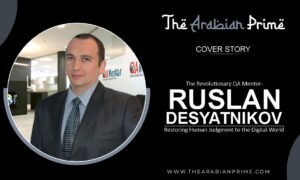
The world is changing rapidly. The landscape is shifting continuously. In the ever-advancing times of the digital disruptions, in an era where software and automated algorithms drive nearly every human interaction, the rush for speed overshadows the quest for perfection. In such an age, quality assurance might have been ignored if not for an inspiring visionary leader shaping the modern industry—Ruslan Desyatnikov‘s lifetime mission has been moving QA beyond mere checklists into the core of every enterprise. His twenty-eight years of experience have transformed the field. With the agility of a revolutionary, Ruslan moved from the front lines of testing to become a global leader who has fundamentally changed how the world’s largest organizations think about excellence. As the Founder, Chief Executive Officer (CEO), and leader of QA Mentor, Inc., he has turned a technical discipline into a strategic powerhouse that serves as the backbone for companies ranging from agile startups to Fortune 500 elites.
Putting Human at the Heart of the Machine
His journey is rooted in a deep understanding of the human element in technology. Ruslan is the creator of Human Intelligence Software Testing, a methodology that places critical thinking and investigative skills at the center of the process. He believes that while automation and artificial intelligence are vital tools, they cannot replace the judgment and risk-based analysis that only a skilled human mind can provide. This approach has restored testing to its rightful place as a high-level strategy, ensuring that software is not just functional but truly resilient in the face of modern challenges.
Before he built a global empire at QA Mentor, Ruslan honed his skills within some of the most complex financial environments on earth. At Citi, he managed quality for a global payments platform, and at HSBC, he built a Testing Center of Excellence that spanned seven countries and hundreds of testers. These roles taught him how to manage scale without losing sight of the smallest details. He learned that whether you are leading a team of eight or a workforce of thousands, the goal remains the same: to create a culture where quality is everyone’s responsibility.
Education and constant learning have always been part of his personal creed. With degrees from Baruch College and the University of Phoenix, along with a vast collection of certifications, Ruslan has combined academic knowledge with the grit of real-world experience. He has completed over one hundred and twenty-eight audit and transformation projects, each time helping a company reach a higher level of maturity and efficiency. His impact is so significant that his frameworks are now the gold standard used by major enterprises across the globe.
The Motivation Behind the Mission
Ruslan did not enter the world of software testing simply to manage code; he entered it to solve a recurring crisis. After spending years leading global initiatives for giants like HSBC and Citibank, he noticed a dangerous pattern. Software was failing not because of a lack of tools, but because of weak judgment and a ‘checkbox’ mentality. In high-stakes environments where a single error could impact millions of banking users and violate strict regulations, Ruslan saw that the industry was treating quality as a final chore rather than a core responsibility.
This realization became his driving force. He understood that true quality cannot be sprayed on at the end of a project. It must be built through accountability and critical thinking from the very first day. This belief led him to develop the Human Intelligence Software Testing (HIST) discipline. By focusing on the human ability to investigate and reason, he aimed to move the industry away from superficial habits and toward a standard where software is truly secure, reliable, and valuable.
“Quality is not something you add at the end of development. It must be driven by critical thinking, investigation, and personal accountability from day one. My goal is to ensure software is not just functional, but truly valuable to the person using it.”
Building a Foundation on Human Judgment
QA Mentor was born as a direct answer to the gaps Ruslan saw in the global market. He observed that many companies were rushing into automation too early, ignoring the actual needs of the user. He saw testers who were not empowered to question the rules or challenge bad decisions. When he founded QA Mentor, he moved away from being a simple vendor and instead became a strategic partner. He built the company on the conviction that quality is engineered by people who understand business and risk, not just by those who know how to run a script.
From its earliest days, the company focused on creating ‘thinking testers.’ Ruslan wanted to build a culture where responsibility and depth were the primary drivers. By creating structured yet flexible methodologies, he ensured that his teams could handle any challenge, whether they were working with a small startup or a massive enterprise. This foundation of human intelligence remains the core of everything the company does today. “Software failures are rarely caused by a lack of technology. They happen because of a lack of context and human judgment. We built this company to be a strategic partner that prioritizes depth and responsibility over simple checklists.”
Transforming the Core of Global Systems
With over 120 audit and transformation projects under his belt, Ruslan has refined a signature approach that tackles problems beneath the surface. He often steps into complex, fragmented environments where testing happens too late and automation provides a false sense of security. His method is to move quality out of its silo and make it a shared responsibility across the entire lifecycle. He aligns testers with business leaders and technical teams so that everyone owns the final outcome.
A major part of his success lies in replacing ‘vanity metrics’ with meaningful data. Instead of counting how many tests were run, he focuses on indicators that actually matter, such as defect leakage and release confidence. In one major banking transformation, this approach led to a complete overhaul of the operating model, resulting in more predictable releases and a massive drop in production incidents. By focusing on human judgment and outcome-driven metrics, Ruslan continues to deliver sustainable improvements that go far beyond a quick fix.
“The challenge is often not to add more tests, but to fundamentally change how quality is practiced. By putting human judgment before tools and making quality a shared responsibility, we turn chaos into a predictable and successful process.”
Restoring Balance Through Human Intelligence
The creation of Human Intelligence Software Testing (HIST) was Ruslan’s response to a growing crisis he witnessed across the industry. As technology advanced, many organizations began to equate quality with how many automated tests they could run or how fast they could deploy code. Ruslan saw that this tool-centric approach was pushing human judgment and critical thinking to the sidelines. Teams were busy maintaining scripts while critical risks and usability flaws were slipping through to the final users. The gap was not a lack of technology but a lack of investigative thinking.
HIST was designed to fill this void by placing human reasoning at the center of the testing lifecycle. It does not reject automation or AI; instead, it uses them as assistants to amplify human judgment. HIST forces a focus on why a test is being run and what truly matters to the business. By restoring this balance, Ruslan ensures that software is not just technically functional but truly reliable and trustworthy. “Traditional practices were optimizing for speed, but not for understanding or value. HIST addresses what is often neglected: why something should be tested and when judgment must override a script.”
The Merging of Minds and Machines
In the age of AI, Ruslan has established a strict governance model to ensure that technology enhances rather than replaces human insight. Within the HIST framework, humans remain the sole owners of risk assessment and final quality decisions. AI is used to handle the heavy lifting, such as analyzing massive data sets or identifying hidden patterns, but it does not own the decision-making. If a tester cannot explain or justify a suggestion made by an AI tool, that output is not trusted.
This balance is maintained through mandatory validation checkpoints. Testers are coached to be investigators who use AI to suggest test ideas, while they provide the context and responsibility that a machine lacks. This positioning ensures faster execution without sacrificing the deep insight required for complex systems. By keeping the ‘human in the loop,’ Ruslan preserves the integrity of the testing process in a way that automation alone never could. “AI may suggest or flag a risk, but it does not own the decision. If the tester cannot understand the output, it is not used. We use technology to amplify intelligence, not to replace it.”
Cultivating Quality Across Global Cultures
Through his work with giants like Citi and HSBC, Ruslan learned that quality is a leadership responsibility that transcends the size of a company or its budget. He discovered that a small startup can have a more mature approach to quality than a massive enterprise if the right mindset is in place. One of his greatest lessons is that there is no one-size-fits-all model; instead, maturity grows when QA is trusted to ask difficult questions early in the process.
Managing QA Mentor on a global scale requires a delicate blend of standardized frameworks and human leadership. Ruslan maintains consistency across international teams by using a single global methodology based on HIST. While the core processes for planning and execution are standardized, he allows for localized communication styles. This ensures that whether a team is in New York or Europe, they are all following the same principles of accountability and excellence. “QA maturity has very little to do with tools and everything to do with mindset. Driving maturity is a journey of coaching and education. The teams that succeed are those that treat quality as a strategic function.”
Leadership Born from High Stakes
Ruslan’s philosophy was forged in high-pressure financial environments where a software failure could lead to massive financial loss or regulatory penalties. These roles taught him that leaders cannot manage from a distance; they must stay close to the technical details and the realities their teams face. This hands-on approach is what he brings to QA Mentor every day. He encourages his teams to speak up when something feels wrong, fostering a culture of integrity where everyone takes ownership of the final outcome.
By focusing on outcomes rather than vanity metrics like test counts, Ruslan helps organizations align their quality goals with their business objectives. He continues to mentor the next generation of testers, teaching them that their role is to be the defenders of the user experience. His journey remains a testament to the idea that in a world of increasing automation, the most powerful tool remains a disciplined and curious human mind. “Strong leadership is about creating clarity and trust. At QA Mentor, we encourage a culture where teams question and investigate. We take responsibility for outcomes just as we did in high-stakes financial environments.”
The Human Centric Future of Technology
As Ruslan looks toward the next decade, he sees a future where software testing becomes more human, not less. While technology will continue to advance, he believes the focus will shift from simple feature checks to a deep understanding of how products behave in the real world. As artificial intelligence and complex integrations become the norm, the true challenge will be validating trust, safety, and reliability. Tools will handle the scale, but only a human mind can decide what truly matters to a business and its users.
In this evolving landscape, testers will move away from being reporters of pass or fail results. Instead, they will become strategic advisors who help teams interpret quality signals and make better release decisions. Ruslan envisions a clear distinction between simple automation and true intelligence. While automation will be expected as a standard, the ability to provide insight, judgment, and accountability will be the real differentiator for leaders in the field. “The future of testing is not about replacing people with tools. It is about using those tools to amplify human thinking. We use technology so that we can build products people truly trust.”
A Collective Victory for Quality
For Ruslan, receiving over one hundred global honors is not just a personal achievement but a reflection of a shared journey. He views every award as a validation that his path of prioritizing integrity and continuous improvement is the right one. These recognitions belong to the entire team at QA Mentor, as every employee has contributed to the success through their own work and belief in the company’s mission.
This recognition strengthens his sense of responsibility as a leader. It motivates him to continue building an environment where people feel empowered to challenge conventions and take pride in their work. For Ruslan, these awards are not a finish line. They are a confirmation that when a team is aligned around the right values, they can produce extraordinary results that change the entire industry for the better. “These honors are not a finish line; they are a confirmation that our vision is translating into real impact. They belong to the team and reinforce my belief that when people are empowered, great things follow.”
Leading with Purpose and Integrity
Beyond his professional success, Ruslan is guided by a core set of personal values that shape every decision he makes. Integrity is at the top of his list, as he believes trust is built through honesty, even when conversations are difficult. He also places a high value on accountability, taking ownership of outcomes, and expecting the same from his teams. He believes that innovation without a sense of responsibility is nothing more than noise.
A deep respect for human judgment also defines his leadership. He firmly believes that processes and frameworks should support people rather than replace their ability to think. By challenging his own assumptions and encouraging others to do the same, he ensures that both he and his organization never stop growing. He chooses the path of purpose over convenience, preferring to build something lasting and meaningful even if it requires more time and effort.
Advice for the Next Generation of Thinkers
To the emerging professionals entering the AI-driven world of quality assurance, Ruslan offers a clear message: change your mindset before you worry about your skills. He encourages new testers to develop a ‘thinking-first’ approach. In a world where tools can generate scripts and reports, the real value lies in the ability to ask the right questions and challenge assumptions. He advises them to understand the business and the user experience so they can provide the context that machines lack.
He stresses the importance of being AI-literate without becoming AI-dependent. This means understanding how the tools work while always validating their output rather than trusting them blindly. Finally, he points to communication as a vital skill for anyone looking to make a lasting impact. Being able to explain risk and uncertainty to stakeholders is what turns a tester into a leader. Ruslan’s story continues to be one of constant discovery, proving that even in the most technical fields, the human spirit is the most powerful tool of all. “AI excels at repetition, but humans excel at discovery. Learn to ask good questions and challenge assumptions. Your ability to explain risk and uncertainty is what creates a lasting impact.”
Today, Ruslan Desyatnikov is celebrated as a thought leader who shares his insights on major platforms like Forbes and CIOReview. His walls are lined with over a hundred global recognitions, including being named Testing Leader of the Year. He has been called one of the most creative and daring leaders in business, a reflection of his willingness to challenge the status quo. Even with all these accolades, he remains focused on the future, mentoring the next generation of testers and ensuring that as we move deeper into the era of artificial intelligence, the human heart of quality remains as strong as ever.