
A Lifescience-Tech Visionary – Dr. Shidin Balakrishnan: Building More Intelligent Hospitals That Provide More Humane and More Reliable Care
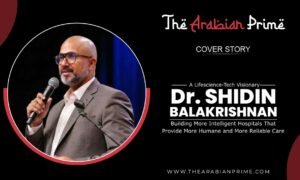
It is a crucial question. What defines true influence in the life sciences today? Innovation. Impact. Or institutional change. To Dr. Shidin Balakrishnan, true influence in the life sciences is not innovation in isolation; it is innovation that changes outcomes and is strong enough to reshape institutions. A paper, a prototype, or even a promising algorithm matters only when it improves the quality, safety, and timeliness of care at scale. That means influences sit at the intersection of scientific rigor, clinical relevance, and implementation. Dr. Shidin’s work has tried to live in that intersection. In surgery, he has been involved in building AI and augmented reality systems, but equally important, he has focused on the harder question: how do you integrate these tools into real, existing clinical pathways responsibly? That is why his work now extends from research and prototyping into enterprise clinical innovation, governance, and adoption. “I believe the most meaningful influence is when a technology stops being interesting and starts becoming useful, trusted, and repeatable.”
The Moment of New Realization
In a career spanning surgery, artificial intelligence, augmented reality, and population health informatics, there was a moment when Dr. Shidin Balakrishnan realized that data-driven intelligence would fundamentally reshape clinical care. The turning point for him came when he began working closely with minimally invasive and robotic procedures and realized how much clinically meaningful information was being generated, but not truly used per se. In the operating room, you have video, instrument motion/trajectory, imaging, physiology, workflow patterns, and postoperative signals, yet historically we converted much of that complexity into brief notes, static snapshots, and retrospective impressions. He remembers thinking that if one could learn from those data streams in real time and across populations, they could move from reactive care to anticipatory care. Later, his exposure to population health informatics reinforced that intuition: the real transformation does not come from having more data, but from evaluating the right data in the right context and converting it into action. “That was the moment I understood that data-driven intelligence would not simply support clinical care; it would fundamentally redefine how care is delivered, monitored, and improved,” shares Dr. Shidin Balakrishnan.
Aligning Perspectives Around One Clinical Endpoint
As a leader working at the intersection of medicine and technology, aligning clinicians, engineers, and data scientists toward a single clinical mission is crucial. Dr. Shidin Balakrishnan starts by asking a very simple question: What is the clinical decision or workflow failure he and his team are trying to improve? If that question is not clear, the collaboration becomes technology-led rather than patient-led. Clinicians define the unmet need and the consequence of getting it wrong. Engineers translate that need into a buildable system. Data scientists determine what can be measured, predicted, and validated. He shares, “My role is to keep those perspectives aligned around one clinical endpoint.” He insists on a shared language, a shared metric, and a shared map of the workflow. “We review cases together, not in silos, because that is where assumptions become visible.” He also encourages his teams to move in phases: proof of concept, silent validation, clinical usability, and then implementation. Alignment happens when every discipline understands not just its own task, but how its work changes the patient journey, he states.
One Meaningful Translation
If Dr. Shidin Balakrishnan had to choose one initiative that best reflects meaningful translation from concept to patient impact, “It would be our current work on AI-driven prediction and mitigation of postoperative complications in robotic nephrectomy.” Because it is designed from the outset to affect the patient journey, not just describe it. The vision is to combine perioperative data into a system that can identify risk earlier, support timely intervention, and help teams allocate attention where it matters most. What makes that initiative meaningful is that it sits on top of years of foundational work in surgical video analysis, augmented reality, training systems, and workflow research. The main challenge has not been algorithm development alone. It has been data quality, signal integration, clinical interpretability, governance, and the need to embed predictions into real workflows without creating alarm fatigue or false confidence. Translation becomes real only when a model informs action and action measurably improves recovery, safety, or resource use.
Using Tech to Increase Clinical Trust
Also, ensuring safety, clinical trust, and accountability when introducing AI systems into high-risk surgical and postoperative environments is imperative. Dr. Shidin Balakrishnan says, “I do not believe in deploying AI on the basis of technical performance alone. Clinical trust begins with scope discipline.” The system must do one well-defined job, under known conditions, with clear failure boundaries. He and his team validate in stages, beginning with retrospective work, then silent or shadow-mode prospective testing, and only then supervised clinical use. Every output must be auditable, clinically interpretable, and linked to an accountable human decision-maker. In surgery, that means human-in-the-loop oversight is not optional; it is foundational. He is also very attentive to uncertainty, because one of the major weaknesses of current AI systems is overconfidence under ambiguity. “So we design for escalation, not for illusion of autonomy.” If the model is uncertain, it should say so. Safety, trust, and accountability are preserved when AI is treated as a clinical instrument to be governed, measured, and continuously monitored, not as a replacement for judgment.
Real-Time Postoperative Intelligence
It is emerging as a critical frontier. Dr. Shidin Balakrishnan foresees predictive systems transforming recovery outcomes and hospital operations in the near future. He believes that real-time postoperative intelligence will shift recovery from periodic assessment to continuous, risk-adaptive care. Instead of waiting for deterioration to become obvious on a ward round or routine observation cycle, predictive systems will identify trajectories of concern much earlier by integrating perioperative context, vital signs, laboratory trends, and eventually wearable and behavioral data. Clinically, that means earlier rescue, more personalized discharge planning, and better targeting of high-dependency resources. Operationally, it means smarter bed utilization, more efficient escalation pathways, and reduced avoidable readmissions. The key point is that postoperative intelligence should not merely generate a score; it should trigger a pathway. A prediction is only valuable if it changes monitoring intensity, prompts a review, or guides intervention. “In the near future, I expect the strongest systems to be those that combine real-time prediction with workflow-aware action, so hospitals become more anticipatory, not just more data-rich.”
Long-lasting Lessons Learned from the Pandemic
Though COVID-19 waned a few years back, the lasting lessons remain. According to Dr. Shidin Balakrishnan, the pandemic taught us that speed matters, but unstructured speed is dangerous. “The lesson I carry forward is that innovation must be rapid, modular, and governed at the same time. During the pandemic, we learned the value of cross-disciplinary problem solving, pragmatic engineering, and acting under severe constraints.” In his own work, even something as practical as N95 decontamination reinforced the importance of translating scientific ideas into scalable, context-sensitive solutions. But COVID-19 also exposed what happens when evidence generation, data governance, and implementation pathways are weak. So the lesson is not to slow down innovation; it is to build systems that allow rigor to travel faster. That means better data infrastructure, pre-agreed validation frameworks, clearer ethical oversight, and stronger collaboration between clinicians, scientists, and health-system leaders.
Balancing Priorities with Vision
Having secured significant competitive research funding, Dr. Shidin Balakrishnan must balance national healthcare priorities with long-term scientific vision. He says he tries to treat national priorities and long-term scientific vision as mutually reinforcing, not competing. Health systems need solutions that address immediate pain points such as complications, workflow inefficiency, access gaps, workforce strain, and value-based care. Long-term science gives us the platform technologies that can solve those problems repeatedly across settings. So when he thinks about funding, Dr. Shidin Balakrishnan looks for work that is immediately relevant but architecturally extensible. For example, one of their current project addresses perioperative risk today, but it also teaches them how to build safer predictive systems across procedures. Another project focuses on improving surgical training now, but it also points toward the future of intelligent, adaptive surgical education. This is how he thinks about portfolio balance: solve a real problem now, but do so in a way that creates reusable capability. That approach respects public investment while still allowing ambitious science to mature over time.
Addressing Critical Concerns
As healthcare technologies become more powerful, Dr. Shidin Balakrishnan has to address concerns around ethics, data governance, and equitable patient access. “The more powerful healthcare technologies become, the more disciplined we must be about how they are governed.” Ethics in this space is not an abstract conversation; it is embedded in design choices, access pathways, procurement decisions, and deployment models. For him, three principles are essential. First, data stewardship must be rigorous: minimum necessary access, de-identification where appropriate, strong oversight, and secure architectures that respect patient trust. Second, equity must be tested, not assumed. If a model performs well only in the population that trained it, it is not ready. “We need demographic auditing, external validation, and continuous performance surveillance.” Third, access must follow value, not hype. The best tools should not remain confined to elite centers or technically mature teams. They should be designed for adoption in real health systems with varying resources. Ethical AI is not just accurate AI; it is accountable, explainable, fair, and usable in the environments that need it most.
Anticipating the Next Major Breakthrough
Dr. Shidin Balakrishnan also foresees that when it comes to minimally invasive and robotic-assisted surgery, the next major breakthrough will not be full surgical autonomy in the dramatic sense people often imagine. It will be the emergence of multimodal surgical copilots that understand context. These systems will combine operative video, instrument kinematics, preoperative imaging, workflow phase recognition, and patient-specific data to support the surgeon in real time. “We are already seeing the building blocks: accurate instrument and scene segmentation, augmented-reality overlays, semi-autonomous camera control, intelligent robotic assistance, and postoperative video analytics.” When these capabilities mature into one coordinated system, surgery becomes more perceptive, more precise, and more reproducible. He also thinks this breakthrough will be inseparable from data infrastructure. The ability to learn from thousands of procedures, while preserving privacy and safety, will be what differentiates isolated features from true surgical intelligence. In other words, the breakthrough is not a robot acting alone; it is a clinically governed human-machine partnership with deep contextual awareness.
The Clinical Excellence Required for Tomorrow
In this regard, Dr. Shidin Balakrishnan further says that undoubtedly, the next generation of clinician-scientists will need a broader skill set than previous generations. Clinical excellence, however, will remain the anchor, because without an understanding of disease, workflow, and patient consequence, technology becomes superficial. But that is no longer enough. They will also need data literacy, study design competence, implementation science, and fluency in human factors. They must know how to question a dataset, interpret model behavior, and recognize bias, calibration failure, and automation bias. Just as importantly, they need the ability to communicate across disciplines, because the future of medicine will be built by teams, not lone experts. “I would add one more skill: disciplined skepticism.” In an AI-driven ecosystem, it is easy to be impressed by performance claims. Effective clinician-scientists must ask harder questions about generalizability, safety, workflow fit, and downstream impact.
A True Learning Healthcare System
Looking toward 2026 and beyond, the single advancement Dr. Shidin Balakrishnan believes will most dramatically improve patient outcomes is the rise of workflow-integrated predictive intelligence inside a true learning health system. “I do not mean larger models in isolation. I mean clinically governed systems that continuously combine patient data, procedural context, and institutional knowledge to predict risk early and trigger the right intervention at the right time.” When prediction is connected to action, outcomes change. That could mean earlier recognition of deterioration, more precise perioperative planning, better escalation decisions, more personalized follow-up, and smarter use of constrained hospital resources. In his view, that is where technology and system design finally meet. The future will belong to organizations that can learn from every patient safely, translate those lessons into operational pathways, and then improve care iteratively. “If we get that right, the result will be not just more intelligent hospitals, but more humane and more reliable care,” he concludes.