
The Culture of Flow: How Paweł Gowin is Orchestrating Human Potential in the Industrial Age 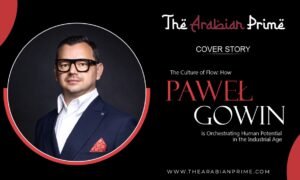
A predictable music like someone humming a song plays in the hardened flats of a manufacturing floor within a massive facility, but for Paweł Gowin, the true music of industry lies in the lively spaces between the machines. It is mid-2026, and Pawel Gowin stands on a mezzanine overlooking a complex production line that spans three football fields. This is not just a factory. It is a living proof of what happens when twenty-five years of operational wisdom meets a deep passion for human culture.
Pawel Gowin is an International Chief Operations Officer (COO) who views a group of factories as a single organism. His career is built on the belief that productivity is a side effect of a healthy organizational culture. He has proven this in the most difficult environments imaginable. While many leaders struggled during global crises, Paweł Gowin took four separate factories across Poland, Lithuania, and Ukraine and unified them into one effective organization. Doing this during a pandemic was a challenge. Doing it while one of those plants operated in a war zone required a level of leadership that goes beyond simple management.
The Core of Success
Pawel’s reputation for Manufacturing Excellence began long ago with projects that many thought were impossible. He was the first non-Swedish executive in IKEA history to run major investment projects outside of Sweden. From the high-stakes markets of China to the industrial hubs of Russia and Portugal, he built three massive greenfield factories from nothing. Each project had a budget of one hundred million euros. Each time, he delivered the facility below budget and ahead of the deadline. He did this by expecting the unexpected and focusing on solutions rather than problems.
At the core of his success is a unique approach to Lean Six Sigma. For Paweł Gowin, Lean is not just a set of tools or a checklist. It is a mindset that he installs into the very walls of a building. When he launched the greenfield factory in Russia, it took him only eighteen months to elevate it into the top five of forty-one factories worldwide. On several key performance metrics, it reached the number one spot globally. This was not achieved through pressure alone, but through a unique operational culture that rewarded effectiveness and high quality.
Leading a Structural Pivot
Talking about excellence, Pawel Gowin feels that organizations outgrow their niche the moment excellence alone is no longer enough to create value. “In my experience, this shift is not driven by ambition, but by clear, repeatable signals.”
First, customer expectations evolve. Clients stop asking for products and start expecting outcomes, integration, and accountability. They are no longer buying what you make—they are buying the problem you solve.
Second, efficiency reaches its limit. You can optimize a niche only to a point. When growth plateaus despite operational excellence, it’s a sign that efficiency is no longer a differentiator—value must move toward experience, customization, and end-to-end solutions.
Third, commoditization sets in. When competitors can replicate what you do, the question is no longer how well you produce, but how uniquely you create value.
Leading this kind of structural pivot while preserving precision requires intentional leadership.
For him, it starts with organizational identity. Vision is not a slogan— “it defines why we exist and where we are going.” It aligns energy, sets priorities, and guides decisions, even if it is never fully reached.
Seeing the Human Side of the Business
Equally important is recognizing that business is fundamentally human.
Organizations don’t build relationships—people do. Moving from products to solutions means moving from delivering commodities to delivering meaningful experiences.
To make that shift, Pawel Gowin focuses on a few non-negotiables:
- Precision as a mindset: Not just in production, but in thinking, communication, and decision-making.
- Progress over perfection: Perfectionis a moving target. Growth comes from continuous improvement—being better than yesterday.
- Effectiveness over effort: Not doingmore, butdoing what matters most. He constantly asks: How much of what we do actually moves the mission forward?
- Consistency over intensity: Transformation is not a declaration—it is the result of small, disciplined steps that compound over time.
- Curiosity and reflection: Leaders must ask more questions than they answer. Growth starts where comfort ends.
- People-first empathy: Not focusing only on output, but on people. When people feel valued, they take ownership—and that is when precision becomes cultural, not enforced.
Ultimately, becoming a solutions provider is not just a strategic shift—it is a mindset transformation. When purpose is clear, execution is disciplined, and people take ownership, precision stops being a capability—it becomes identity. And that is what allows an organization to scale, evolve, and compete—without ever losing its core.
Culture as the Real Differentiator
A strong advocate for local production mandates, Pawel Gowin says he would not anchor the transformation in any single function or organizational unit. In his experience across different markets, “the real differentiator is the culture we choose to build and consistently reinforce.” It is never about individuals in isolation—it is about the collective. Together is always better.
Too often, organizations focus on what they do and how they do it, but sustainable value is created when they invest equal—if not more—energy into why they do it. The “why” is what aligns people, drives consistency, and builds resilience across regions, functions, and challenges.
“It is interesting how naturally this comes to us in life. As parents, we patiently answer endless ‘why’ questions because we understand that curiosity builds understanding. Yet in business, we often expect execution without explanation.” That is a mistake.
Explaining ‘why’ is not just a soft skill—it is a structural necessity. It creates clarity, ownership, and ultimately, accountability. When people understand the purpose behind decisions, precision stops being enforced and starts being self-driven. Culture becomes the operating system. He strongly believes that we create value through who we are, not where we come from or where we operate. Regionality, globality—these are contexts, not limitations. “What truly matters is the mindset we bring: our standards, our discipline, and our shared belief in what we are building. In that sense, Strategic Stewardship is about protecting and nurturing this ‘why’ at scale—ensuring that as we grow, expand, or transform, we do not dilute our identity but strengthen it through people.”
Because in the end, organizations don’t deliver excellence—people do. And people only deliver excellence consistently when they believe in the reason behind it.
Automation as a Human Exoskeleton
Automation only becomes a threat when it is implemented without intent. If approached correctly, it is not a replacement for human capability—it is an exoskeleton that amplifies it. The framework of Pawel Gowin starts with a simple principle: we don’t automate to remove people, we automate to elevate them. When they reduce tasks from hours to minutes, the real question is not about efficiency—it is about what he expects people to do with the time and capacity they’ve created. If they don’t answer that deliberately, they risk de-skilling. If they do, they unlock a higher level of contribution.
He focuses on three anchors: First, clarity of purpose – the “why.” People need to understand why automation is introduced. Not as a cost-cutting exercise, but as a way to remove low-value, repetitive work so they can focus on what truly matters—judgment, problem-solving, and improving the system itself. Just like in any strong culture, explaining “why” is not optional; it builds trust and ownership. Second, redesign of roles—not just tasks. Automation should not compress roles into button-pushing. It should expand them.
As execution time decreases, expectations on thinking increase. He deliberately shifts people from doing → understanding → improving. Precision then moves from being a technical requirement to a cultural trait, reflected in how decisions are made and how problems are approached. Third, continuous development and curiosity.
Growth happens outside the comfort zone. He expects teams to stay curious, to question outputs, and to challenge systems—not blindly rely on them. Technology should support thinking, not replace it. Progress matters more than perfection, but progress requires engagement.
The Mindset of Global Expansion and Customer Obsession
At the core, Pawel Gowin believes we create value through who we are, not what tools we use. AI and ERP systems are only as powerful as the mindset of the people using them. That is why he defines empathy as caring about people, not just their output.
When people feel ownership and understand the purpose behind change, they don’t fear automation—they use it to become better. In the end, automation should not make work smaller—it should make people bigger. Global expansion works when you are strict on standards and flexible in expression.
He starts by defining a clear set of non-negotiables—his purpose, quality standards, and operational discipline. His purpose is customer obsession. That means every market, without exception, must deliver the same level of reliability, precision, and trust.
Operationally, he relies on proven systems and routines with a track record. If something consistently delivers quality, he scales it. He doesn’t reinvent the wheel—he refines and replicates what works. But systems alone don’t create balance. The framework must be flexible by design, with clear boundaries that empower local teams to interpret and apply the brand.
The framework must be flexible by design, with clear boundaries that empower local teams to interpret and apply the brand. They are closest to the customer, and that proximity is a competitive advantage.
What makes this work is the clarity of “why.” When teams understand that the “why” is customer obsession, they don’t just follow standards—they make decisions that protect and elevate them. In the end, consistency is not enforced—it is built through discipline. Relevance is not accidental—it is shaped through cultural understanding. Both are sustained when everyone is aligned around one constant: the customer.
Sustainability as a Core Leadership Responsibility
Sustainability cannot sit on the side as an initiative—it must live at the core of the culture, at every level of the organization. Protecting people and the planet is not a program; it is a leadership responsibility. When truly understood, it moves beyond policies and becomes part of how decisions are made daily—across operations, supply chain, and partnerships. Too often, Pawel Gowin believes organizations reduce sustainability to a marketing tool for short-term gain.
That approach is not only ineffective—it erodes credibility. Real impact comes when sustainability is treated as a genuine direction, not a campaign. He believes every step matters. Small, consistent actions—embedded into processes and behaviors—create long-term change. Not everything that counts is easily measurable, but that does not make it less important.
At the same time, what they choose to measure signals what they truly value. As leaders, they have a choice: what do they pass on to the next generation, and how do they want to be remembered?
He believes we are temporary stewards of the systems we build. The decisions they make today define the legacy they leave behind. In the end, sustainability becomes real when it is no longer something they talk about—but something they consistently do, because it reflects who we are. Total control over the value chain does not create pressure—lack of alignment does. Frictionless flow is not engineered through processes alone; it is a reflection of culture, awareness, and shared belief. To connect environments as different as a factory floor and a high-end showroom, Pawel Gowin insists you need more than coordination—you need a unifying vision that people believe in and bring to life every day. When that belief is strong, silos disappear. What remains is a continuous flow driven by purpose, not control.
The Infrastructure of Trust and Vertical Integration
Trust is the real infrastructure behind any integrated model. It is not easy to build, but once it exists, it replaces complexity with clarity, ownership, and speed. People stop working for the system and start working with each other. He leads with curiosity and possibility. Friction is not something to manage—it is something to eliminate by constantly asking: what can be done better, simpler, more meaningful? Growth begins the moment organizations stop accepting constraints as fixed. The one leadership habit that prevents vertical integration from becoming a bottleneck is consistency of intent.
Showing up every day with discipline, regardless of circumstances. Repeating the vision until it becomes instinct. Creating alignment not once, but continuously. Because culture is not built in moments—it is built in what they tolerate, reinforce, and live daily. He also believes that performance without energy and joy is not sustainable.
When people find meaning in what they do, they don’t just execute—they elevate. In the end, true integration is not about owning the entire value chain—it is about connecting it through belief. When people trust each other, understand why they exist, and take accountability, complexity turns into flow—and the organization operates as one.
The Shift from Heroics to Systems
Many growing firms rely on the heroics of individuals. Leadership can feel like a lonely journey, but it is fundamentally an act of service—setting the tone for the organization and the people within it. Pawel Gowin doesn’t believe in hero-driven organizations. Heroes belong in stories, not in operating models. Human progress has always depended on tribes—on our ability to connect, trust, and work together. The strength of the group has always outweighed the strength of any individual. The same applies to organizations. Relying on a few high performers may deliver short-term results, but it weakens the system over time. Sustainable performance comes from building teams with trust, alignment, and shared ownership.
That shift—from heroics to systems—does not happen overnight. Transformation is a disciplined, long-term effort. It requires clarity of intent, consistency in execution, and a willingness to invest in people, even when it is slower. This is where leadership choices matter. Do we optimize for short-term wins driven by individuals, or for long-term strength built on trust and collective capability? It’s the difference between playing a finite game and building something that lasts. Digital tools and systems play a role—but not as control mechanisms. They are there to support people, to bring transparency, and to create confidence that what they plan, they deliver. Over time, this consistency builds what he calls Digital Trust—a belief that the organization will perform, not occasionally, but predictably.
Building Collective Strength and Digital Trust
For him, the answer is clear: he would rather build a team of committed individuals with shared values and growth potential than depend on isolated high performers who don’t elevate the system. The real measure of leadership is not how fast you reach the top, but how strong the organization is when you get there—and whether it can sustain success without you. In his role, he must align architects, engineers, and designers who often speak different professional languages. The ambition is to move beyond traditional manufacturing into fully connected, technology-enabled ecosystems, where design, production, and customer experience operate as one. Not competing on cost alone, but on intelligence, agility, and the ability to create long-term value per customer.
At the core of this vision is a simple belief: people drive performance. Strong outcomes are the result of empowered individuals aligned around a shared purpose—not isolated excellence. That becomes critical when aligning architects, engineers, and designers—disciplines that naturally speak different professional languages. He doesn’t try to force one language. He creates a common direction. It starts with a clear “why”—customer obsession and the experience they want to deliver. When everyone understands the outcome from the customer’s perspective, alignment stops being functional and becomes intentional. From there, they translate that intent into a small set of shared principles—quality, precision, usability, and aesthetic coherence. These act as a common operational language across all disciplines, guiding decisions without over-prescribing them.
Leadership as Service and Strategic Alignment
They then ensure early and continuous collaboration. Teams are connected from the beginning, not at handover points. This removes silos and creates shared ownership of the final outcome, rather than fragmented contributions. Finally, they reinforce alignment through consistency and accountability. A unified voice is not created in workshops—it is built daily, through decisions, feedback, and the discipline to stay true to the vision. Leadership in this context is not about control—it is about service and enablement. Creating the conditions where people understand the vision, trust each other, and contribute their expertise toward a shared result. Because strength never comes from individuals working in parallel—it comes from people working as one system.
In the end, a unified operational voice is not about making everyone think the same—it is about ensuring everyone moves in the same direction. Market saturation does not create stagnation—complacency does. Organizations don’t slow down because the market is full; they slow down because they stop challenging themselves. That is why he believes agility is not built in difficult times—it is built when things are going well. His approach is rooted in proactive discipline and the courage to evolve before it is required. They create a culture where continuous improvement is not an initiative, but a habit. They regularly step back—not only to review performance, but to ask a more important question: how can they do this better, simpler, differently? Progress becomes part of how they think, not something they do occasionally.
Proactive Discipline and the Future-Ready Organization
He also chooses to compete with himself. Instead of waiting for disruption, he actively challenges his own model, explores new ideas, and invests time and energy into what might shape the future. This keeps the organization moving forward—even when the market feels stable.
At the same time, he protects focus. Growth can easily lead to distraction, but true agility comes from knowing what matters most and aligning consistently around it—customer experience, innovation, and long-term value.
And he embeds adaptability into everyday work. Through constant collaboration and close connection to the customers, he stays aware, responsive, and ready to adjust. Change is not something people or organizations react to—it is something they live with. In the end, future-ready organizations don’t wait for change—they move first, shaping it with intention, curiosity, and the belief that there is always a better way.
Igniting the Next Generation of Leaders
For Pawel Gowin, the role of a COO in talent development is not limited to managing people’s growth—it is to ignite it. Leadership is an act of service, and it begins with ourselves. If he and his team want to prepare the next generation to lead in a technology-first world, they must first lead by example—through discipline, curiosity, and the courage to continuously evolve. As he believes strongly, we must work harder on ourselves than on the work we do. Because talent development is not about adding skills—it is about shaping character, mindset, and intent. The focus should be placed on creating an environment where people don’t just perform—they grow into leaders.
The Four Pillars of Forging Talent
First, to build a culture of awareness and reflection. True leaders don’t confuse effort with effectiveness. They pause, they question, they focus on what truly moves the mission forward. It’s not about doing more—it’s about doing what matters the most. Second, to create real ownership early. He trusts people with responsibility before they feel ready. He exposes them to decisions, to challenges, to uncertainty. Because leadership is not learned in comfort—it is forged in accountability and experience.
Third, to ensure learning is lived, not taught. Development does not happen in isolation. It happens in real work, in solving real problems, in collaboration across disciplines. Technology is not something to observe—it is something to use, challenge, and shape. Fourth, to nurture inner drive over external validation. He imagines a world with people who keep going when no one is watching. Who are not driven by recognition, but by purpose.
Shaping a New Leadership Standard
In a world where technology evolves rapidly, the true differentiator will never be the tools—it will be the people who know how to use them with intention. Ultimately, his role is not to build capability—it is to build leaders. People who can see beyond what exists today, believe in what is possible tomorrow, and have the strength to bring it to life.
Because the future will not be led by those who know the most—but by those who are willing to grow the most. Looking at the next five years, the “permanent mark” he wants to leave is not a single project or milestone—it is the creation of a sustainable, people-driven operating model that proves business growth is strongest when it is built through people, not around them.
He wants to contribute to shaping a new leadership standard in the region—one that moves away from heavy structures and unnecessary governance, toward lean, trust-based organizations where accountability and ownership exist at every level. Organizations where people are not managed as resources, but developed as talent, and where teams outperform individuals because they are aligned by purpose. His ambition is to build strong foundations—cultures where discipline, consistency, perseverance, curiosity, integrity, and generosity are not values on paper, but behaviors lived daily. With the right environment, like any well-nurtured system, these qualities grow and compound, delivering long-term, sustainable results.
The Legacy of Active Service
He strongly believes that success is not accidental. Even if this vision may sound ambitious, it is hard work, consistency, and belief that turn it into reality. Organizations must not follow direction because they are told to—but because they understand it and believe in it. For Pawel Gowin, leadership should empower thinking, not submission. His role is not only to grow the business, but to help people grow within it—to help them find their purpose and realize their potential. Finding your own purpose is not enough; true leadership is about enabling others to discover theirs.
He sees his contribution as using his strengths, experience, and awareness to elevate others—because when people grow, organizations grow with them. If he were to be remembered, he would want it to be for building organizations where people did not just perform—but evolved, took ownership, and created value because they truly believed in what they were building. As Mahatma Gandhi said: “Find yourself in losing yourself in the service of others.”