
The Dawn of Project Solara Microsoft and Next-Gen Cloud Computing 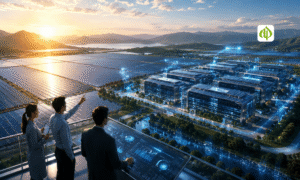
Out there beyond old ways of doing things, cloud systems start shifting hard under pressure to cut waste and boost speed. Right now at the center stands something few saw coming – Project Solara Microsoft, quietly rebuilding what data centers can be when smart design meets clean energy goals. When demand grows, so does strain; regular power tricks fail fast these days. Hidden inside progress lies a fresh rhythm: machines learning to run themselves using bold code paired with rethought boxes humming off solar ideas. This isn’t just upgrade noise – it reshapes expectations without shouting.
Redefining Global Data Network Infrastructure
Years passed while endless streams of data pushed power networks to their limits, pushing big tech firms toward bold new paths. A turning point arrived with Project Solara Microsoft, a shift pointing clearly to cleaner digital foundations. Instead of depending on outside electricity and vast cooling setups like standard cloud hubs do, this system powers itself through built-in energy creation and control. Project Solara Microsoft reshapes how networks are engineered today – no small tweak, but a full rethinking from the ground up. Remote centers now handle heavy tasks steadily, free from sapping nearby supplies, thanks to this self-sustaining design.
When companies push faster into digital upgrades, needing strong cloud systems rises sharply. Instead of just handling data normally, Project Solara by Microsoft uses smart forecasting to spot energy shifts on the fly. By moving computing jobs instantly when power dips occur, it keeps performance steady without lagging behind. Even under heavy traffic or weak electricity supply, operations stay smooth thanks to constant adjustments happening every second. For large businesses worldwide, outcomes could be significant – less cost and effort spent managing massive cloud workloads over time.
The Synergy of Artificial Intelligence and Solar Innovation
At the heart of this forward-thinking initiative is a sophisticated interplay between autonomous systems and clean energy capture. The core philosophy behind Project Solara Microsoft relies heavily on leveraging advanced machine learning algorithms to maximize the capture and utilization of natural light sources. By utilizing specialized photovoltaic arrays integrated directly into data storage architectures, Project Solara Microsoft transforms the physical structure of a data center into an active, energy-producing entity. This deep integration allows the system to analyze atmospheric conditions, predict cloud cover, and adjust internal processing speeds to perfectly match available energy levels.
Furthermore, the implementation of Project Solara Microsoft represents a significant departure from standard artificial intelligence deployments, which are traditionally notorious for their massive carbon footprints. By utilizing the unique, localized energy matrix developed under Project Solara Microsoft, AI model training can occur directly within self-powered nodes. This localized approach eliminates the need to transmit raw power over long distances, bypassing the inherent energy losses that usually plague traditional grid systems. The result is a highly efficient, closed-loop computing cycle that proves technology and ecology can coexist harmoniously.
Transforming the Future of Enterprise Technology Architecture
The practical applications of this architecture extend far beyond environmental sustainability, opening up entirely new avenues for enterprise innovation. When a business integrates its operations with a framework built on Project Solara Microsoft, it gains access to a level of operational resilience that was previously unattainable. Because the underlying technology of Project Solara Microsoft is decoupled from standard municipal power grids, it remains largely immune to the regional blackouts and energy price volatility that frequently disrupt standard business operations. This independence provides a competitive edge to companies requiring continuous uptime and secure data management.
Moreover, the scalability of Project Solara Microsoft allows it to be deployed in remote or historically underserved geographic regions where traditional infrastructure is lacking. By bringing the immense capabilities of Project Solara Microsoft to edge locations, industries like agriculture, maritime logistics, and remote healthcare can leverage high-performance computing right where data is generated. This democratization of computing power paves the way for a more connected and equitable global digital economy, ensuring that the benefits of advanced cloud technology are not confined to major metropolitan hubs.
The Long-Term Horizon of Cognitive Cloud Solutions
As we peer into the future of digital infrastructure, it becomes increasingly clear that the principles established by this initiative will dictate the trajectory of the tech sector for decades to come. The continued expansion of Project Solara Microsoft serves as a vital reminder that true technological progress cannot occur in a vacuum isolated from environmental realities. By committing resources to Project Solara Microsoft, the industry is setting a new benchmark for corporate responsibility and engineering excellence, challenging competitors to rethink their reliance on archaic power models.
Ultimately, the journey of Project Solara Microsoft reflects a broader societal shift toward intentional and harmonious engineering practices. The successful deployment of Project Solara Microsoft proves that the next era of computing will not just be defined by how fast we can process information, but by how wisely we manage the physical resources required to do so. As this ecosystem matures, it will undoubtedly inspire a new generation of developers, architects, and visioners to push the boundaries of what is possible, ensuring that the digital world grows alongside a thriving physical planet.