
The Forensic Matrix: How Dr. D. Anthony Miles Deploys Multivariate Statistics and Liability Audits to Dissect Deceptive Commercial Trade Practices
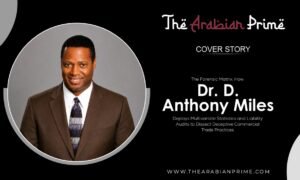
Modern business landscapes frequently witness high-profile corporate collapses, product liabilities, and deceptive advertising scams. Dr. D. Anthony Miles disrupts these vulnerable spaces by applying strict statistical validation and investigative analysis to corporate strategy. As the Founder and Chief Executive Officer (CEO) of Miles Development Industries Corporation, he leads a specialized consulting practice and venture capital acquisition firm designed to identify structural operational flaws before they sink an enterprise. His is a unique methodology. One that centers on what he calls a marketing autopsy. This method utilizes empirical metrics in determining exactly why specific business models fail or succeed in competitive economic climates.
Positioned among the most influential and dynamic leaders to watch, Dr. Miles brings deep investigative clarity. It makes him exceptional in a crowded marketplace. A place where standard consulting firms rely only on vague trends rather than real, actual data. His role is that of a nationally recognized expert witness and a pioneer in forensic marketing. In his capacity, he regularly dissects fraudulent commercial operations, false promotional claims, and trade dress violations for high-stakes legal proceedings. Changing how modern organizations assess commercial risk is his daily corporate execution. As such, he stands apart from the business leaders who rely on speculative growth plans. Rather, he guides companies toward verifiable market truths.
The Gap Between Knowing and Proving: Blending Statistical Rigor, Venture Development, and System Thinking
Dr. Miles’ career spans entrepreneurship, marketing, statistics, research, and venture development. Early in his journey, he recognized that the real problems facing entrepreneurs and organizations don’t fit neatly into a single discipline. A startup founder doesn’t just need marketing advice— they need someone who can quantify market risk, design a research framework to validate assumptions, and then translate that data into a strategic decision. That gap between knowing and proving is where he’s always lived. His academic training in statistics gave him rigor. His work as an entrepreneur gave him scars and wisdom. The combination forced him to think in systems. He feels that you can’t lead a venture development effort without understanding research methodology. You can’t do meaningful forensic marketing analysis without knowing how businesses actually operate under pressure. Each discipline feeds the others. That multidisciplinary foundation has shaped Dr. Miles’ leadership philosophy in a very direct way: he doesn’t believe in one-dimensional thinking. The leaders and organizations he’s seen struggle the most are the ones who treat marketing as separate from data, or strategy as separate from evidence. His role — whether as a consultant, an expert witness, an academic, or a CEO — has always been to connect those dots. He also believes deeply that leadership carries an obligation to build knowledge, not just apply it. That’s why he’s remained committed to research, to publishing, and to mentoring the next generation of scholars and entrepreneurs. The goal has never been to be the smartest person in the room — it’s been to make the room smarter. When Dr. Miles founded Miles Development Industries Corporation, the core idea was ambitious: create an organization at the intersection of consulting and venture acquisitions. From the beginning, he wanted Miles Development Industries to be a thinking organization, one that diagnoses problems at their root and develops strategies backed by evidence. That meant being as comfortable with statistical analysis as with brand strategy or venture development. What evolved over the years was the application of that vision. As forensic marketing emerged as a discipline, he saw a natural extension of everything they already built to do expert witness work, litigation support, and rigorous market analysis. He had the methodological foundation to do it credibly. What has never changed is his commitment to excellence and intellectual innovation. The value he brings is precision — the ability to look at a market, a business model, or a dispute and say with confidence: here is what the evidence actually shows. That standard has guided Miles Development Industries from day one, and it always will.
The Trust Standard: Solving Last-Mile Lasting Losses with Safe Drop Security Engineering
According to Dr. Miles, Safe Drop® Security Delivery System addresses a critical need in modern logistics and security. The rise of e-commerce transformed global logistics almost overnight — but the security infrastructure around last-mile delivery never kept pace. Package theft, chain-of-custody failures, and delivery fraud became epidemic. Consumers and businesses were absorbing billions in losses annually, and the industry’s response was largely reactive — cameras, alerts, and apologies after the fact. Safe Drop® was born out of a problem that was hiding in plain sight. Safe Drop® was designed to get ahead of that problem. The core market challenge was simple but profound: how do you create a delivery system that guarantees security, accountability, and verification at the point of handoff— without adding friction for the consumer or the carrier? That question drove the innovation. What makes Safe Drop® significant is that it addresses not just theft, but trust. In modern logistics, trust is the product. Retailers, carriers, and consumers all operate on the assumption that a package sent will be a package received, and when that chain breaks, the damage goes far beyond the lost item. It erodes brand confidence and customer loyalty. Globally, Dr. Miles hopes Safe Drop® creates a new standard one where secure delivery is the expectation, not a premium add-on. Emerging markets especially stand to benefit, where logistics infrastructure is growing rapidly, but security protocols are still catching up. The opportunity to shape that infrastructure early and shape it right is enormous. Ultimately, Safe Drop® reflects the same philosophy behind everything he builds: identify where the system is failing, apply rigorous thinking, and engineer a solution that scales.
The Forensic Protocol: Systematizing Advanced Analytical Models for Litigious Market Ecosystems
Dr. Miles is recognized as a pioneer in forensic marketing. He further explains this concept and tells about how organizations can leverage it to gain a competitive advantage. Most people think of marketing as creative campaigns, branding, and messaging. And it is. But beneath every marketing decision is a set of claims, assumptions, and strategies that can and should be examined with the same rigor we apply in law, medicine, or finance. That’s the foundation of forensic marketing. At its core, forensic marketing is the systematic application of advanced analytical and research methods to investigate marketing practices, consumer behavior, competitive dynamics, and market conditions, often in contexts where the stakes are high. That includes litigation, regulatory scrutiny, corporate disputes, fraud investigations, and strategic due diligence. When a company needs to know not just what happened in a market, but why, and be able to prove it, that’s forensic marketing. He’s spent years developing the methodological framework for this discipline, drawing on statistics, consumer behavior theory, econometrics, and legal standards of evidence. It’s rigorous work, and it requires someone who can operate credibly in both the boardroom and the courtroom.
For organizations seeking a competitive advantage, Dr. Miles says that the application is powerful. Forensic marketing gives you the ability to audit your own marketing ecosystem, identify where your strategies are underperforming and why, detect deceptive competitive practices, validate market research before making major investments, and build evidentiary support for business decisions that may face legal or regulatory challenge. In today’s environment, where markets are litigious, data is abundant but often misread, and competitive tactics are increasingly aggressive, organizations that apply forensic marketing thinking are simply better protected and better positioned. They make decisions based on verified intelligence, not assumptions. The competitive advantage isn’t just knowing more. It’s being able to prove what you know. Having conducted extensive research in predictive analytics and consumer behavior, he believes that the businesses that will define the next decade are not the ones with the most data — they are the ones that know what to do with it. After years of his research in predictive analytics and consumer behavior, what strikes Dr. Miles most is how many organizations are still making consequential decisions based on intuition dressed up as strategy. The coming decade will be unforgiving to that approach. Hyper-personalization at scale will separate leaders from followers. Consumers no longer simply prefer personalized experiences; they expect them. Organizations that build predictive capability into their core operations will command extraordinary loyalty and pricing power. Behavioral data as a strategic asset is the new competitive frontier. Understanding why consumers make decisions, not just what they buy, is where the real intelligence lives. Organizations that model that complexity accurately will out-predict and out-position their competitors consistently.
Dr. Miles further adds that the trust economy will define brand value. Data privacy concerns and corporate accountability are converging to create a marketplace where transparency is a differentiator. Brands that handle consumer data ethically will earn a loyalty premium no advertising budget can replicate. Evidence-based decision culture may be the most important shift of all, building leadership teams that demand rigor and resist anecdotal thinking. The organizations that achieve that cultural transformation will be virtually impossible to outmaneuver. The decade ahead will reward precision over guesswork and evidence over assumption. That has always been true, but the pace of change is making it more consequential than ever.
The Third Eye Framework: Overcoming Capital Constraints and Harmonizing Multi-Industry Venturing
Throughout his journey, every significant challenge Dr. Miles faced as an entrepreneur came down to one thing: operating in being able to see opportunities before everyone else does. Early on, the greatest challenge was developing the ability to see opportunities before everyone else does. You have to see them before everyone does, and that is not easy. When you are building something new, whether a business model, a research framework, or an emerging discipline like forensic marketing, you are constantly proving not just that your idea works, but that you are the person to execute it. He overcame that by having a third eye. Rigorous research, documented results, and intellectual consistency built a reputation that no amount of self-promotion could have manufactured. That is what drives him. Resource constraints were a constant companion. Like most entrepreneurs, he had to do more with less and for longer than he anticipated. That pressure, as uncomfortable as it was, sharpened his strategic thinking. It forced prioritization and taught me that discipline is a more reliable asset than capital. The most enduring challenge has been building ecosystems. Tying operating across multiple businesses and linking them together. Entrepreneurship, academia, statistics, and legal consulting each world has its own language, standards, and expectations. Learning to move fluidly and develop those ventures into an ecosystem is the key, and to be credible in all of them requires relentless commitment to continuous building. What carried him through every challenge was a simple conviction: if the work is rigorous, relevant, and honest, it will find its audience. That belief has never failed him.
The Sequential Calculus: Stress-Testing Empirical Statistical Baselines with Seasoned Executive Intuition
Dr. Miles work combines data-driven decision-making with strategic leadership. In it, balancing analytical insights with intuition when making critical business decisions is imperative. Data tells you what is happening. Experience tells you what it means. After decades of working at the intersection of analytics and strategy, he’s come to believe that the tension between data and intuition is largely a false choice. The best business decisions he’s made have always been informed by both, and the worst ones happened when he over-relied on either. Data and experience will win every time. Analytically, his training as a statistician taught him to demand evidence, question assumptions, and resist the seduction of convenient narratives. When the data points clearly point in a direction, you follow it even when it’s uncomfortable. But data has limits. It captures what has already happened. It measures what we thought to measure. It cannot fully account for emerging conditions, human dynamics, or the kind of pattern recognition that only comes from years of real-world experience. That is where seasoned intuition earns its place at the table. His approach is sequential, lead with evidence, then stress-test it with experience. If the data and his instincts align, he moves with confidence. If they conflict, that tension becomes the most important question in the room, and he digs deeper before deciding. The goal is never to choose between being analytical and being decisive. It’s to be both rigorously and without apology. He likes what Deming says, “In God we trust. All others must bring data.” That is for real.
The Analytical Shift: Leveraging Strategic Infrastructure and Artificial Intelligence to Prevent Automated Mediocrity
As a researcher and statistician, Dr. Miles believes that AI is not replacing strategic thinking; it is raising the price of poor strategic thinking. As a researcher and statistician, he’s watched AI move from a fascinating methodological tool to a fundamental force reshaping how organizations compete. The transformation is real, and it is accelerating. He thinks that in business strategy, AI is compressing the time between insight and decision. Scenario modeling, competitive intelligence, and risk assessment that once took weeks can now be executed in hours. Organizations that build AI capability into their strategic planning process will simply outpace those that don’t. In marketing, the shift is profound. AI is enabling a level of consumer behavior prediction and personalization that was previously theoretical. But here is the critical caveat: AI amplifies the quality of your data and your research design. Garbage in, garbage out, at extraordinary speed. Organizations that invest in rigorous data infrastructure will leverage AI powerfully. Those that don’t will automate their own mediocrity. In organizational performance, AI is forcing a reckoning with talent and culture. The premium is shifting from information processing to judgment, creativity, and ethical reasoning, the distinctly human capabilities that AI cannot replicate. His counsel to leaders is this: don’t chase AI as a trend. AI is a tool. It can’t replace wisdom. Understand it as infrastructure and build your organization’s analytical foundation strong enough to use it wisely.
The Real Legacy: Prioritizing Family Milestones over Academic Trophies and Codified Research Paradigms
Dr. Miles knows he has received numerous awards for his research and contributions to marketing and business studies. But the achievement he is proudest of cannot be framed and hung on a wall. He is most proud of his two daughters. Both graduated with master’s degrees. His youngest daughter graduated from Georgia Tech. His oldest graduated from Xavier University. That is what makes him proud. He is genuinely grateful for every award and recognition he has received they represent validation from peers and institutions he deeply respect. But when he reflects on what matters most, it is not a single accolade. It is the body of work. Pioneering forensic marketing as a recognized discipline, developing its theoretical framework, publishing the research, and demonstrating its application in real legal and business contexts, that is the contribution he is most proud of. Because it didn’t exist in a codified form before. Building something from intellectual scratch, having it withstand peer scrutiny, and watching it gain traction in both academic and professional circles, that is a different order of satisfaction than receiving a trophy. A close second is the impact on people. The students he has mentored, the entrepreneurs he has advised, the organizations he has helped navigate genuinely difficult challenges; those outcomes are quietly more meaningful than any formal recognition. Awards affirm the past. What drives him is the work still ahead, the research not yet published, the problems not yet solved, the leaders not yet developed. That unfinished agenda is what gets him up in the morning.
The Leadership Matrix: Cultivating Intellectual Humility, Evidence-Based Courage, and Ethical Agility
In today’s rapidly changing business environment, Dr. Miles feels that the executives who will thrive are not necessarily the smartest in the room; they are the most adaptable and the most honest. After decades of working with organizations and leaders across industries, he’s come to believe that certain qualities separate those who navigate change successfully from those who get consumed by it. First, there is Intellectual humility, which tops the list. The pace of change today means that what worked yesterday may be irrelevant tomorrow. Leaders who are too invested in their own past conclusions cannot adapt quickly enough. The willingness to say ‘I was wrong’ or ‘I don’t know yet’ is not weakness; it is strategic agility. Second, there is evidence-based courage is equally essential. It takes confidence to make bold decisions grounded in data when everything around you is uncertain. The worst leadership failures he has witnessed came from executives who either ignored evidence or hid behind it to avoid accountability. Third, there is disciplined communication that matters more than ever. In complex, fast-moving environments, the ability to translate ambiguity into clarity, for your team, your stakeholders, and your market, is a force multiplier. And lastly, there is ethical grounding. Pressure reveals character. The leaders who endure are those whose values remain consistent, whether they are winning or struggling. Leadership has never been about having all the answers. Leadership is doing the things that need to be done that no one will do. That’s leadership.
The Converging Forces: Architecting AI Baselines, Scientific Venturing, and Data Accountability
Looking toward 2026 and beyond, Dr. Miles sees three converging forces that will define the next era of entrepreneurship and business transformation. The first is artificial intelligence as infrastructure. AI is no longer a competitive differentiator it’s becoming the baseline. The entrepreneurs who will win are not simply those who adopt AI tools, but those who understand how to build business models around AI capabilities. That requires a level of analytical sophistication and strategic thinking that most organizations are still developing. The gap between AI-native businesses and traditional ones will widen significantly in the next few years. The second is the democratization of venture creation. The barriers to launching a scalable business have never been lower, but the barriers to sustaining one remain as high as ever. He sees enormous opportunity for entrepreneurs who combine technological leverage with rigorous business fundamentals. Too many founders chase innovation without discipline. The ones who thrive will be those who treat their ventures like scientists — hypothesize, test, measure, and adapt. The third is data-driven accountability in marketing and business strategy. Regulators, investors, and consumers are demanding more transparency and evidence behind business claims. Organizations that have invested in research infrastructure, forensic capability, and analytical rigor will have a profound advantage — not just competitively, but legally and reputationally. His advice to entrepreneurs and business leaders is this: the future belongs to those who can think across disciplines. Technology alone won’t save you. Data alone won’t save you. But the ability to synthesize both and lead with evidence will set you apart in any market, in any environment. The opportunities ahead are extraordinary. The question is whether you’re building the capability to capture them.
The Generational Mandate: Four Pillars of Substance, Discomfort, Fluency, and World-Changing Value
Being recognized among influential leaders is humbling, says Dr. Miles, but what it really does is reinforce a responsibility he feels deeply: to use whatever platform he has to light a path for the next generation of entrepreneurs, innovators, and leaders who are still finding their way. So here is what he wants them to know. He has four things he wants to say. First, build on substance, not optics. “We live in an era that rewards visibility, personal branding, and the appearance of success.” Social media has made it easy to look like a leader before you’ve done the work of becoming one. Don’t fall into that trap. Real influence is built on expertise, credibility, and results — and those things take time. Do the work first. The recognition will follow. Second, embrace discomfort as a curriculum. Every setback he has experienced as an entrepreneur taught him something a classroom never could. Failure is not the opposite of success; it is part of the process. The entrepreneurs who endure are not the ones who avoid adversity; they are the ones who extract lessons from it and keep moving with greater precision. Third, think there are no boundaries. The world’s most pressing problems and its greatest business opportunities sit at the intersection of disciplines. If you limit yourself to one lane, you limit your impact.
Be a marketer who understands data. Be a technologist who understands human behavior. Be a leader who understands both strategy and evidence. That multidisciplinary fluency is the most valuable skill you can develop. Fourth, build something larger than your ambition. The businesses and leaders that endure are those built around genuine value creation — solving real problems for real people. Let purpose drive your strategy, and profit will follow. The world needs bold, rigorous, ethical leaders now more than ever. He is convinced that the next generation has what it takes — but you must be intentional, disciplined, and relentless in your pursuit of excellence. The door is open. Now build something worthy of changing the world.