
Dr. Ko Cheng Fang: Where Impossible Problems Become New Possibilities
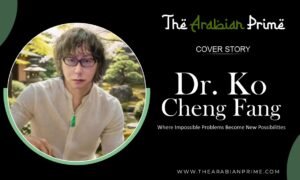
The Founder of LongServing Technology has spent his career crossing the boundaries of cybersecurity, materials science and advanced physics to turn difficult scientific problems into technologies with real-world potential.
Science advances by solving problems, but some questions resist the methods that have worked before, sitting at the edges of human understanding where one discipline may hold part of the answer and another the missing piece. For Dr. Ko Cheng Fang, these difficult spaces at the intersection of disciplines have become the most interesting places to work.
His journey began with an unrelenting pursuit of independent thinking and a desire to break through disciplinary boundaries, leading his early research into cybersecurity, where he worked on patents and began approaching complex problems through a different lens. That experience formed his research approach, giving him the confidence to follow questions across fields rather than remain within the limits of a single discipline.
His work then moved into materials science, where he pioneered breakthroughs in laboratory-grown jadeite technology, marking a significant shift in subject while maintaining the same underlying approach. He was drawn to areas where established methods left room for new possibilities and where difficult questions could be transformed into something tangible.
That same pursuit has now taken him into the development of proprietary X-photon materials, created in response to the fundamental limitations of AI computing power. The work reflects the path he has followed throughout his career, from cybersecurity and materials science to the frontier of advanced physics, while continuing to challenge the underlying problems widely regarded as “impossible.”
Today, as the Founder of LongServing Technology, Dr. Fang is dedicated to transcending the conventional boundaries of physics and transforming technologies that are ahead of their time into tangible commercial strength. With a long-term vision, he remains committed to turning breakthroughs at the frontier of science and technology into real-world impact, driving meaningful transformation across industries and contributing to the advancement of civilisation.
Where Science and Creativity Begin
The way a person learns to look at the world often begins long before a career gives that instinct a name. For some, it comes through books or classrooms. For others, it develops through the freedom to make something, take it apart, and imagine what else it could become. Dr. Fang’s early interest in art gave him that freedom, and over the years, it became closely connected with the way he approached science.
His interest in science and creativity began with an early exploration of art, particularly drawing and sculpture. These experiences taught him the freedom of creating beyond conventional boundaries.
As his career evolved, he came to realise that science is the ultimate tool for transforming creativity into reality. From his early work on cloud cybersecurity patents, to combining materials science with aesthetics to commercialise laboratory-grown jadeites, and now to developing X-photonics chips designed to push beyond the fundamental limits of physics, the relationship between science and creativity has evolved from “artistic creation” into “using technological breakthroughs to solve the bottlenecks facing civilisation.”
To him, science provides the rigorous foundation of logic, while creativity gives technology limitless possibilities for application and commercial value.
That connection between the two has gradually shaped more than his approach to invention. It has also influenced the way he understands the larger purpose of bringing scientific thinking and artistic vision together.
When Science Meets Artistic Vision
There is a particular tension between science and art: one seeks precision, structure, and proof, while the other leaves room for imagination, interpretation, and possibility. Dr. Fang sees value precisely in bringing these different qualities together in the same space.
To him, “when science meets an artistic vision” represents the perfect fusion of fundamental technological logic and the highest aspirations of aesthetics.
Science is the rigorous skeleton, providing the technological power to transcend the limits imposed by physics. Art is the dynamic soul, giving hard-core technology commercial value that goes beyond utility, along with a sense of humanity and warmth.
From challenging the boundaries of conventional crystallography and creating laboratory-grown jadeites with the aesthetics of the finest jewellery, to elevating the microscopic structures of photonic materials into architectures for photonic computing, the convergence of these two disciplines has enabled him to transcend established frameworks.
He envisions the future with the imagination of an artist, while transforming the seemingly impossible into reality with the rigour of a scientist, creating achievements of his time that combine technological depth, aesthetic influence, and transformative impact.
This way of looking at the two disciplines eventually became part of his everyday working method. When a problem reaches a point where established methods offer limited answers, he turns to both scientific knowledge and creative thinking to find a way forward.
Using Science to Give Creativity Direction
The value of creativity becomes clearer when an idea must withstand the demands of actual development, and for Dr. Fang, this is where scientific knowledge becomes essential. It gives structure to imagination, allowing an idea to move from possibility toward something that can be tested, refined, and eventually brought into use.
In his daily work, he uses scientific knowledge as a rigorous foundation of logic, while treating creative thinking as a pathway to overcoming seemingly insurmountable challenges.
When confronted with R&D bottlenecks, he does not confine himself to the limitations of established textbooks or conventional theories. For example, in developing photonic chips, he moved beyond traditional silicon-photonics thinking and drew upon innovative concepts from cross-disciplinary materials science. This led him to develop proprietary X-photon materials with wavelengths as small as 2 to 3 nanometres, and to design an entirely new architecture that enables light paths to undergo 90-degree refraction.
In management and operations, he relies on rigorous experimental data to validate ideas, while using the imagination of an artist to redefine a product’s commercial value and its path to real-world implementation.
This combination of scientific rigour in validation and creative thinking in breaking boundaries enables his team to continuously create innovations that possess both deep technological barriers and meaningful market value, even when confronting physical constraints that appear impossible to overcome.
That approach has also shaped the way he deals with problems that appear difficult within the accepted boundaries of a particular field. Sometimes, finding an answer requires changing the way the question itself is being viewed.
Value of Thinking Differently
Scientific knowledge gives researchers a framework within which to work, but every framework also carries assumptions about what can and cannot be achieved. Dr. Fang believes that artistic thinking can create the space to question those assumptions and look for possibilities that may sit outside established ways of working.
When solving scientific or professional challenges, artistic thinking plays a core role in “breaking existing frameworks” and “intuitive innovation.”
Traditional science is often constrained by established theories and disciplinary boundaries, making it easy to be restricted by preconceived notions of what is “impossible.” Artistic thinking, however, gives him the freedom of an artist facing a blank canvas, exploring cross-disciplinary solutions without limitations.
For example, when developing photonic chips and X-photon materials, he was not constrained by the limitations of traditional silicon photonics. Instead, he drew upon the imagination of artistic creation to explore new materials and optical-path architectures that had never been explored before.
Artistic thinking gives him the intuition to boldly anticipate the future, and then use science for rigorous validation, transforming abstract ideas into tangible technological breakthroughs.
This willingness to look beyond established boundaries has roots in an earlier stage of his career. One experience in particular changed the way he understood the significance of technological work and would later influence the direction he chose to take.
Experience Which Changed His Career
Every career has moments that alter its course, some through success and others through circumstances that force a person to reconsider the scale and consequence of what they are creating, and for Dr. Fang, one such moment came through his early work in cloud cybersecurity.
The milestone that has had the most profound impact on his career was the development of an early cloud cybersecurity patent and the experience of having it requisitioned.
At a time when smartphones had not yet become widespread, he had already laid the groundwork for cloud data storage and password-lock architecture with a forward-looking vision. Because the technology was so far ahead of its time, it attracted the attention of the U.S. Department of Homeland Security and was required to be kept confidential. Going through the impact of confidentiality and remaining anonymous, he gained a profound understanding of the tremendous significance and impact that technology can have on national security and the development of civilisation.
This unique experience reshaped his worldview and career direction. It taught him to remain patient, stay low-profile, and wait for the right moment, while laying the foundation for the resilience and conviction that later led him back to the laboratory to conquer laboratory-grown jadeite technology and develop proprietary X-photon materials and photonic computing architectures.
It reminded him that truly forward-looking innovation must withstand the test of time and have the courage to take responsibility for changing the world.
The significance of that experience can also be seen in the milestones that followed. His work would eventually span cybersecurity, materials science and photonic computing, with each achievement marking another stage in that journey.
Achievements Which Stand Out
Looking back at a career that has crossed several fields naturally raises the question of which accomplishments have carried the greatest weight. For Dr. Fang, three achievements currently stand out, each for a different reason and each connected to a different stage of his work.
He believes that, at present, the three most important achievements in his career are:
First, breaking through the limits of physics to develop X-photon materials and all-optical chip/memory architectures, providing a disruptive solution with 1,000-fold performance to address the global bottlenecks in AI computing power and energy consumption.
Second, successfully commercialising laboratory-grown Imperial Green jadeite, overcoming challenges in materials science and gaining recognition in leading global fashion and business magazines.
Finally, his early forward-looking development of cloud architecture and digital password-lock patents, laying the foundational groundwork for the development of modern cybersecurity and cloud computing.
Taken together, these achievements show how widely his work has travelled, from digital infrastructure to materials and advanced computing. Working across such different areas also requires a habit of learning that extends well beyond the immediate demands of a profession.
Staying Curious About What Comes Next
For Dr. Fang, learning is closely tied to curiosity. His approach to staying informed involves looking outside the boundaries of his immediate field and paying attention to ideas that may become relevant years before they become part of mainstream conversations.
For him, staying sharp and continuously learning is about maintaining curiosity and having the courage to think across different fields.
He does not limit his thinking to a single discipline or what is written in textbooks; instead, he keeps an open mind, much like the freedom of artistic creation, exploring new knowledge across different fields. He regularly reads about history, philosophy, and cutting-edge research across various areas, while using meditation to quiet his mind and reflect.
This allows him to step beyond short-term market changes and trends and look at things from a much longer-term perspective. It helps him think about what fundamental changes industries may face over the next 10 to 20 years, and which technological bottlenecks are most worth anticipating and addressing today.
Thinking that far ahead also means accepting that the path from an idea to a working technology can be difficult. In his own experience, some of the greatest challenges came from trying to develop technologies for which the necessary equipment, components and systems were difficult to find.
When the Existing Tools Fell Short
Research becomes particularly demanding when the tools available in the market have been designed around problems that already exist. Dr. Fang often found himself working on requirements that called for something different, which meant that solving the scientific problem sometimes also required solving the practical problem of how to conduct the work itself.
During the R&D and commercialisation process, his biggest challenges were that many of the technologies were simply too far ahead of their time, making them difficult for people to understand and often leading to questions about their viability, while he also struggled to find equipment and supply chains that met his requirements. Adding to the pressure were technology confidentiality restrictions in the early stages, which created tremendous pressure throughout the entire process.
Faced with these challenges, he did not choose to follow traditional methods. Instead, he found his own ways to solve the problems. When existing equipment did not meet his needs, he modified it himself. When suitable components were not available, he redesigned them himself.
Throughout this process, meditation and years of reading classical works also taught him to stay calm and not be affected by outside opinions. Many times, he had to explore and experiment on his own, so he relied on patience and resilience to keep moving forward step by step.
In the end, he chose to respond to all the doubts and challenges with real experimental results and genuine commercialisation outcomes.
That experience also reinforced the discipline required to take an unconventional idea seriously. For him, creativity can open a direction, but the idea still has to face the precision of science before it can become a real result.
Letting Creativity Lead the Way
Every scientific process reaches a point where an idea exists only as a possibility, and too many restrictions at that stage can prevent a useful thought from being explored at all. Dr. Fang therefore distinguishes between the freedom needed to imagine an idea and the discipline needed to prove it.
The key to maintaining both creativity and rigour is to use creativity to find the direction first, and then use science to validate it.
When thinking about a new idea, he approaches it like an artist creating something new, without setting limits for himself at the beginning or allowing traditional textbooks or the boundaries of a single discipline to restrict his thinking. He boldly explores whether different fields can be combined and remains open to ideas that may initially seem unlikely.
Once he begins putting an idea into practice, he returns to a scientific approach, relying on experiments, data, and repeated validation to determine whether the idea can actually work. At the same time, he uses patent strategies to gradually build and protect the technologies that have real value.
For him, it is about using the imagination of an artist to break through bottlenecks, and then using the rigour of a scientist to turn those ideas into reality. This allows him to maintain technical precision while continuously generating new ideas and creating truly groundbreaking results.
It is a method he also wants younger professionals to understand. The freedom to explore becomes more valuable when it is accompanied by the discipline to learn, test and take responsibility for the result.
What Young Professionals Can Learn
The early stages of a career often come with strong pressure to follow familiar paths. Education creates one set of boundaries, professional roles create another, and established beliefs can make certain possibilities seem settled before a person has had the opportunity to examine them independently.
For young professionals who want to combine science with creativity, Dr. Fang offers three principles.
First, “Break the boundaries between disciplines and maintain independent learning.” He advises young professionals not to allow themselves to be limited by school or a single profession. They should have the courage to explore different fields and draw inspiration from them.
Second, “Do not blindly follow existing frameworks or established beliefs.” When the public or authorities tell them that something is “impossible,” he believes they should think the other way around and ask whether there may be another path forward, then verify it themselves.
Third, “Use creativity to imagine the future, and rigour to bring innovation to reality.” During the ideation stage, he advises them to think like an artist without limitations. During execution, they should think like a scientist by emphasising data and validation, and turn breakthrough ideas into truly valuable results through practical implementation.
These principles reflect the way he has approached his own career, and they also point towards what he wants to build next. His ambitions now extend from the development of photonic computing technology to international commercialisation and new applications.
Taking Photonic Computing to the World
The next stage of Dr. Fang’s journey is focused on scale. After years of developing technologies and working through the challenges surrounding them, his attention is now turning towards global commercialisation and the wider applications he believes these technologies can support.
His current goal is to drive the global commercialisation of photonic computing technology and lead Langserin Technology toward a public listing on Wall Street.
His future plans include several areas.
- Global Industry Alliances: Through his proprietary “Strategic Equity Hedging Agreement,” he plans to collaborate with international technology giants and Middle Eastern sovereign wealth funds, while supporting traditional electronic wafer foundries in upgrading and transforming into a photonic chip foundry ecosystem.
- Global Luxury Expansion: He plans to establish flagship stores for laboratory-grown jadeites in leading global cities, including New York, Paris, Tokyo, and Dubai.
- Next-Generation Technology Disclosure: He plans to advance the development of photonic AI computing centres and robotics applications, while preparing to unveil highly disruptive breakthroughs in anti-gravity flight technology and solid-state nuclear batteries.
The range of these plans reflects the breadth of his interests, yet the underlying question remains consistent with the one that has followed his career from the beginning: how far can human imagination go when science is used to give it form?
The Legacy Beyond His Work
For Dr. Fang, the answer to that question extends beyond the success of a particular company, invention or technology. What matters to him is the possibility of leaving behind both a contribution to the field and a way of thinking that others can carry forward.
The long-term legacy he hopes to leave behind is a technological paradigm that breaks through the bottlenecks of civilisation, along with a spirit of innovation that is not bound by conventional frameworks.
On the technological level, he hopes to fundamentally address the challenges of AI computing power and energy consumption through X-photon materials and all-optical computing architectures, laying a more efficient and sustainable foundation for the computing infrastructure of the next generation of information civilisation.
On the level of spirit and ideas, he hopes to demonstrate to the world that truly great innovation often comes from the courage to cross disciplinary boundaries and think independently. Even when faced with uncertainty, scepticism, and limitations, as long as people remain committed to their convictions and dare to challenge the impossible, they can combine the power of science with the vision of art to create meaningful and lasting value for human society.