
The Ultimate Business Guide To Modern Enterprise Agentic AI Use Cases 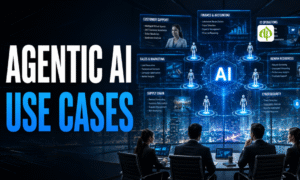
Now moving beyond basic question-and-answer routines, artificial intelligence operates with greater independence. These modern setups think ahead, set targets, use tools, then adjust when needed. Without pausing for instructions at each tiny step, they push complex sequences through to completion. Firms across regions now replace fixed programs with fluid teams of smart agents. What once required constant oversight now unfolds on its own. Peering into live workflows shows what works when rolling out such systems. Actual examples of agentic AI show factories turning tangled back-end steps into fluid lines by linking pieces once isolated.
Redefining How Customers Get Help and Manage Their Products
Out of nowhere, older systems followed strict paths – each step locked into place like train tracks. If someone asked something slightly off course, confusion followed fast. Suddenly, responses broke down completely. People ended up waiting longer, passed around until a real person stepped in. Now, smarter tools listen, adapt, then respond – not just pulling lines from manuals but shaping replies based on context. These new setups learn as they go, handling twists without freezing up.
One moment it pulls data from secure records, the next it checks past interactions to confirm who you are before making adjustments on its own. When someone wants their plan changed or needs a detailed fix in billing, the software weighs rules first, then launches internal systems to carry out steps without help. Instead of scattered actions across separate screens, everything flows together – freeing staff to handle only those rare cases where trust and care matter most.
Transforming Financial Operations and Risk Mitigation
The financial sector requires constant vigilance, rapid decision-making, and absolute adherence to strict regulatory framework parameters. Traditional automated systems in banking could flag an unusual transaction based on fixed data filters, but finalizing the investigation always demanded manual human review. Deploying modern agentic ai use cases within financial institutions introduces autonomous compliance and fraud auditing loops that operate continuously.
These deep-reasoning networks examine transaction patterns across global networks in real time, gathering context from multi-layered external databases and historical customer behaviors simultaneously. When an anomaly emerges, the agent handles the situation comprehensively by halting the transaction, initiating secondary security protocols, notifying the account owner, and generating detailed regulatory compliance documentation. Furthermore, in wealth management sectors, these tools function as proactive financial planners, evaluating shifting market conditions against an investor’s personal risk tolerance to execute strategic rebalancing decisions without unnecessary administrative delay.
Optimizing Global Supply Chains and Predictive Logistics
Logistics management involves balancing an overwhelming number of unpredictable variables, including volatile weather, shifting material prices, geopolitical labor disruptions, and sudden demand spikes. Businesses rely heavily on maintaining smooth operational flows across disconnected suppliers, warehouses, and transport routes. Utilizing agentic ai use cases inside supply chain management changes operations from a reactive posture to a highly proactive one.
Instead of waiting for a manager to spot a materials shortage, autonomous agents monitor real-time inventory levels, factory output data, and global shipping status logs concurrently. If a supplier fails to hit a milestone, the agent independently calculates the downstream impact on production schedules, evaluates alternative vendors, requests quotes, and triggers a replacement purchase order. In terms of physical distribution, these tools analyze ongoing traffic data and weather forecasts to rewrite transport routes on the fly, ensuring that shipments arrive reliably while fuel and resource consumption remain minimized.
Accelerating Enterprise Software Development and Code Governance
Modern engineering teams face intense pressure to ship reliable software at an unprecedented pace, which often leads to developer burnout and accumulating technical debt. While basic generative tools can write short snippets of isolated code, they lack the bigger-picture context necessary to manage large, enterprise-grade applications safely. Embracing agentic ai use cases inside development workflows provides engineering teams with digital collaborators that understand the entire codebase structure.
These programming agents can take a high-level feature request, break it down into an actionable step-by-step development plan, write the required code across multiple related files, and run local test suites to verify functionality. If a test fails, the agent reads the error stack trace, diagnoses the root logic error, and rewrites the implementation until it passes code quality benchmarks. Beyond writing new features, these agents continually scan repositories for hidden security vulnerabilities, automatically open pull requests with necessary patches, and update system documentation to keep technical debt fully under control.