
Building the Bridge Between Worlds – Ibrahim Hegazy: Navigating the Future of Construction Technology 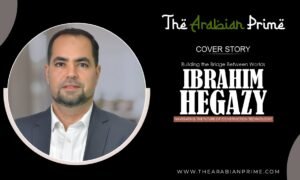
Every single day, Ibrahim Hegazy journeys on in two different realms. One, a traditional construction industry. It is a field that is defined by heavy machinery, physical materials, and immense logistical challenges. The other world where Ibrahim Hegazy operates is the high-speed sphere of modern technological advancements. In it, now, with the AI disruption at full pace, software and digital systems are evolving in the blink of an eye. Before we can keep track a novel trend meets us. But not Ibrahim Hegazy. As Green Figure Technique aka GFTs Commercial Director, he becomes the vital link connecting these two realities. His fifteen years of experience, primarily in the United Arab Emirates, allowed him to build a reputation of a leader who understands exactly what it takes to modernize the way cities are built across the Gulf.
An Evolving Perspective on Business Growth
From Sales Representative to Commercial Director, Ibrahim Hegazy’s perspective on business growth evolved over the years. In the beginning, growth was very straightforward in his mind—it meant closing more deals. More meetings, more proposals, more numbers at the end of the month. He was focused on activity and results, and honestly, that phase teaches you a lot. It builds resilience and sharpens your understanding of the market.
“But over time, my perspective changed completely.” He started to realize that real growth is not about how many deals you close—it’s about how many clients stay with you, grow with you, and trust you enough to come back again. That shift from transactional thinking to relationship thinking was a big turning point for him.
Another major change was moving from individual effort to building systems. As a sales rep, your performance depends on your own effort. But as you grow into leadership, you start asking different questions:
“How do we make success repeatable?”
“How do we build a team that can perform consistently, even without direct involvement?”
“How do we create a structure that supports growth, not just chases it?”
Ibrahim also became more selective. Earlier, he was trying to win every opportunity. Now, he focuses more on the right opportunities— “the ones where we can truly add value and build long-term partnerships.” Not every deal is worth winning if it doesn’t align with your direction, he insists.
And maybe the biggest shift is understanding that growth is not only external—it’s internal as well. Your team, your processes, your culture; if they are not growing, the business will eventually slow down, no matter how strong your sales pipeline looks.
Today, he sees growth as a combination of three things:
- Strong relationships with clients
- Clear and scalable systems
- A team that understands value, not just targets
When these are aligned, growth becomes more stable, more predictable, and much more meaningful.
A Foundation Built by Solving Problems
Moreover, Ibrahim Hegazy’s background is not just in selling products but in solving problems that have existed for decades. Holding an MBA from Geneva Business School, he combines academic discipline with a deep practical knowledge of the GCC market. He specializes in the digital tools that keep massive projects on track, such as ERP systems, document management, and cost estimation software. He knows that in a region where construction trends change overnight, a company cannot rely on old methods if it wants to stay competitive. He uses his expertise to show project managers and governmental authorities that the right software is just as important as the steel and concrete used in a foundation.
Dealing with high-level consultants and decision makers requires more than just technical knowledge; it requires the art of persuasion and strategic thinking. Ibrahim Hegazy has spent his career refining his ability to lead teams and negotiate complex deals that benefit all parties involved. He understands the specific requirements of the Middle Eastern market, where relations and trust are the most valuable currencies. He does not just offer a service; he offers a partnership based on a shared vision of a more efficient and technologically advanced industry. For him, every new project is an opportunity to prove that technology is the ultimate tool for overcoming physical limitations.
A Decade of Resilience and Defining Moments
Ibrahim’s journey within GFT spans over a decade. When he looks back, the defining moments were never the easy wins—they were always the tough situations where he and his team had to figure things out with limited resources and high expectations.
The early days of digital evangelism: He started in sales, knocking on doors, meeting engineers, and trying to explain why software could actually change how they work. At that time, the market wasn’t as ready as it is today. Many clients didn’t even believe digital tools could improve their workflow. Those early conversations taught him patience, but more importantly, they taught him how to listen.
Shifting from sales to long-term value: One major turning point was when they started working with large contractors in the GCC. Suddenly, the expectations changed. It was no longer about selling a product—it became about delivering value, ensuring adoption, and supporting teams on the ground. That’s when he realized leadership is not about closing deals, it’s about building systems that keep delivering long after the deal is done.
Becoming a construction technology partner: Another defining moment was when they shifted their mindset as a company, from selling software to becoming a construction technology partner. That shift required a completely different approach: a deeper understanding of client challenges, structured support, and long-term commitment. Those experiences shaped his leadership style into something very simple: stay close to the market, stay honest with clients, and build a team that understands value—not just sales.
The Differentiator: Partnership over Vendor Status
The GCC construction market is highly competitive and fast-moving. The biggest difference is that they don’t position themselves as a software vendor—they position themselves as a partner. Many companies sell tools. But construction companies don’t really need more tools—they need clarity, efficiency, and control.
The Three Pillars of GFT Excellence
At GFT, they focus on three things:
- The right technology
- Proper training
- Continuous support
He and his team don’t just deliver a license and leave. They make sure the team knows how to use it, how to apply it in real projects, and how to get measurable results from it. Also, they are very specialized. They work only in construction technology. That focus gives them a deeper understanding of real challenges—whether it’s quantity takeoff, project tracking, or site documentation.
Regional expertise and market solving: Another key differentiator is their regional experience. They’ve been in this market for years, across the UAE, KSA, and beyond. They understand how projects run here, the pressure teams face, and the gaps that technology needs to solve. That combination—focus, experience, and support—is what really sets them apart.
The transition from digitization to intelligence: With his deep expertise in software and SaaS solutions for construction, he can see digital transformation reshaping the industry in the coming times. In fact, the next five years will be very interesting for construction. We are moving from digitization to intelligence. Before, the goal was to move from paper to digital. Today, the goal is to use that digital data to make better decisions.
Three Main Shifts in the Future of Construction
He sees three main shifts:
~First, automation in quantity and cost estimation. Tools will reduce manual work significantly and improve accuracy. This is already happening, especially with AI-powered solutions.
~Second, integration. Instead of using disconnected systems, companies will move toward connected platforms where data flows between design, estimation, and execution.
~Third, real-time visibility. Site data, progress, and issues will be captured and analyzed continuously, not reported weeks later.
The companies that adopt these changes early will have a major advantage—not just in efficiency, but in winning projects.
Quantity Takeoff: The Impact of Immediate Wins
Although his work involves Quantity Takeoff, Reality Capture, and BIM tools, if we talk about immediate impact—the kind that a client can feel within weeks, not months—then quantity takeoff tools come first. The reason is simple: they directly affect time, accuracy, and money. In many companies, quantity takeoff is still done using a mix of CAD and Excel. It works, but it’s slow, and it leaves room for human error.
Precision in tendering and pricing: When a team shifts to a proper takeoff solution, the difference is immediate. They can measure faster, standardize their work, and reduce mistakes. That translates directly into more accurate BOQs and better pricing. And in a competitive market, even small improvements in accuracy can make a big difference in winning or losing a project.
Reality capture and strategic BIM transformation: Reality capture comes next in terms of impact, but in a different way. It doesn’t immediately affect tendering or pricing, but it adds a new level of control during execution. When project teams can ‘go back’ to the site digitally, track progress visually, and verify work without being physically present, it improves coordination and reduces disputes. The value becomes very clear once the project is running. BIM tools are extremely powerful, but their impact usually takes longer to realize. They require proper implementation, structured models, and alignment between teams. When done right, BIM can transform how projects are designed and delivered—but it’s more of a strategic shift than an immediate one.
The Roadmap for Results
So in simple terms:
- Quantity takeoff delivers quick wins
- Reality capture improves visibility and control during execution
- BIM creates long-term transformation
Each one is important, but if a client is looking for something that shows results quickly, quantity takeoff is usually the starting point.
The Architecture of Trust in the GCC
Ibrahim Hegazy has built strong relationships across the GCC. So he learned that trust is built in small moments, not big promises. For him, it comes down to three things: First, honesty. If something will not work for a client, he says it clearly. Even if it means losing a deal. Second, consistency. You can’t be present only when you want to sell. You have to be there after the sale—during implementation, during challenges, and even when things go wrong. Third, understanding the client’s business. Not just their request, but their real problem. Sometimes what a client asks for is not what they actually need. Over time, when clients see that he is genuinely trying to help—not just sell—they start trusting him. And that trust turns into long-term partnerships.
Leadership in High-Pressure Environments
Leadership in sales-driven environments can be demanding, because to him, sales is a high-pressure environment without doubt. He believes motivation is not just about targets—it’s about clarity and support. People perform better when they understand what is expected of them and how to achieve it. So they focus a lot on structure—clear KPIs, clear processes, and continuous follow-up. At the same time, he stays close to the team. He doesn’t believe in managing from a distance. He likes to be involved in deals, discussions, and even challenges they face. Also, he tries to create a culture where results are recognized, but effort is also appreciated. Because not every effort leads to immediate success, especially in their market. And one important thing—discipline. Motivation can go up and down, but discipline keeps performance consistent.
Overcoming Resistance through Demonstration
The construction sector is traditionally slow in adopting new technologies. Resistance is normal, especially in this industry. Most professionals are already under pressure, so trying something new feels like a risk. The best way to overcome that is not by convincing—it’s by demonstrating. He and his team focus on showing real use cases, real results, and practical examples. When clients see how a tool works in a situation similar to theirs, the resistance starts to decrease. Also, they don’t push full transformation from day one. They start small. A pilot project, a small team, a limited scope. Once they see results, adoption becomes easier. And most importantly, they support them during the transition. Because the real challenge is not buying the tool—it’s using it effectively.
Market Insight and Practical Relevance
Ibrahim Hegazy stays ahead of emerging trends in ConTech and ensures his solutions remain relevant, as he found out that staying close to the market is the key. He spends a lot of time talking to clients, understanding their challenges, and seeing how projects are evolving. That gives real insight—not just theoretical trends. They also work closely with their partners globally, which helps them understand what is coming next. But the most important thing is filtering. Not every new technology is useful. He focuses on solutions that solve real problems—not just impressive features. Relevance comes from practicality.
Trust as the Ultimate Currency
Being recognized as one of the most trusted leaders is significant. Trust, for Ibrahim Hegazy, is very simple. It means that when a client or a team member deals with him, they feel confident that he will do what he said he would do. No surprises. No hidden details. It’s about transparency, reliability, and accountability. In his industry, trust is more valuable than any contract. Because once it is built, business becomes much easier. And once it is lost, it’s very difficult to recover.
The Foundation of Listening and Persistence
Looking back, two lessons stayed with Ibrahim Hegazy from day one. The first is: listen more than you talk. In the beginning, he thought selling meant explaining everything. Over time, he realized the real skill is understanding the client before offering anything. The second lesson is: follow up. Many deals are not lost because of price or competition—they are lost because of a lack of follow-up. Consistency in communication makes a big difference. And one more thing—rejection is part of the process. Early in his career, he learned not to take it personally. Every ‘no’ is just part of reaching the right ‘yes.’
The Roadmap for Future ConTech Professionals
Ibrahim’s advice to aspiring business development professionals aiming to build a successful career in the construction technology space is simple: First, understand the industry before the technology. Construction is complex, and every project is different. If you don’t understand how the industry works, you won’t be able to position any solution properly. Second, be patient. This is not a fast-moving sales environment. Deals take time, relationships take time, and trust takes time. Third, focus on value, not features. Clients don’t care about what the software can do—they care about what it will solve for them. And finally, keep learning. Technology is evolving fast, and the only way to stay relevant is to keep improving your knowledge. If you combine industry understanding, consistency, and genuine interest in helping clients, you will build a strong and successful career.