
Dr. Mohammad Al Awadhi: Reimagining Healthcare Through Intelligent Transformation
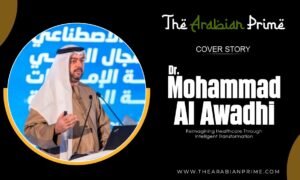 Advancing intelligent, secure, and connected healthcare ecosystems through responsible innovation, resilient leadership, and a relentless focus on measurable public value.
A healthcare system can have advanced technology, connected platforms, and ambitious digital plans, yet the real test begins when those systems must work for patients, professionals, and the communities they serve. Making that connection requires more than technical knowledge. It requires an understanding of how governments function, how businesses manage risk, how teams respond to change, and how innovation becomes useful in everyday life. Dr. Mohammad Al Awadhi’s career has been determined by precisely that understanding.
His journey began at Dubai e-Government, where he worked as a web developer developing government portals. It was an early introduction to the practical value of technology and how it could improve public services. His next roles at Dubai Silicon Oasis Authority and Dubai Islamic Bank gradually moved him into wider responsibilities, giving him experience in customer relations, risk management, process improvement, and team leadership.
Then came du, a chapter that changed the scale of his work. Progressing through strategic and business development roles, he became Senior Director of Business Development for Smart Cities. During this period, he contributed to winning the Smart Dubai Platform bid and helped secure Dubai’s first Smart District project. The experience taught him how to turn emerging technologies into practical solutions, align innovation with business and government priorities, build effective partnerships, and bring diverse stakeholders together around shared objectives.
His education continued alongside his career, with an MSc in International Business, a Doctorate in Business Administration, and the Harvard Leadership Accelerators programme strengthening his strategic thinking and commitment to continuous learning.
Today, as Director of IT & Chief AI Officer at the UAE Ministry of Health and Prevention, he brings these chapters together through a collaborative, people-centred, and outcome-driven leadership approach. Dr. Mohammad’s focus is on establishing a clear vision, empowering teams, encouraging innovation, and ensuring technology investments deliver measurable and sustainable value to the organisation and the wider community.
From Technology as a Tool to Technology as Lasting Value
Technology has become inseparable from the way modern organisations operate, but its presence alone says little about whether it is creating meaningful value. The more important question is what changes when technology becomes part of the way a business thinks, serves, and grows.
Earlier in his career, technology was largely evaluated through its ability to improve efficiency or generate revenue. Over time, Dr. Mohammad’s understanding evolved towards a broader view in which technology becomes valuable when it redesigns experiences, strengthens decision-making, and builds capabilities that continue to serve an organisation over the long term.
He places importance on ensuring that every digital investment responds to a clearly defined need, strengthens organisational performance, and creates measurable benefits for users. This requires technology to be discussed in the language of outcomes, including service quality, speed, resilience, trust, and sustainability, rather than being assessed only through technical specifications or implementation milestones.
His approach also recognises that platforms, data, talent, governance, and operating models function as an interconnected system. Treating technology as a standalone function can limit its potential, while viewing it as part of the wider organisational structure allows businesses to create more consistent and sustainable value. Such an approach also changes the expectations placed on leaders, particularly at a time when organisational influence is increasingly measured through the quality and longevity of the outcomes they create.
Defining Iconic Leadership in 2026
At a time when leaders are expected to balance growth, innovation, resilience, and social responsibility, Dr. Mohammad considers iconic leadership to be rooted in relevance, integrity, and lasting impact rather than visibility or professional titles.
He identifies the need for leaders to remain ambitious enough to pursue growth and innovation while maintaining the discipline required to manage risk and protect trust. Resilience is equally important, particularly as organisations navigate uncertainty, changing expectations, and rapidly evolving technologies. Alongside resilience, humility and continuous learning remain essential qualities for leaders operating in complex environments.
For Dr. Mohammad, organisational success must also create broader be connected with wider social value. Influential leaders create purpose, give teams the space to contribute, and make decisions that remain responsible under pressure. Their strongest legacy is therefore measured through the people, systems, and institutions they strengthen over time, rather than through a single achievement or moment of recognition.
This understanding of leadership becomes especially relevant when organisations undertake transformation, where ambition alone must be supported by structure, accountability, and the ability to translate strategic intent into sustainable operational change.
Making Digital Transformation Sustainable
As organisations move from treating digital transformation as a strategic ambition to recognising it as an operational necessity, the real challenge begins after implementation, when new systems must become part of everyday operations and demonstrate measurable value. Technology alone cannot determine the success of a transformation programme; its impact depends on the alignment between people, processes, infrastructure, governance, and the needs the initiative was designed to address.
Dr. Mohammad’s approach begins with the belief that meaningful transformation must emerge from a real operational or human need rather than a preferred technology. Clear sponsorship, measurable objectives, strong governance, capable teams, and active stakeholder participation form the foundation of sustainable progress.
He also places importance on architecture, cybersecurity, data quality, and interoperability being addressed from the beginning, while change management ensures that employees understand why the transformation matters and how their roles may evolve. Sustainable programmes are designed around adoption, scalability, and continuous improvement, with performance assessed through service indicators and user feedback.
Transformation creates lasting value when it becomes part of the organisation’s DNA. Transformation should become part of the everyday operating model rather than remaining a temporary project. As emerging technologies increasingly become part of these transformation programmes, the same discipline must guide their adoption, particularly in the case of artificial intelligence, where opportunity and responsibility must develop together.
Approaching Artificial Intelligence Responsibly
Artificial intelligence is rapidly reforming business models, decision-making, and customer experiences, creating opportunities for organisations to improve performance while introducing new questions around accountability, security, transparency, and trust. Dr. Mohammad advocates an approach that combines optimism with discipline, ensuring that experimentation remains connected to clear organisational objectives.
He recommends beginning with high-value use cases where the problem, expected outcome, and accountability are clearly defined. Reliable and protected data must form the foundation of AI adoption, while ethical and regulatory boundaries need to be considered from the outset.
Human oversight remains essential, particularly when AI-supported decisions affect people, health, rights, or access to services. Dr. Mohammad also identifies transparency, model monitoring, cybersecurity controls, and processes for detecting bias or unintended consequences as necessary safeguards.
He considers AI most effective when it supports professional judgement rather than obscuring it. When governance develops alongside experimentation, organisations can pursue innovation with greater confidence while ensuring that AI remains secure, explainable, and aligned with strategic priorities. However, responsible innovation depends on more than the governance of intelligent systems; it also requires a wider culture of security across the organisation.
Building a Cybersecurity Culture
Cybersecurity has increasingly become a central component of organisational resilience, extending far beyond the responsibilities of an IT department. From a leadership perspective, Dr. Mohammad places emphasis on treating security as a shared organisational value, supported by clear responsibilities across every level of the institution.
A strong cybersecurity culture begins in the boardroom but must extend to frontline teams through regular awareness programmes, practical simulations, and simple reporting channels. Security must also be embedded into architecture, procurement, software development, cloud adoption, and daily operations rather than being treated as a final technical checkpoint.
He points to approaches such as Zero Trust, identity and access management, continuous monitoring, and risk-based assessments as important safeguards. However, technology and controls alone cannot establish a secure culture. Employees must understand the purpose behind security measures and feel confident reporting concerns without hesitation.
Leadership must model secure behaviour, invest consistently, and connect cybersecurity with service continuity and public trust. When employees recognise that security protects both organisational operations and the people who depend on them, it becomes part of everyday decision-making. This connection between security, resilience, and trust is particularly important in sectors such as healthcare, where innovation must deliver public value while protecting sensitive information and essential services.
Connecting Innovation With Public Value
Recognition in innovation and leadership reflects Dr. Mohammad’s work across digital transformation and healthcare innovation, but the principle guiding his initiatives remains closely connected to measurable public value. He places priority on the challenges an initiative addresses, the experience it improves, and its ability to scale sustainably.
Within healthcare transformation, this has involved advancing connected digital services, stronger interoperability, intelligent analytics, automation, cloud capabilities, and secure infrastructure. Each area contributes to a wider objective of improving services while strengthening resilience and institutional capability.
He considers recognition, including the IDC CISO Excellence Award 2026, a reflection of collective work rather than an individual achievement. Such outcomes are supported by multidisciplinary teams that combine technical expertise, operational understanding, governance, and a commitment to service improvement.
Clear governance, security by design, performance indicators, and stakeholder feedback have remained instrumental in creating measurable impact. Awards provide encouragement, yet the more meaningful measure lies in improved services, better decisions, and greater confidence among users. In healthcare, these outcomes depend increasingly on how effectively technology connects institutions, professionals, data, and patients across the wider care journey.
Creating a Connected Healthcare Ecosystem
Healthcare organisations across the UAE and the wider region are undergoing significant technological change, with digital health platforms, data-driven services, artificial intelligence, and connected infrastructure reshaping the delivery of care. Dr. Mohammad identifies the greatest opportunity in building a connected health ecosystem where trusted data follows the care journey and supports timely decisions.
Interoperability can reduce fragmentation across providers and government entities, allowing information to move more effectively between systems and supporting a more coordinated experience for patients and professionals. AI and advanced analytics can strengthen prevention, forecasting, clinical support, and resource planning, while digital platforms can make services more accessible and personalised.
He also highlights the role of cloud technologies and automation in improving agility, while emphasising that these capabilities must be supported by privacy, cybersecurity, and sound governance. Across the region, technology has the potential to shift healthcare from reactive service delivery towards more proactive, preventive, and population-focused models.
The value of a connected ecosystem lies in its ability to bring together data, infrastructure, professionals, institutions, and patients around a shared objective of better health outcomes. The success of such an ecosystem, however, depends partly on the environment in which innovation is developed, tested, supported, and scaled, an area where the UAE has established considerable advantages.
The UAE’s Innovation Ecosystem
The UAE has established a distinctive position as a global hub for innovation and digital transformation through the combination of ambitious national vision, decisive leadership, modern infrastructure, and a strong appetite for implementation. Dr. Mohammad identifies this combination as one of the country’s greatest advantages in turning ambitious ideas into practical outcomes.
Government entities, businesses, technology partners, and academic institutions are encouraged to collaborate, test ideas, and move from concept to delivery with speed. The country’s ability to attract diverse talent further strengthens its capacity to introduce emerging technologies into meaningful national priorities.
Clear digital strategies, advanced connectivity, and a culture that welcomes change create an environment where innovation can scale. For Dr. Mohammad, the strength of the UAE ecosystem lies in the relationship between experimentation and execution. Ambition is supported by partnership, implementation, and a consistent focus on future readiness.
Yet, even the most advanced ecosystem can achieve meaningful progress only when transformation remains connected to the people it is intended to serve. As technology becomes more deeply integrated into organisational and public systems, human experience must continue to guide the direction of change.
Keeping People at the Centre
As organisations become increasingly dependent on technology, ensuring that people remain central to transformation becomes a defining leadership responsibility. Dr. Mohammad’s approach begins with understanding the experiences of employees, customers, patients, and partners before selecting the systems or solutions intended to serve them.
Technology choices, therefore, must respond to human needs rather than dictate them. People should be involved in design, testing, and improvement, while receiving the skills, confidence, and support required to operate effectively in changing environments.
He places importance on communication that explains both what is changing and why the change matters. Adoption, satisfaction, accessibility, and trust should be measured alongside technical performance, as these indicators reveal whether a transformation is genuinely improving experiences.
When teams are empowered to challenge assumptions and contribute ideas, technology becomes a practical tool for strengthening human capability. The objective is to ensure that automation supports purpose, improves access, and enables people to work with greater confidence and effectiveness. Achieving this at scale also requires collaboration among the different institutions and sectors that shape the systems through which people receive services.
Making Cross-Sector Collaboration Effective
Collaboration between government, private-sector organisations, technology providers, academia, and other stakeholders has become increasingly important in addressing complex challenges. Dr. Mohammad considers effective collaboration to begin with a shared outcome and a clear understanding of what each partner contributes.
Government can provide policy direction, public-value priorities, and regulatory clarity. Industry contributes technology, delivery capabilities, and market insight, while academia brings research, independent expertise, and opportunities for deeper exploration. Successful partnerships require governance, defined decision rights, data-sharing principles, security expectations, and measurable responsibilities from the outset.
He also places importance on regular forums for honest communication and joint problem-solving. Collaboration becomes stronger when it extends beyond contractual delivery and develops into a learning relationship in which knowledge, risks, and successes are shared.
The most productive partnerships are built around mutual accountability, openness, and a shared commitment to outcomes rather than isolated organisational interests. Such relationships will become increasingly important as healthcare and other essential sectors move towards more intelligent, connected, and integrated operating models.
The Next Chapter
Looking towards the future, Dr. Mohammad’s professional focus remains centred on advancing intelligent, secure, and connected healthcare ecosystems that anticipate needs and support better decisions. He hopes to contribute further to the responsible use of artificial intelligence, predictive analytics, cloud platforms, and interoperable data while ensuring that trust and human experience remain fundamental.
Developing the next generation of technology leaders is also an important part of this vision. He places value on creating opportunities for emerging professionals to learn, experiment, and lead with confidence, recognising that institutional progress depends on the strength of the people who carry it forward.
The legacy he seeks to contribute is an enduring culture of innovation, one that strengthens institutional capability, enables collaboration, and consistently translates technology into better services and outcomes for society. For Dr. Mohammad, the future of transformation rests in the ability to combine intelligence with responsibility, innovation with trust, and technological progress with a clear understanding of human needs.