Dr. Ramesh Bairi: Building Digital Wellness that Serves Human Life
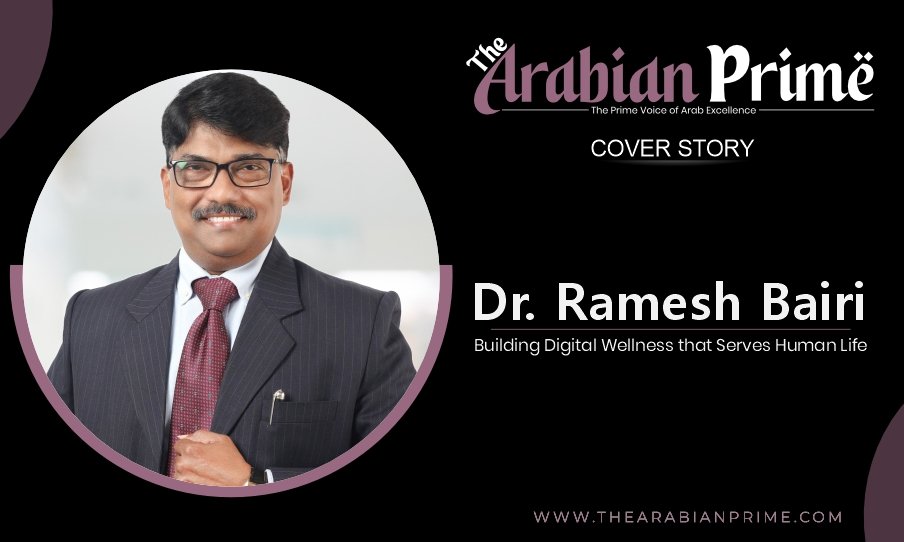
Integrating technology and empathy to build digital wellness systems that actively improve how people live, recover, and stay balanced!
Every long career leaves a person with patterns they recognise, habits they refine, and questions that slowly grow louder with time. After years of building systems, expanding markets, and guiding teams across continents, one question began to matter more than growth charts or scale. How can technology actively improve the quality of human life, not just its speed?
This question sits at the heart of Dr. Ramesh Bairi’s journey. Formed by more than 3 decades of work across consumer electronics, retail, and distribution, his leadership grew through lived experience in the Middle East, Europe, Asia, and fast rising markets. Each region added perspective, teaching him how people live, choose, and trust brands in different ways. Over time, technology became familiar territory, yet its role in daily life started to feel incomplete.
The shift towards digital health and wellness came with intention and clarity. Ramesh saw that innovation often chased speed and ease, while emotional balance, mental clarity, and inner health waited on the sidelines. He believed technology could carry deeper responsibility, one that supports human life with care and understanding rather than distraction.
This belief led him to lead ROTAI, a space where neuroscience, wellness, and emotional intelligence meet with purpose. The vision remained simple and grounded. Technology should elevate everyday living, encourage awareness, and support people in feeling centred within their own lives.
Ramesh leads with empathy formed by experience and patience earned through time. His work demonstrates a confidence that real progress begins when leadership listens to human needs, and when innovation chooses meaning alongside momentum.
Leadership Forged Across Complexity and Scale
Years of leadership across industries and geographies tend to leave clear imprints on how decisions are made and values are set. In Ramesh’s case, his approach was shaped not by linear growth stories but by environments where uncertainty, scale, and cultural diversity were constant companions.
His leadership philosophy was forged in complexity, managing diverse markets, volatile economies, and fast-evolving consumer expectations. One defining experience involved scaling businesses from early-stage operations into large, multi-country enterprises. That process, he reflects, teaches humility. It forces leaders to listen deeply, adapt quickly, and think systemically.
Another formative influence came from working closely with global principals, retailers, and digital platforms. Those interactions revealed that sustainable success does not come from aggressive expansion alone, but from alignment between product relevance, cultural context, and long-term trust.
At ROTAI, these lessons take shape through what he calls “conscious innovation.” Innovation, for him, must be intentional. Every decision, technological, operational, or strategic, is evaluated not only for profitability but for its impact on human experience. Leadership today, in his view, is not about control; it is about “orchestration, bringing people, purpose, and platforms into harmony.”
Technology’s Role Beyond Comfort and Convenience
As health, wellness, and technology increasingly overlap, the question shifts from what technology can do to how it should exist in human lives. Ramesh approaches this intersection with a broader lens, viewing technology not merely as a tool but as a lived environment.
Technology, he observes, has moved from being a tool to becoming an environment. The real opportunity lies in shifting from reactive health to proactive well-being. Beyond comfort, technology can help regulate stress, improve sleep quality, enhance cognitive balance, and restore emotional resilience.
At its best, wellness technology should function quietly, supporting the nervous system, adapting to individual needs, and responding to human rhythms rather than imposing mechanical ones. When technology understands the body and respects the mind, it becomes restorative rather than intrusive.
Projecting forward, he believes the future of digital wellness is not about more screens or data, but about intelligent systems that help people reconnect with themselves, their health, and their sense of balance.
Building Products That Feel Like Companions
Innovation in wellness often fails when technology advances faster than emotional relevance. For Ramesh, ensuring ROTAI’s products remain meaningful requires starting from a different place altogether.
The process begins with the human story, not the feature list. While technology evolves rapidly, emotional needs remain remarkably consistent: relief from stress, better rest, physical recovery, and mental clarity.
ROTAI’s innovation process integrates neuroscience, ergonomic science, AI-driven personalization, and human-centered design. Equally important, however, is emotional resonance. A ROTAI experience, he believes, should feel intuitive, calming, and deeply personal.
Significant investment is placed in listening, customer feedback, behavioural insights, and cross-cultural perspectives. This approach ensures that products do not feel like machines, but companions that adapt, learn, and support the user over time. Innovation that lacks emotional intelligence, he notes plainly, rarely earns long-term loyalty.
Principles that Guide Decisions Under Pressure
Uncertainty is not an exception in leadership; it is a constant. Ramesh relies on a small set of principles to navigate disruption without reacting impulsively.
Three principles guide him: clarity of purpose, optionality, and disciplined patience. Clarity of purpose anchors decisions during uncertainty. Optionality ensures strategies are never built around a single future scenario. Disciplined patience reinforces the idea that not every opportunity requires immediate action.
During periods of disruption, he stresses the importance of separating noise from signal. Strategy, in his view, is not prediction—it is preparedness. At ROTAI, resilience is built by investing in capabilities, partnerships, and people who can adapt faster than change itself.
Empathy as a Strategic Design Lens
Empathy is often discussed in leadership, but less often operationalized. At ROTAI, Ramesh treats it as a practical framework rather than an abstract value.
Empathy shapes everything the organization does. From product ergonomics to after-sales support, design decisions are rooted in real human moments, fatigue after long workdays, recovery after illness, and the need for quiet in an overstimulated world.
Customer experience at ROTAI is not viewed as transactional, but relational. Each interaction is treated as a trust exchange. Empathy enables the team to anticipate needs rather than merely respond to complaints. In wellness, he maintains, empathy is not soft; it is strategic.
MENA as a Launchpad for Global Vision
Regional growth often reveals whether a brand can scale without losing its essence. For ROTAI, its presence in the MENA region played a defining role in shaping its global outlook.
Strategic partnerships with premium retailers, hospitality groups, real estate developers, and wellness-focused institutions across the region proved pivotal. These collaborations reinforced the belief that wellness technology belongs not only in homes but across lifestyles, luxury residences, corporate spaces, healthcare environments, and hospitality ecosystems.
He views the MENA region as uniquely positioned to emerge as a global wellness hub. Its openness to innovation, combined with a cultural emphasis on hospitality and well-being, continues to influence ROTAI’s ambition to become a globally respected wellness technology brand rooted in regional excellence.
Ethics and AI in Personalization
As AI reshapes personalization in wellness, ethical boundaries become as important as technological capability. Ramesh approaches this balance with caution and intent.
AI, he emphasizes, must enhance agency, not replace it. ROTAI’s ethical framework prioritizes transparency, data privacy, and human override. Personalization should empower users with choice, not foster dependency.
AI systems are designed to be assistive rather than prescriptive, supporting well-being while respecting individuality. Wellness is deeply personal, and technology, in his view, must honor that intimacy responsibly.
Speed, Structure, and Sustainability
Digital transformation often tempts organizations to prioritize speed over stability. Ramesh remains deliberate about avoiding that trap.Speed without structure, he warns, creates fragility. At ROTAI, transformation follows a phased, metrics-driven approach. Processes are modernized while governance, supply chain integrity, and financial discipline are strengthened in parallel.
Sustainability is embedded rather than added later. From product longevity to ESG-aligned practices, long-term value is treated as the ultimate performance metric. Growth that compromises resilience, he states plainly, is not progress.
Global Markets and a Post-Digital Mindset
Exposure to diverse global markets has shaped how Ramesh understands wellness in a post-digital era. While needs may be universal, expression is not.Global experience taught him that wellness transcends borders, but its expression remains cultural. Today’s consumers seek meaning, not just connectivity. Technology must adapt to local lifestyles while maintaining global standards.
In his view, the future belongs to brands that are globally intelligent but locally empathetic.
Visionary Leadership Versus Management
The distinction between capable management and visionary leadership becomes more pronounced in digital health. Ramesh draws that line clearly.Visionary leaders think in systems rather than silos. They invest in learning, cultivate curiosity, and remain emotionally grounded amid complexity. Managers focus on optimizing the present. Visionaries design the future while staying accountable for today.
The difference, he believes, comes down to courage, the courage to question assumptions, lead with humanity, and build for impact beyond metrics.
Defining Legacy in Digital Health
Looking ahead, Ramesh defines legacy through significance rather than scale. Growth alone does not qualify as impact.Legacy, for him, is not scale alone; it is significant. If ROTAI contributes to a world where technology restores balance rather than depletes it, that represents meaningful success.
On a personal level, his aspiration is to demonstrate that leadership can be both commercially astute and deeply human. As digital health evolves, he hopes it does so with wisdom, ethics, and empathy at its core.
Trending Now