
Iran Eases Korean Appliance Import Curbs Through Border Trade
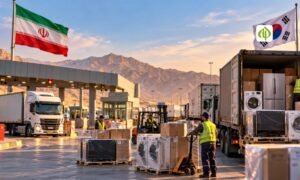
Iran has expanded limited imports of South Korean home appliances through its border trade system, allowing products from companies such as Samsung and LG to enter through border carriers, seafarers, and cooperatives. The change does not reopen normal commercial imports of major Korean appliances.
Iran’s Trade Promotion Organization clarified the policy after reports suggested that restrictions on South Korean brands had been lifted more broadly. The latest measure instead creates a limited exception linked to border trade.
The policy change comes five years after restrictions were imposed on products from major South Korean appliance manufacturers. Under the revised arrangement, eligible goods can enter through specific border-trade channels, while conventional commercial imports remain prohibited.
The change is particularly relevant to western border regions, where informal cross-border trade is an important source of income. The practice known as kolbari, in which goods are carried across borders, has developed amid limited employment opportunities in some areas.
The new arrangement could allow border traders and cooperatives to handle a wider range of imported goods. However, Iranian officials have not described the measure as a broader change in economic or social policy.
The decision also comes as Iran’s domestic home-appliance industry faces weaker production figures. According to the Statistical Center of Iran figures cited by Iran International, refrigerator production fell 25% year-on-year, television production declined 36% and washing-machine output dropped 42%.
Home-appliance prices were reported to have risen 117% in August from a year earlier. Iranian manufacturers also continue to import components, with the sector requiring roughly $1.2 billion of parts annually across four major appliance categories.
The restrictions have limited the availability of major international brands through authorised commercial channels. Access to official sales, spare parts and after-sales services can therefore differ from the informal routes through which imported products continue to reach consumers.
The immediate change leaves Iran’s broader import restrictions largely in place. South Korean appliances can gain greater access through border mechanisms, but ordinary commercial imports remain restricted.
The development will leave attention on whether the expanded border exception remains limited to specific trade channels or leads to further changes in Iran’s appliance import policy.
For consumers and businesses, the key distinction is between the newly expanded border trade allowance and a full reopening of commercial imports. The latest announcement does not amount to the latter.