
Leading Through Trust in the Age of AI
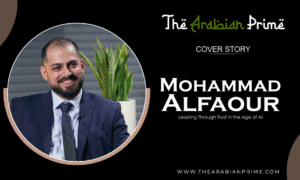
Mohammad Alfaour, Managing Director, MENA | Egnyte
Every career has moments that quietly redefine who you become as a leader. For Mohammad Alfaour, PMP, Managing Director of MENA at Egnyte – those moments came long before artificial intelligence became part of the conversation. They happened on remote construction sites. Recognized as one of the region’s most visionary Construction Technology leaders to watch in 2026, he is helping organizations build trusted information foundations for the next era of AI and digital transformation.
Leadership and the Human Element of Technology
His professional journey spans more than 15 years of deep experience, linking construction engineering and project management directly with enterprise technology and scalable digital transformation. His overarching leadership philosophy focuses on helping complex organizations leverage trusted information and responsible artificial intelligence to empower their workforces, improve strategic decision-making, and drive meaningful business outcomes.
Mohammad roots his professional leadership style in real experiences that quietly redefined who he became as a leader long before artificial intelligence entered the conversation. Early in his career as a site engineer, he experienced two near misses that left a lasting impression on his perspective. In one instance, he narrowly avoided losing a finger while helping a subcontractor reposition a heavy manhole cover. In another event, a crane lifting a bucket of rebar experienced a sudden weld failure on its lifting attachment, sending the heavy load crashing to the ground only a short distance from where he stood during a routine safety walk. Those experiences fundamentally shaped the way he views leadership, technology, and responsibility – teaching him that behind every drawing, document, workflow, and technology platform is a real person.
Empowering Workforce Mobility on the Modern Jobsite
His team helps organizations replace fragmented legacy file systems with secure collaboration platforms that connect boardrooms with field operations, enabling better access to trusted information across the asset lifecycle. By focusing on practical application rather than theoretical IT upgrades, they help teams integrate their active project and operational data with intelligent tools that safeguard their critical information. This method allows major firms to remain completely agile in a demanding economic landscape where hybrid work and strict data compliance dictate project profitability and scalability.
Driving Responsible Intelligence and Long-Term Value
Together he and his team continue to guide regional enterprises through the complex process of adopting automated intelligence, keeping a close eye on data integrity and risk management. Rather than chasing technology for its own sake, he focuses on helping organizations build trusted information foundations that enable responsible AI adoption. His approach is to balance rapid technological adoption with strong internal governance, giving business leaders the clarity they need to make high-stakes investments with confidence.
“Technology May Be What We Do. People Are Why We Do It.”
Mohammad recognizes that every individual relies on good information, effective communication, and sound executive decisions to do their job safely and successfully. This human perspective ultimately led him away from hands-on construction and engineering into digital transformation and enterprise technology. Although the target industries evolved and the technology advanced, his core mission remained exactly the same, which is to help people make better decisions through trusted information. These experiences reinforced that technology is never impressive simply because it’s advanced. Its real value lies in helping people work more safely, more confidently, and ultimately return home to their families at the end of the day.
Transitioning from Digitization to Enterprise Intelligence
Together he and his team observe a fundamental shift in how modern organizations think about technology, especially as construction undergoes one of its biggest technological transformations. A few years ago, the regional conversation largely focused on simple digitization, whereas today it centers on intelligence. Across the MENA region, organizations are moving beyond asking what AI can do and are instead asking how they can deploy it responsibly, securely, and at scale. They view this change as an important evolution for the industry. Recent research from McKinsey shows that more than 80% of organizations across the GCC are now using AI in some capacity, reflecting a rapid shift from basic experimentation toward enterprise-wide adoption.
What is changing now is not the pace of adoption, but the focus on corporate governance, trusted information, and measurable business outcomes. In many ways, AI has become a powerful catalyst for organizations to finally address longstanding challenges around data quality, governance, and information management. They believe the Middle East is uniquely positioned to lead this transformation. National initiatives such as Saudi Vision 2030 and the UAE’s continued investment in AI and digital infrastructure create an environment where organizations can completely rethink traditional ways of working instead of simply digitizing existing processes. Construction sits at the center of that opportunity because every project generates enormous volumes of information across owners, consultants, contractors, suppliers, and operators. The organizations that can securely connect that information, govern it effectively, and transform it into actionable intelligence will secure a significant competitive advantage. Having the opportunity to contribute to that journey across the Middle East and North Africa remains one of the most rewarding aspects of the work he and his team do across the region.
Egnyte as an Enabler of Operational Excellence
At Egnyte, Mohammad and his team help organizations securely collaborate, govern enterprise knowledge, and unlock intelligence across content and connected data sources, wherever that information resides. This trusted foundation allows regional organizations to confidently leverage AI tools without compromising their corporate governance, internal security, or legal compliance. Whether supporting a semi-government real estate developer managing complex capital projects or a Tier-1 contractor coordinating thousands of project documents across multiple stakeholders, his objective remains remarkably similar, which is to enable better decisions through trusted information. For him, this secure approach is where the future of responsible enterprise AI truly begins.
Applying Universal Lessons Across Diverse Sectors
Throughout his extensive career spanning development, construction, healthcare, finance, education, hospitality, and retail, Mohammad has developed a leadership philosophy grounded in trust, collaboration, and continuous improvement. Working across these distinct industries taught him that while technology changes rapidly, basic human needs do not change at all. Every organization, regardless of its specific market, wants greater operational clarity, stronger team collaboration, better daily decision-making, and ultimately improved business outcomes and financial results. The visible challenges often look different on the surface, but underneath the corporate exterior, they remain surprisingly consistent.
This realization reinforced his strong belief that effective leadership must always begin by listening to the people closest to the work. He notes that some of the best operational ideas came directly from the frontlines. He has learned just as much from those directly doing the work as from executives in corporate boardrooms, believing that great leaders must create environments where those diverse perspectives are actively heard and acted upon.
Furthermore, he recognizes that professional pressure naturally flows downhill within a corporate hierarchy. He asserts that leaders have a direct responsibility to absorb operational complexity rather than passing it on to their teams. His executive role centers on creating clarity, removing systemic obstacles, and empowering teams to focus entirely on delivering real value. He emphasizes that everyone must do their part and have each other’s backs, a principle that remains just as true in construction as it is in enterprise technology.
Building Trust Before Building Intelligence
Mohammad approaches organizational change with the firm understanding that while technology evolves quickly, true trust is earned slowly. He frequently observes that implementing technology is often the easiest part of any corporate project, whereas managing the people is the real transformation. He notes that the corporate world sometimes speaks about resistance to change as though it is an internal weakness, but he does not see it that way at all. He honestly shares that changing something as simple as his personal toothpaste takes some getting used to. If an adjustment that small takes time, he asks executives to imagine the immense pressure of asking thousands of employees to completely rethink how they collaborate, make critical decisions, and deliver massive commercial projects.
Technology evolves quickly. Trust is earned slowly.
In practice, Mohammad believes successful transformation always starts by helping people understand exactly why change matters. The process requires genuine empathy, transparent communication, and strong leadership long before it requires implementing any technology. He often reminds his internal teams to be like water, explaining that water doesn’t abandon its destination; it simply adapts its path while continuing to move forward. Organizations that embrace that flexible mindset become far more resilient during periods of rapid market change, proving his philosophy that technology should always reduce operational complexity rather than create it.
Establishing Foundations for the Future
Looking ahead to the year 2030, he predicts that artificial intelligence, cloud collaboration, automation, and intelligent information management will become standard components of how organizations operate globally. Rather than asking whether organizations should adopt AI, leaders will increasingly focus on how to govern it responsibly, secure it effectively, and ensure it operates on trusted information. What will differentiate successful organizations in the future will not simply be their access to technology, but the trust they have built in their information, their people, and their leadership teams. For young professionals beginning their careers today, his advice remains very simple, urging them to never lose sight of the real people they are serving. He counsels them to learn the core business operations before learning the technology, to stay curious, to ask questions, and to listen intentionally while building trust before seeking professional influence.
If there is one specific legacy he would like to leave behind, it is not that he merely helped organizations adopt new technology. Instead, he hopes to be remembered for helping companies use technology to improve how people work together, make decisions with greater confidence, and create safer, smarter, and more resilient organizations.
Every great building starts with a strong foundation.
The same is true for trusted information, leadership, and lasting partnerships. They aren’t built overnight—they’re earned one decision, one relationship, and one action at a time.
The technologies we use will continue to evolve.
Our responsibility to the people who rely on them never should.