
Mohamed Samy: Three Decades of Turning Ambition into Transformation
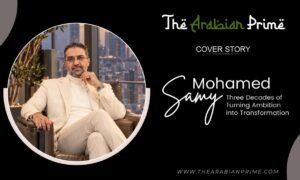
Digital transformation is rarely the work of technology alone. It also depends on understanding how businesses operate, where industries need to change, and how people can develop the skills to make new systems useful. In the ICT sector, connecting technology with commercial priorities and workforce development is a demanding task, particularly across markets with different needs and levels of digital maturity.
Mohamed Samy, CEO of Cloud 11, brings nearly three decades of leadership experience in international sales and business development across the Middle East and Africa, Southern Europe, and Canada. His career has covered several areas of the ICT industry, including telecommunications and energy, giving him experience in managing regional business growth, developing customer relationships, and leading industry-focused strategies.
During his time as SAP Head of Energy and Utilities Industry, Mohamed led business growth across the region and contributed to the digital transformation of the UAE’s energy sector. His contribution was recognised by the Dubai Government through the award of a UAE Golden Visa. He previously served as SAP Regional Head of Telecom Industry, overseeing account management, sales, and business development for telecommunications businesses across the Middle East. These experiences reflect a career shaped by international markets, industry-specific challenges, and the commercial realities of digital change.
Most recently, as Managing Director of SAP Egypt, he grew the team from around 60 to nearly 500 people and the customer base from about 200 to more than 1,000, turning the local office into a hub for the wider EMEA region.
The following interview explores Mohamed’s professional journey and examines how technology leadership, business development, and an understanding of local market needs can shape an organisation’s direction and the industries it serves.
You have built a leadership career spanning more than two decades across the Middle East, Africa, South Europe, and Canada. Take us back to the beginning, what inspired you to pursue a career in the ICT industry, and how has your journey evolved over the years?
I started my career at a real turning point for the region. Nearly 28 years ago, I joined Mobinil, now Orange Egypt, at its launch, when mobile connectivity was still new to most people. Watching a technology change how people lived and did business, almost overnight, is what drew me in.
I then spent close to a decade at Ericsson, leading key accounts in Egypt, Algeria and Saudi Arabia. On Etisalat’s mobile account in Saudi Arabia, I closed a managed-services deal that was close to the largest services deal in the industry worldwide at the time. At Alcatel-Lucent, now Nokia, I led the Orascom Telecom Group accounts globally, from Canada, Italy and Greece to North Africa, Pakistan and Bangladesh, and then the Etisalat Group accounts out of Abu Dhabi, across its affiliates in the Middle East and Africa.
Next came 13 years at SAP. Leading telecom across the Middle East from Saudi Arabia, I started almost from scratch: SAP had no presence in the region’s operators, and within three years it had a footprint in every one. I went on to lead the energy sector from the UAE, and then served as Managing Director for Egypt, where over five years we grew the team from around 60 people to nearly 500 and our customers from about 200 to more than 1,000, turning a local office into a lighthouse and hub for the wider EMEA region. Today I am CEO and a shareholder of Cloud 11, a partner to Salesforce and Google, growing our Salesforce business across the Middle East from offices in Egypt, Saudi Arabia and the UAE.
What were some of the biggest challenges you encountered while building your career across international markets, and how did you overcome them?
I have worked in Italy, Greece, Canada, Pakistan, Saudi Arabia and across North Africa, from Algeria to Tunisia. The biggest challenge was that every market has its own dynamics and, above all, its own culture, both within my teams and among my customers.
I overcame it with humility and respect. I made the effort to understand each culture and our differences, rather than imposing one way of working. I looked at people as talents, not by their background, nationality or gender. And I put myself in a learning position in every market and with every person I met. That exposure has been the greatest enrichment of my career, and it built my ability to grow business in very different markets.
With more than 20 years of experience in international sales and business development, what principles have remained constant in the way you build relationships and drive business growth?
People who know me say my passion is making the impossible possible. Throughout my career, that has meant creating and closing mega transformational deals with the region’s leading corporations. Three principles have made that possible. First, trust is the real currency. Technology deals are long-term commitments, and customers choose partners they believe will stand beside them when things get difficult.
Second, understand the customer’s business better than they expect you to. My strongest relationships were built when I could discuss an operator’s subscriber growth or an energy company’s asset reliability, not just our product.
Third, play the long game. Some of my most valuable relationships today began fifteen or twenty years ago, with no deal attached. Growth follows when you consistently create value for the customer first.
Digital transformation is no longer limited to technology adoption, it increasingly involves changing how organizations operate and create value. What do you believe are the key ingredients for a successful digital transformation?
I see digital transformation as a business transformation that happens to use technology. Having supported transformation across Egypt’s government and its public and private sectors, I have seen successful programs share five ingredients.
It starts with leadership conviction: the CEO and board must own it, not delegate it to IT. Next comes a clear link to value, whether revenue, cost, customer experience or risk, so every initiative can be measured. Third, clean processes and data, because automating a broken process only makes it fail faster.
Fourth, and most underestimated, is people. Employees need to understand why things are changing and be equipped to work differently. Finally, transformation must be iterative. The winners deliver value in phases, learn quickly and adjust, rather than waiting years for one big go-live. That is the approach we take with every Cloud 11 customer in Egypt, Saudi Arabia and the UAE.
From your experience, what role can technologies such as cloud computing, data analytics, AI, and automation play in making the energy sector more efficient, sustainable, and resilient?
I led SAP’s energy business from the UAE and was the top performer in the region for five consecutive years. On two or three occasions, I closed some of SAP’s biggest deals worldwide, and they still generate significant revenue today. I attended SAP’s Winner’s Circle and Inner Circle, for its top performers worldwide, at least seven or eight times, and the UAE awarded me the Golden Visa in recognition of my contribution to transforming the sector. That work showed me how much value is locked inside energy operations: asset-heavy, highly regulated businesses where small efficiency gains translate into very large numbers.
Cloud gives energy companies the agility to connect operations that were historically siloed. Data analytics and AI enable predictive maintenance, better production planning and real-time visibility across the value chain, while automation reduces manual work and safety risk.
These technologies are also central to sustainability. You cannot reduce what you cannot measure, so accurate emissions tracking is becoming as important as financial reporting.
Telecommunications companies are increasingly becoming technology and digital-service providers rather than connectivity businesses alone. How do you see this evolution continuing?
I have had a front-row seat to this evolution, from Mobinil’s launch in Egypt, through Ericsson and Alcatel-Lucent, to leading SAP’s telecom business across the Middle East. Connectivity is becoming a commodity, and the leading operators in our region understand that.
The next step is to become true platform companies, using their customer relationships, data and 5G networks to offer digital services to consumers and enterprises alike. To get there, telcos must modernize their core IT, become far more customer-centric, and partner with hyperscalers and software providers rather than building everything themselves.
You are also leading global education and training platforms aimed at expanding Egypt’s digital ecosystem and workforce. Why is talent development so important to sustainable digital transformation?
Technology is rarely the bottleneck; skills are. Egypt has one of the largest and youngest talent pools in the region, which is an enormous advantage, but only if we equip it with the right capabilities.
That is why, in my last five years in Egypt, I made developing young people a personal priority, as an investment in future generations. We gave young talent guidance, support and a real voice in decision-making, and I shared that message as a speaker at many universities and conferences. We built a pipeline from campus to career. Through more than 17 university alliances, undergraduates earned SAP certifications, and our summer internships brought them inside SAP. For postgraduates, our Young Professionals Program offered a two-month certification track that prepared them to contribute from day one. Transformation is only sustainable when a country builds its own capabilities rather than importing them.
How do you encourage innovation within your teams while ensuring that business objectives and customer needs remain at the center of decision-making?
I give teams room to experiment, but always anchored to a customer problem. Every idea should answer a simple question: what does this change for the customer, and how will we know? I prefer small, fast pilots with clear success measures over large theoretical projects.
Innovation also needs psychological safety. People must feel free to challenge ideas, including mine, and to fail early without fear. Diverse teams, where young people’s views genuinely count, consistently produce better ideas. At SAP Egypt, that culture helped us drive innovation and AI adoption across sectors, while ranking first or second in the region for growth and revenue year after year. At Cloud 11 we are building the same culture from day one. Our teams work closely with customers to understand their business first, then apply Salesforce and Google technologies to solve real problems, not to showcase features.
What is one leadership lesson you learned through experience that you wish you had understood earlier in your career?
That leadership is less about having the answers and more about building the team that finds them. Early in my career, I measured myself by my own performance: the deals I closed and the accounts I grew.
It took time to understand that a leader’s real impact is multiplied through others, and that the best teams are built on talent and passion, not on background, gender or ethnicity. In Egypt, I became an ambassador for people of determination, creating real opportunities for them to contribute to business growth, and promoted the idea within SAP globally and with other companies in Egypt. That inclusive culture helped make us a Great Place to Work three years running, with a clear impact on our performance. I also worked hard to help women step into leadership roles and thrive in their careers. I wish I had learned sooner that developing people is not a distraction from the business; it is the business.
Looking ahead over the next five years, which technologies or business trends do you believe will have the greatest impact on organizations in the region?
Artificial intelligence, without doubt, and especially agentic AI that can act, not just analyze. Over the next five years it will reshape how organizations sell, serve customers and run operations. But AI is only as good as the data behind it, so unified, trusted data platforms will be just as critical.
I also expect strong growth in sovereign and in-country cloud, driven by data residency rules across the Gulf and Egypt, alongside the rising importance of cybersecurity. Above all, customer experience will become the main competitive differentiator. Organizations that combine AI, data and a genuine customer focus will pull ahead.
As you look toward the next chapter of your own professional journey, what goals and ambitions are you most excited about pursuing?
I am genuinely energized by this new chapter. After 28 years with global technology leaders, becoming CEO and a shareholder of Cloud 11 is a different kind of responsibility, and a very personal one.
My immediate focus is growing our Salesforce business across the Middle East from our three offices in Egypt, Saudi Arabia and the UAE, and opening offices in more countries. I want Cloud 11 to be one of the most trusted Salesforce and Google partners in the region, known for measurable business outcomes rather than just implementations. Beyond that, I want to build a strong local team of consultants and architects, develop young talent, and help organizations in Egypt and the wider region move faster on AI-driven customer transformation. Building something of my own, with lasting impact, is what excites me most.
What advice would you give to young professionals in the Middle East and Africa who aspire to build an international career in technology, sales, or business leadership?
First, stay curious and never stop learning. The technology you master today will change, so your ability to learn is your real asset. I practiced this myself, completing a Master’s in Global Business Administration at the Swiss Business School in early 2023, more than two decades into my career. Second, understand business, not just technology. The most successful professionals I know can explain technology in the language of a CEO or CFO.
Third, be open to moving across countries, industries and roles. Every move in my career, from Algeria to Saudi Arabia to the UAE, taught me something I could not have learned at home. Fourth, build relationships with integrity; your reputation will follow you for decades.
Finally, believe that you can compete globally. Talent from the Middle East and Africa is as capable as anywhere in the world, and what sets you apart is your talent and passion, not where you come from. Be confident, work hard, and take the opportunities when they come.