
Mohammed Hisham: A Filmmaker Who Learned Production From the Inside
The world of film production is built on a combination of creative instinct and practical discipline. Behind every frame that reaches an audience is a long process of planning, coordination, problem-solving, and people coming together to turn an idea into something tangible. The industry also demands adaptability, as filmmakers often move between creative departments, production challenges, tight schedules, and large-scale projects where every decision can shape the final result.
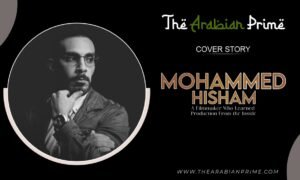
Mohammed Hisham Merey, also known as Etsh, has built his career around this blend of creativity and execution. An Egyptian independent filmmaker and producer based in Qatar, he has spent around a decade working across film sets and major productions, both with production houses and as a freelancer. His journey has taken him through filmmaking, producing, editing, cinematography, and different technical departments, giving him an understanding of production from several sides rather than from a single role.
His entry into the industry was not a conventional one. After graduating in chemical engineering from Qatar University, his growing interest in media and filmmaking led him to teach himself the craft and gradually build practical experience. Before moving into production, he worked across areas including sound and camera, and began his professional journey as an editor on a television show. Those early experiences helped him understand how different parts of a production connect and eventually shaped his transition into producing.
Over the years, Merey has worked with different clients and production environments, including Al Jazeera Media Network, where he served as a Senior Production Coordinator for three years, as well as major film and live-production projects. His experience includes working as an Events/Films Producer during the FIFA World Cup 2022, along with involvement in large-scale productions such as the AFC opening ceremony and the FIFA Arab Cup 2025 ceremonies. Alongside production, he continues to develop himself across filmmaking, editing, cinematography, events production, team management, scheduling, and budgeting.
What makes his journey particularly interesting is that it has never been limited to learning one role and staying within it. Each new production has added another layer to his understanding of filmmaking, allowing him to approach the industry not only as a producer managing the practical side, but as someone who understands the creative process from having worked within it himself.
Choosing Passion Over a Conventional Career
Before graduating from engineering school, Mohammed had already developed a strong fascination with media, particularly filmmaking. He began teaching himself through online courses and YouTube channels, then moved quickly from learning to experimenting. He bought his own equipment, went into the field, tested different techniques, and gradually discovered that filmmaking was becoming more than an interest. It was turning into a genuine passion.
Working as an independent filmmaker in the beginning meant doing almost everything himself. There was limited support, so he had to invest in his own equipment, resources, and learning. That experience taught him to be self-reliant and willing to take on difficult tasks.
After graduation, he reached a point where he had to make a choice between following the career connected to his degree and pursuing something he genuinely loved. He chose filmmaking and decided to give it his time, energy, and full commitment.
The first one or two years were not easy. He spent considerable time meeting people, building relationships, and finding his place within Qatar’s relatively small media industry. Entering a community where many professionals already had years of experience was challenging, particularly as a newcomer. Still, his willingness to work hard and take on demanding assignments gradually helped him establish himself.
That period became the real transition point in his career. Rather than choosing the safer path simply because of his academic background, he chose to follow what he was passionate about, even knowing the beginning would be difficult.
Learning From Different Production Worlds
Working across filmmaking, television commercials, television production, and live events gave Mohammed a broader understanding of what production demands. Each format has its own methodology, planning process, limitations, and pace. A commercial operates very differently from a live show, while television and broadcast work come with their own standards and regulations.
Despite those differences, he found one principle consistent across every format: organization. Being able to plan properly and bring the right people together at the right time has remained one of the most important factors behind a successful production.
The timelines can vary dramatically. Television commercials often come with extremely short deadlines. In some cases, a team may have only a week to develop a creative concept, secure approval, plan the production, execute it, and deliver the final work. Live productions require a different level of preparation, with extensive coordination, creative discussions, larger teams, and rehearsals. A film crew might consist of 30 or 40 people, while a live show can involve 300 or 400 staff members.
Television brings another set of considerations because broadcast standards and regulations place boundaries around what can be done creatively. Having worked across these different environments, Mohammed has learned to recognize the particular requirements and challenges of each one and adapt his approach accordingly.
Protecting the Idea While Making It Possible
Mohammed sees production as the point where a creative idea has to meet reality. When a director or creative approaches him with an idea, his responsibility begins with understanding whether that idea can actually be achieved. His role covers the full execution process, from pre-production and budgeting through production and post-production.
He starts by sitting with the creative or director, reading the treatment, and imagining the idea in practical detail. From there, he begins testing it against real-world conditions. If a concept calls for aerial shots, for example, he considers whether drones can actually be used, and if not, whether the same visual effect could be achieved through CG or post-production.
These conversations become a combination of creative and technical thinking. The director naturally wants to protect the original vision, while Mohammed has to consider the logistical, technical, and financial realities involved in delivering it. His objective is to find solutions and alternatives that preserve as much of the original idea as possible.
That requires flexibility from both sides. Creative teams need to understand that every production has limitations, while Mohammed sees it as his responsibility to find the strongest possible solution within those boundaries. Sometimes a small compromise is unavoidable, but the aim is to retain the aesthetics and central idea rather than losing what made the concept compelling in the first place.
Budget is part of the same conversation. If a particular approach requires more money than is available, the answer cannot simply be to abandon the idea. The challenge is to find another way of reaching the intended result within the resources provided.
Mohammed describes the process as a constant push and pull between ambition and practicality. He values working with directors and creatives who understand those realities while remaining committed to achieving the best possible result. His own approach is to keep pushing until the available resources have produced the strongest outcome they can deliver.
Delivering the Impossible in 50 Days
The FIFA Arab Cup 2025 opening ceremony became one of the most demanding productions Mohammed had taken on. The scale was enormous, but the real difficulty came from the timeline. The production received the green light only around a month and a half before the show. People with experience in complex ceremonies told the team that a production of this scale would normally require four to five months of preparation. They had roughly 50 days.
Mohammed had already worked on major sporting ceremonies, including aspects of the FIFA World Cup 2022 opening and closing ceremonies in Qatar and the AFC Asian Cup opening ceremony. Yet the Arab Cup presented a different kind of pressure. The team had to assemble the entire production almost from the ground up, bringing together contractors, suppliers, technical specialists, creative teams, talents, and experienced ceremony professionals from around the world.
The production covered everything from construction and casting to storytelling and creative development. A relatively small in-house team could not possibly carry a project of this scale alone, so specialists with experience in major international productions were brought in to build the wider team.
Mohammed served as deputy head of production, working alongside the head of production to oversee the ceremony and spending long days at Al Bayt Stadium. During the final stages, 16 to 18-hour days became routine as he supervised the work and coordinated the many moving parts required to bring the show together.
Despite the intensity, the experience was deeply rewarding. Working alongside some of the finest professionals in the industry exposed him to new approaches and a level of production complexity that few projects can offer. Seeing such a technically and creatively ambitious show come together in only 50 days made the experience feel almost unreal.
The pressure was immense, but so was the satisfaction of seeing the idea become real. For Mohammed, it became a once-in-a-lifetime experience and one that left a lasting mark on his professional journey.
Every Project Brings a New Lesson
Working in a multidisciplinary production environment has given Mohammed the opportunity to move between very different forms of production. Films require a different approach from live shows, while original productions bring their own demands and working methods. Recently completing two feature films added another dimension to that experience.
He considers this variety a privilege because it continually puts him in unfamiliar situations. Each project brings new challenges, different teams, and opportunities to learn from people with experience in other parts of the world. International specialists are often brought in for large productions, creating an environment where knowledge and working methods are exchanged naturally.
That exposure has also allowed Mohammed to develop expertise in areas he might not otherwise have encountered closely. Some recent projects required his direct involvement with special effects, for instance, giving him the chance to work alongside specialists and build a deeper understanding of that field.
The production department itself contributes to this constant learning. A group of producers may work on several projects at the same time, while larger productions bring them together to handle different departments or areas of responsibility. Working so closely across these different scopes means that one project can teach lessons that become useful on the next.
Mohammed does not see experience as something that eventually makes production predictable. Even after years in the industry, he approaches every project as a new challenge. There are always new people to meet, new problems to solve, and something unexpected to learn.
That mindset keeps the work interesting for him. The attraction is not simply in completing another production, but in stepping into something unfamiliar and discovering what it can teach him.
Where Storytelling Meets Technology
Mohammed believes the strongest distinction in a production house is not simply the scale of its projects or the technology available to it, but the ability to tell a compelling story. He has found that strong creative storytelling, combined with the technical understanding needed to bring those stories into the real world, creates a meaningful difference.
Having worked closely with senior creative professionals, he has seen how much thought goes into developing a story and translating it into a visual experience. The creative development side brings together people with a deep understanding of storytelling, while the production team works to find the practical and technical ways to bring those ideas to life.
That combination has also led to collaborations with major international companies involved in large ceremonies and events. Mohammed has seen firsthand how storytelling can become the foundation around which the technical elements of a major production are built. The relationship between the creative idea and its technical execution is what allows a concept to move beyond the page and become something an audience can experience.
Making AI Work for Production
Mohammed views AI as a double-edged tool. Used properly, it can improve production value while saving considerable amounts of time and money. Used without care, it can have the opposite effect and weaken the quality of the final work.
His approach has been to use AI where it genuinely improves the workflow rather than simply using it because the technology is available. It has found a place in areas of the production pipeline, particularly during pre-production, where teams deal with large amounts of paperwork, communication, planning, and coordination. With several projects often running simultaneously, tools that make communication faster and routine processes more efficient can have a real practical benefit.
Technology such as augmented reality and extended reality is also changing what is possible during production. Instead of travelling to multiple locations for exterior shots, productions can increasingly recreate environments inside a controlled studio using large LED screens and virtual environments.
That creates a different kind of production freedom. Lighting, surroundings, and other conditions can be controlled far more precisely, while teams can avoid some of the time, coordination, travel, and costs associated with location shooting.
Mohammed is still experimenting with these technologies and sees testing as an important part of understanding where they work best. Trial and error remains necessary, particularly when a production is trying to achieve a specific visual result. Used at the right stage and with enough preparation, these tools can give production teams far greater control.
The technology, however, still needs judgment. Mohammed is conscious that poor implementation can make a production feel artificial or overly dependent on digital effects. The value lies in knowing when and how to use the tools, rather than allowing the tools to dictate the creative outcome.
A New Chapter Built Around Creative Freedom
Mohammed’s next phase is likely to take him toward a more independent way of working. He is preparing for a move into a new professional environment while also exploring opportunities to work as an independent producer and potentially freelance with different clients.
Part of that decision comes from wanting to experience filmmaking outside the corporate structure of production work. Even within a creative environment, working for clients brings processes, approvals, deadlines, and a corporate workflow. He wants to spend more time exploring projects on his own terms, with a stronger focus on film rather than television commercials.
Live shows remain another area he is keen to pursue. He enjoys their systematic nature and the way a major live production develops through planning, coordination, rehearsals, and execution. Film production, particularly under tight deadlines, can sometimes become chaotic. While he has learned to work comfortably under that pressure, he feels ready for an approach that is more organized and less stressful.
That matters to him because he believes the atmosphere around a production eventually finds its way into the work itself. Mohammed has always tried to make the people around him feel comfortable, even when the project itself is demanding.
His measure of a successful production is therefore not limited to what appears on screen or on stage. He also cares about how the people behind it experience the journey. A project may be hectic and challenging, but if the crew can enjoy the process, work together, and feel that they are part of something exciting rather than simply completing a job, that gives him the greatest satisfaction.
Know Where You Want to Go, Then Keep Learning
Mohammed’s advice to young professionals begins with understanding just how broad the film and production industry really is. It is not one career path but a collection of different disciplines, from creative roles to production and daily operations. Anyone entering the field needs to explore those possibilities and think carefully about what they want to be doing and learning in the years ahead.
Choosing a direction early can provide a useful starting point, whether someone is drawn to the creative side or prefers the operational demands of production. The beginning, however, is rarely easy. Mohammed describes the industry as demanding, time-consuming, and very different from a conventional nine-to-five career. Long hours, tight schedules, and significant personal commitment are part of the reality.
At the same time, he cautions young professionals against believing that success requires sacrificing everything outside work. After several years in the industry, he learned that an intense work schedule can affect personal wellbeing and relationships with friends, family, and the wider community. Finding balance matters, even when the nature of the work makes that difficult.
Passion can make those demands easier to handle. Someone who genuinely enjoys learning, meeting new people, taking on unfamiliar challenges, and discovering how productions come together may find the long hours far more rewarding. The work can be hectic, but curiosity gives that pressure a purpose.
His strongest advice is to remain clear about what you want to learn and where you want to develop. That clarity can provide the right foundation and help young professionals make better choices about which part of the industry to pursue.
There is also no need to feel trapped by an early decision. Someone may enter the industry through one particular path and later realize that it is not the right fit. Mohammed believes there is always room to stop, reassess, and try something different. In an industry with so many directions to explore, changing course can be part of finding the career that truly suits you.