
Deep Economic Reforms and Strategic Evolution Shaping Saudi Vision 2030 Today 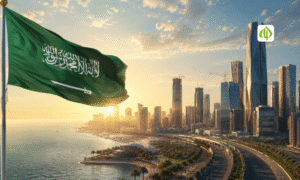
Right now, big changes are reshaping economies around the world – and much of it ties back to the Middle East. For decades, people saw Saudi Arabia only as an oil giant, dominating fossil fuel supply without question. Yet everything shifted when saudi vision 2030 came forward, laying out bold plans meant to break free from reliance on crude exports. Instead of staying stuck in old patterns, the country has moved fast; today’s progress shows real momentum beyond talk. Three years deep into execution, what once sounded like distant goals now functions as daily life across cities, industries, and government systems. Out of old structures rise new ones, as the country reshapes its systems piece by piece under saudi vision 2030. Culture breathes differently now – wider, bolder, less restrained. Foreign investors find doors open where none existed before. Power shifts quietly through these changes, not with noise but steady movement. What unfolds at home catches attention worldwide, a rare look at transformation from within. A nation built on resources learns to reinvent beyond them. Old habits give way without drama, replaced by choices that point elsewhere. This path isn’t copied – it’s drawn fresh, step after careful step.
Redefining Prosperity With Big Non Oil Growth
Right at the heart of this shift sits a clear choice – no longer letting national income swing with oil prices on distant markets. Economists had long pointed out the danger: when one resource dominates everything else, trouble follows like shadows at dusk. Instead of waiting for shocks to hit, leaders pushed growth in different kinds of work, slowly building something new beneath the surface through saudi vision 2030. Now, for the first time ever, most of what drives the economy comes from outside the oil sector, reshaping old patterns without fanfare.
Now powering ahead, the shift draws strength from how the Public Investment Fund places its moves – building up trillions in managed assets. Not just buying overseas stocks, the state-owned fund acts like a builder inside the economy, sparking fresh industry networks from scratch. Factories at home are growing fast, seen clearly in homegrown defense production and bold steps into high-tech car making. Suddenly, rules got simpler, smoothing the path for international business to step in. Stability took root through clear laws protecting foreign money, pulling big global firms to plant their regional bases here. These developments are widely viewed as key outcomes of saudi vision 2030.
Restructuring the Cultural and Tourism Ecosystems
Beyond the balance sheets of corporate boardrooms, the tangible impact of saudi vision 2030 is vividly reshaping the daily lives of citizens and the external perception of the nation. Tourism, once restricted almost exclusively to religious pilgrimages, has emerged as a premier pillar of national identity and economic output. The Kingdom recently recorded an astonishing milestone by welcoming over one hundred million annual international and domestic tourists, vastly outpacing original baseline projections.
This leisure boom is fueled by massive investments in gigaprojects and historical preservation. Archaeological treasures like Hegra in AlUla and the historic district of Diriyah are being meticulously rehabilitated, earning multiple inscriptions on the UNESCO World Heritage list. Simultaneously, major entertainment developments like Qiddiya City and premium coastal destinations along the Red Sea are redefining global luxury travel. This cultural unlocking extends deep into the domestic sphere, where household spending on entertainment has surged alongside an explosion of grassroots volunteerism and local artistic expression. The cultural revival remains one of the strongest pillars of saudi vision 2030.
Advancing Societal Infrastructure and Human Capital
The ultimate success of any macroeconomic transition rests entirely upon the readiness and empowerment of its workforce. A vibrant society requires robust human capital, and the social transformation underway has dismantled long-standing barriers to entry. Female labor force participation has experienced a staggering rise, surging past the initial thirty percent target to achieve unprecedented levels of female economic independence and leadership across both public and private sectors.
Furthermore, sweeping structural reforms within the localized labor market have successfully driven native unemployment down to historic lows. The state has heavily prioritized the rapid scaling of small and medium-sized enterprises, recognizing them as the primary engine for sustainable job creation. Education has undergone an equally rigorous modernization process, resulting in multiple premier Saudi universities successfully breaking into the top tier of global academic rankings. This comprehensive focus on human development under saudi vision 2030 is directly paired with a modernized, digitally integrated healthcare system, contributing to a measurable rise in overall life expectancy.
Building the Green Cities of the Next Generation
As the transformation strategy enters its mature phases, long-term environmental sustainability and digital mastery have become the primary benchmarks of progress. The Kingdom is actively constructing an interconnected network of hyper-modern smart cities, anchored by groundbreaking urban experiments like NEOM and the New Murabba. These massive developments are engineered from the ground up to eliminate urban friction through universal digital connectivity and seamless public transit infrastructure.
In perfect alignment with global climate mandates, massive investments are flowing directly into the renewable energy sector, effectively lowering the production costs of solar and wind power to some of the lowest levels recorded globally. Large-scale ecological initiatives have resulted in the planting of over one hundred million trees and the systematic rehabilitation of vast tracts of degraded land. By successfully combining world-class digital governance with aggressive decarbonization strategies, saudi vision 2030 is establishing a resilient, future-proof framework capable of thriving long after the global energy transition concludes.
The Global Blueprint for Comprehensive National Transformation
The accelerating momentum of saudi vision 2030 provides a highly compelling case study for comprehensive state modernization in the twenty-first century. What began as an audacious roadmap has successfully institutionalized accountability, transparency, and fiscal agility across every single layer of governance. By proactively cultivating a highly competitive business ecosystem, unleashing the latent potential of its youth, and building eco-friendly urban centers, the Kingdom has firmly established itself as an indispensable nexus connecting Afro-Eurasian trade and innovation. As the global economy continues to navigate geopolitical volatility and technological disruption, the structural resilience engineered through saudi vision 2030 ensures that the nation is no longer merely reacting to the future, but actively dictating its course.