
Saudia Cargo AI Boosts Efficiency and Doubles Fleet
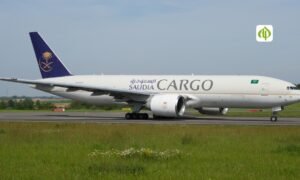
Saudia Cargo is expanding its operations with artificial intelligence and a larger aircraft fleet as the company works to improve efficiency and support Saudi Arabia’s goal of becoming a global logistics hub by 2030. The plan combines digital technology with the addition of four Boeing 777-200F freighters.
The Saudia Cargo AI boosts efficiency and doubles fleet strategy, which is already changing how the company manages its air freight operations. Saudia Cargo uses algorithms to forecast demand, manage capacity and optimize cargo weight and load distribution, according to Vice President of Shared Services Hisham Mallakah.
The company also uses sensors to monitor temperature-sensitive shipments and digital tools to automate parts of its operations. These systems are useful for cargo such as medicines and other items that need careful conditions while being transported.
The Saudia Cargo artificial intelligence strategy is being developed alongside technology partnerships. The company participated in the LEAP 2026 technology conference to explore cooperation in areas including AI and cloud computing and to assess technologies that could make its logistics operations more responsive to changing demand.
Fleet growth is another major part of the expansion. The Saudi Cargo fleet expansion will add four Boeing 777-200F aircraft, effectively doubling the cargo fleet over a period of more than two years. The aircraft can fly about 9,200 kilometres at full payload, making them suitable for long-haul freight.
The new freighters are expected to strengthen Saudia Cargo’s ability to move heavy and temperature-sensitive shipments over long distances. The company also plans to target growing demand for express freight and e-commerce across Asia, Europe and North America.
Saudia Cargo has also launched a direct Riyadh-Melbourne service. The route is designed to speed up shipments of fresh produce, meat, dairy products and pharmaceuticals between Australia, the Middle East and Europe while supporting Saudi exports to Oceania.
The company is looking at further opportunities in China, Vietnam, Indonesia, Africa and Central and Eastern Europe. These markets could expand Saudi Arabia’s role as a logistics corridor connecting Asia, Africa and other regions.
The Saudia Cargo AI boosts efficiency and doubles fleet plan fits within the Kingdom’s National Transport and Logistics Strategy, which aims to raise annual air cargo capacity to 4.5 million tonnes by 2030. The Saudia Cargo fleet expansion and Saudia Cargo artificial intelligence initiatives are central to that wider logistics push.