
The Connected Hub How Muhammad Sameh Is Building the Digital Foundations of the Middle East’s Future
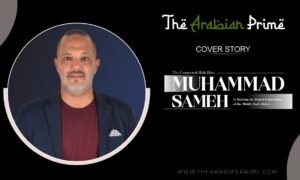
The Middle East stands at the forefront of one of the most significant technological transformations in its history. Governments are accelerating digital economies, enterprises are embracing cloud-first strategies, and industries are reimagining operations through intelligent technologies. Behind this momentum lies an essential yet often overlooked enabler: secure, resilient digital infrastructure that allows innovation to scale with confidence.
Few leaders have contributed to this transformation as comprehensively as Muhammad Sameh, Managing Director of Raya Data Center & Cloud Services. Over the course of a distinguished career spanning entrepreneurship, executive leadership, and corporate governance, he has consistently anticipated where technology is headed and positioned organizations to lead that evolution rather than react to it. His ability to combine strategic foresight with operational excellence has earned him recognition as one of the Visionary Founding Directors Driving Business Innovation in 2026.
At Raya Data Center & Cloud Services, Muhammad oversees the company’s strategic growth across Egypt and Saudi Arabia, strengthening its position as a trusted provider of enterprise cloud solutions, managed services, IT outsourcing, and advanced data center capabilities. Beyond his executive responsibilities, he serves as the Non-Executive Chairman of IM Holding, where he supports businesses across technology, education, manufacturing, fintech, and digital services. Earlier in his career, his contributions to enterprise modernization were recognized through the Best CDO MENA and World Europe Innovation Award, reflecting his long-standing commitment to advancing digital transformation across the region.
What distinguishes Muhammad Sameh is his ability to connect technology with commercial strategy. Throughout his career, he has consistently viewed technology not as an end in itself, but as a means to strengthen businesses, improve resilience, and create sustainable competitive advantage. Every major initiative he has led reflects that philosophy, balancing ambition with disciplined execution and innovation with measurable outcomes.
That perspective continues to shape his work today. As enterprises navigate increasingly complex regulatory environments, evolving customer expectations, and accelerating technological change, Muhammad remains focused on building trusted platforms that enable long-term growth. His contribution extends beyond infrastructure; it lies in creating the confidence that allows businesses to modernize, expand, and compete in an increasingly connected world.
Foundations of Adaptive Leadership
Every leadership philosophy is shaped by defining experiences, and Muhammad’s journey has been built through decades of creating businesses, leading enterprise transformation, and guiding organizations through periods of rapid technological change. Rather than adopting a fixed management style, he has developed an approach rooted in adaptability, recognizing that effective leadership evolves alongside the challenges it seeks to address.
His entrepreneurial journey began with the co-founding of Internet Egypt and Internet Misr, ventures established during a period when the region’s internet ecosystem was still taking shape. Building technology companies from the ground up provided an invaluable understanding of entrepreneurship, customer expectations, commercial resilience, and the realities of creating sustainable businesses in an emerging digital market. Those early experiences reinforced an enduring lesson: lasting success depends as much on strategic thinking and perseverance as it does on technical capability.
A second defining chapter came during his tenure as Chief Digital Officer at Telecom Egypt, where he was entrusted with leading large-scale digital transformation initiatives within one of the country’s most established organizations. Modernizing legacy systems while maintaining operational continuity required a careful balance between innovation and stability. Among the most significant milestones of that period was leading the development of Telecom Egypt’s Tier III Data Center. This project strengthened the nation’s enterprise technology landscape and positioned the organization as a stronger participant in the region’s evolving digital economy.
His perspective continued to broaden through board-level roles across sectors, including technology, education, manufacturing, fintech, and digital services. Exposure to businesses with different operating models, governance structures, and market priorities strengthened his ability to evaluate opportunities from both strategic and operational viewpoints. It also reinforced the importance of balancing innovation with disciplined execution, regardless of industry.
These experiences shaped a leadership philosophy centered on context rather than convention. Muhammad believes effective leaders know when decisive action is required, when collaboration delivers stronger outcomes, and when empowering capable teams creates lasting organizational strength.
“His experiences taught him that leadership is not about a single style but about adaptability, knowing when to push, when to listen, and when to empower others to lead.”
This principle continues to guide his leadership today. Whether expanding regional operations, supporting enterprise customers, or mentoring future leaders, Muhammad approaches every decision with the understanding that sustainable growth is achieved not through rigid frameworks but through the ability to evolve with changing business realities.
The Courage to Invest Ahead of the Market
Visionary leadership is often measured by decisions whose value is not immediately visible. Throughout his career, Muhammad has consistently invested ahead of market demand, recognizing that sustainable competitive advantage belongs to organizations prepared for tomorrow rather than optimized only for today.
One defining example came during his tenure as Chief Digital Officer at Telecom Egypt, where he championed the development of the organization’s Tier III Data Center. At the time, enterprise-grade digital facilities of that scale were still limited in Egypt, and the investment required significant financial commitment alongside organizational confidence.
Rather than viewing the initiative as a technology upgrade, Muhammad positioned it as a strategic asset capable of strengthening the country’s digital economy. He developed a compelling business case, aligned stakeholders around a shared vision, and remained committed despite uncertainty surrounding long-term returns.
The project’s success reshaped Telecom Egypt’s role within the enterprise technology landscape and demonstrated how forward-looking infrastructure investments can generate lasting competitive advantage.
That experience continues to influence Muhammad’s decision-making today. Raya’s expansion into Saudi Arabia reflects the same conviction that sustainable growth depends on preparing for tomorrow’s opportunities before they become industry standards.
Calculated risk, he believes, is an essential characteristic of visionary leadership. Organizations that wait for complete certainty often arrive after the greatest opportunities have already passed. Leaders who combine careful analysis with decisive action are better positioned to shape industries instead of simply participating in them.
This philosophy has become a defining characteristic of Muhammad’s career. Whether launching new ventures, leading enterprise transformation, or expanding regional operations, he has consistently demonstrated the confidence to make decisions that create value far beyond immediate commercial returns.
Leadership Beyond the Executive Office
Leadership takes on different dimensions depending on where decisions are made. Running an organization demands operational precision. Serving on a board requires long-term judgment. Building companies as an entrepreneur calls for resilience, adaptability, and a willingness to embrace uncertainty. Having worked across all three environments, Muhammad brings a perspective that balances execution with governance and ambition with accountability.
As Managing Director, his attention remains focused on customers, operational performance, market dynamics, and execution. Remaining closely connected to daily business activities enables him to respond quickly to changing customer needs while maintaining high standards across every aspect of the organization.
Board responsibilities demand a different perspective. They require evaluating strategic priorities, overseeing governance, assessing enterprise risk, and ensuring that decisions made today continue to create value well into the future. This broader viewpoint encourages disciplined planning while reinforcing accountability across the organization.
His entrepreneurial background completes the picture. Having built businesses from the ground up, Muhammad approaches new opportunities with the curiosity and resilience of a founder while balancing that mindset with the governance expected of a corporate leader. It is this combination that enables him to pursue innovation without compromising operational discipline.
These complementary experiences have shaped a leadership approach that balances ambition with responsibility. Operational insight strengthens strategic planning, governance provides stability, and entrepreneurial thinking encourages continuous innovation. Together, they create a decision-making framework that supports sustainable growth while preparing organizations for the challenges of an increasingly competitive digital economy.
Building the Regional Hub
With decades of experience spanning entrepreneurship, enterprise transformation, and board-level governance, Muhammad turned his attention toward a larger ambition: helping shape the digital foundations of an increasingly connected Middle East. Rather than viewing infrastructure as a support function, he recognized it as a strategic enabler of economic growth, business resilience, and technological self-reliance.
At Raya Data Center & Cloud Services, that vision has evolved into a regional growth strategy centered on secure, scalable, and locally anchored enterprise technology infrastructure. As organizations accelerate cloud adoption and governments invest in digital economies, Muhammad is positioning the company to support this transformation with solutions that combine operational excellence, regulatory compliance, and long-term reliability.
Central to this vision is the development of sovereign cloud capabilities. As businesses place greater importance on data residency and compliance, organizations increasingly seek solutions that allow critical information to remain within national borders without sacrificing performance or scalability.
Muhammad believes regional providers have a unique opportunity to address these requirements while strengthening digital independence across the Middle East. The strategy also reflects changing customer expectations. Modern enterprises require more than computing capacity. They seek technology partners capable of supporting business continuity, cybersecurity, managed services, disaster recovery, and cloud transformation through integrated solutions that evolve alongside their operations.
Under Muhammad’s leadership, Raya continues to invest in resilient digital platforms designed to meet those expectations. By combining enterprise-grade facilities with advanced cloud services and managed technology solutions, the company enables businesses to focus on innovation while relying on secure, scalable technology environments.
Beyond commercial objectives, Muhammad views this expansion as an investment in regional capability. Every new facility, strategic partnership, and technology initiative contributes to a stronger digital ecosystem that supports economic diversification, attracts investment, and creates opportunities for future generations of technology professionals.
He envisions a future where the Middle East is not just a consumer of global cloud services but a producer of regional digital capabilities, where data stays within the region, latency is minimized, and local talent drives innovation.
Leading Transformation That Lasts
The success of enterprise modernization is rarely determined by technology alone. More often, it depends on whether people, processes, and organizational priorities evolve together. Years of leading large-scale change have convinced Muhammad that technology accelerates the quality of decisions an organization is already capable of making.
His experience leading transformation at Telecom Egypt reinforced this perspective. Modernizing a large, established organization required balancing innovation with operational continuity while ensuring that employees, leadership teams, and stakeholders moved forward with a shared understanding of the organization’s direction.
Technology alone could never achieve that objective.
Real transformation demanded clear communication, disciplined execution, and the willingness to rethink established ways of working without disrupting the services customers depended upon every day. It required leaders who could inspire confidence while navigating uncertainty and making decisions whose benefits would only become visible over time.
Those lessons continue to influence Muhammad’s leadership at Raya Data Center & Cloud Services. Every customer engagement begins with understanding business priorities before recommending technology solutions. Instead of promoting products, his teams focus on solving operational challenges through carefully planned digital strategies that align with each organization’s long-term objectives.
For Muhammad, transformation is not measured by the number of systems implemented or platforms migrated to the cloud. Its true value lies in helping organizations become more agile, resilient, and prepared for future opportunities.
Businesses that embrace continuous improvement, invest in their people, and remain adaptable will always be better positioned than those that view transformation as a one-time project.
Building Trust Through Secure Innovation
Trust has become one of the defining assets of the digital economy. As enterprises migrate critical workloads to cloud environments and data becomes central to every business decision, confidence in the underlying technology ecosystem is no longer optional, it is essential. For Muhammad Sameh, security is not simply a technical requirement but a strategic commitment that underpins every customer relationship.
This philosophy shapes every layer of Raya Data Center & Cloud Services. Security is embedded into architecture, operations, governance, and service delivery from the outset, enabling organizations to modernize with confidence while meeting increasingly demanding regulatory and operational expectations.
The company’s distinction as the only ISO/IEC 27001 certified data center provider in Egypt reflects this commitment. For Muhammad, however, certification represents only one aspect of a much broader responsibility. Protecting customer information requires continuous investment in governance, compliance, operational discipline, and evolving cybersecurity practices.
Rather than treating security as a barrier to innovation, he views it as the foundation that makes innovation possible. Organizations are far more willing to adopt emerging technologies when they have confidence that the underlying environment is resilient, compliant, and designed to safeguard their most valuable digital assets.
This balance has become increasingly important as enterprises expand their cloud strategies and manage larger volumes of critical data across multiple markets. Businesses no longer seek technology partners based solely on technical capability. They look for organizations that can provide confidence, reliability, and long-term stability alongside innovation.
Security and innovation are not tradeoffs. They are two sides of the same coin.
Preparing for the Next Era of Digital Infrastructure
While today’s priorities focus on cloud adoption and resilient infrastructure, Muhammad believes the next decade will be defined by how intelligently organizations integrate emerging technologies into their business models. Artificial intelligence, edge computing, sovereign cloud, and sustainable infrastructure are not isolated trends. Together, they represent the next stage of enterprise evolution, where technology becomes increasingly autonomous, responsive, and interconnected.
Artificial intelligence is expected to reshape infrastructure management by improving operational efficiency, strengthening cybersecurity, and enabling more intelligent decision-making. Edge computing will reduce latency by processing information closer to users, supporting applications that depend on real-time responsiveness across manufacturing, healthcare, logistics, and smart city environments.
At the same time, growing regulatory requirements are accelerating demand for sovereign cloud services that allow organizations to maintain greater control over where critical information is stored and processed. Regional providers capable of delivering secure, compliant environments will play an increasingly important role in supporting enterprise growth.
Sustainability will become equally central to future investment decisions. Modern facilities must balance increasing computing demands with responsible energy consumption, efficient cooling technologies, and environmentally conscious operating practices. Businesses that integrate sustainability into infrastructure planning today will be better prepared for tomorrow’s regulatory and commercial expectations.
Rather than viewing these developments as independent trends, Muhammad sees them as interconnected components of a broader technological evolution. Organizations that combine intelligent automation, secure cloud environments, responsible governance, and sustainable operations will establish stronger foundations for long-term competitiveness.
For Raya Data Center & Cloud Services, this future is already taking shape through continued investment in advanced technologies, resilient facilities, and customer-focused solutions that anticipate changing market demands rather than simply responding to them.
Creating a Culture That Sustains Innovation
Technology can create a competitive advantage, but culture determines whether that advantage endures. Muhammad has long maintained that organizations outperform competitors when employees are trusted to think independently, collaborate openly, and take ownership of meaningful outcomes. Sustainable progress begins with capable people who are empowered to make decisions and encouraged to challenge conventional thinking.
That philosophy has shaped the culture at Raya Data Center & Cloud Services. Cross-functional collaboration encourages specialists from different disciplines to solve customer challenges collectively, producing solutions that combine technical expertise with commercial understanding.
Accountability is equally important. Clear objectives, transparent communication, and measurable outcomes ensure that innovation remains connected to business performance. Successes are shared across the organization, while setbacks become opportunities for learning rather than reasons for hesitation.
Muhammad also places considerable emphasis on leading by example. He believes credibility is established not by authority alone but through consistency, integrity, and the willingness to accept responsibility for difficult decisions. This culture has enabled Raya to respond effectively to changing customer expectations while maintaining the operational discipline expected of a trusted enterprise technology partner.
More importantly, it has created an environment where innovation becomes part of everyday thinking rather than an occasional initiative. For Muhammad, that is how organizations remain relevant in an industry defined by continuous change.
Expanding Impact Beyond a Single Enterprise
While Muhammad’s leadership at Raya Data Center & Cloud Services remains central to his professional journey, his influence extends well beyond the boundaries of a single organization. As Non-Executive Chairman of IM Holding, he contributes to the strategic direction of businesses operating across technology, education, manufacturing, fintech, and digital services. The role provides a broader platform to encourage innovation, strengthen governance, and cultivate sustainable growth across diverse industries.
Working across multiple sectors has reinforced one of his core beliefs: regardless of industry, successful organizations share common foundations. They embrace innovation with purpose, maintain disciplined governance, invest in capable people, and remain adaptable as markets evolve.
This perspective also encourages the exchange of ideas between industries. Digital solutions developed for one sector often inspire transformation in another, creating opportunities for businesses to accelerate progress through shared knowledge and collaborative thinking. Muhammad views this cross-sector learning as a powerful catalyst for innovation, allowing organizations to move beyond conventional approaches and discover new ways to create value.
His involvement with IM Holding reflects a broader commitment to developing businesses that contribute to long-term economic growth rather than pursuing short-term gains. By supporting leadership teams, strengthening organizational strategy, and encouraging responsible innovation, he helps create enterprises that remain competitive in rapidly changing markets.
For Muhammad, success is measured not by the number of organizations he leads but by the lasting capability those organizations develop under effective leadership.
Building Confidence in the Region’s Digital Future
Beyond expanding technology infrastructure, Muhammad is equally committed to strengthening the ecosystem that will sustain the region’s long-term growth. He sees the Middle East at a pivotal stage where investment, policy, education, and private enterprise are converging to create one of the world’s most dynamic technology markets.
Maintaining that momentum will depend on more than modern facilities or advanced cloud platforms. It requires collaboration between governments, industry, educational institutions, and technology providers, alongside sustained investment in talent development, responsible governance, and innovation that delivers measurable economic value.
Muhammad is particularly optimistic about the region’s ability to nurture homegrown talent. As opportunities continue to expand across cloud computing, cybersecurity, artificial intelligence, and digital engineering, the next generation of professionals will play an increasingly important role in shaping the region’s technology landscape.
He believes organizations must invest not only in infrastructure but also in education, mentorship, and leadership development. By equipping professionals with the skills needed to solve complex challenges, businesses strengthen their own competitiveness while contributing to broader economic resilience.
This long-term perspective underpins Muhammad’s vision for the future. Building digital capability is not solely about adopting new technologies. It is about creating an ecosystem where innovation, knowledge, and trust reinforce one another to generate lasting regional prosperity.
Redefining Success Through Lasting Value
Awards acknowledge important milestones, but Muhammad views them as reflections of collective effort rather than personal accomplishment. Lasting success is measured by stronger institutions, capable teams, trusted customer relationships, and businesses that continue to create value long after individual projects have been completed.
That philosophy has shaped every stage of his career, from founding technology ventures and leading enterprise modernization to expanding regional operations and advising businesses across multiple industries. Each role has reinforced a simple principle: meaningful leadership leaves organizations stronger, more resilient, and better prepared for the future than they were before.
By focusing on enduring value rather than short-term recognition, he continues to build organizations that are equipped to thrive in a rapidly evolving world.
Advice for Leaders Navigating Digital Change
Decades of building businesses, leading enterprise modernization, and overseeing regional expansion have shaped a practical leadership philosophy grounded in experience rather than theory. The lessons Muhammad shares today reflect challenges he has navigated firsthand across multiple industries and stages of organizational growth.
He encourages leaders to begin with business strategy rather than technology itself. Digital initiatives deliver meaningful results only when they support clearly defined organizational objectives and address genuine operational challenges.
Equally important is the willingness to invest in people. Technology evolves continuously, but organizations succeed because their employees adapt, learn, and collaborate effectively. Creating opportunities for professional development and encouraging a culture of curiosity enables businesses to respond confidently to changing market conditions.
Muhammad also emphasizes the importance of resilience. Transformation rarely follows a perfectly predictable path, and setbacks should be viewed as opportunities to refine strategy rather than reasons to abandon ambition. Leaders who remain adaptable while maintaining a clear long-term vision are better positioned to create sustainable competitive advantage.
Finally, he believes trust should guide every strategic decision. Whether working with customers, partners, employees, or investors, credibility is built through consistent execution, transparency, and a commitment to delivering long-term value.
These principles have shaped Muhammad’s own leadership journey and continue to influence the organizations he leads today.
A Legacy Built for the Future
Throughout his career, Muhammad Sameh has focused on creating the infrastructure, institutions, and leadership culture that allow technological progress to take root. From pioneering internet ventures and leading enterprise-wide digital transformation to expanding secure cloud infrastructure across the Middle East, his work reflects a consistent commitment to strengthening the foundations upon which businesses grow and economies evolve.
As the region accelerates its digital ambitions, leaders who combine strategic vision with disciplined execution will play an increasingly important role in shaping its future. Muhammad’s contribution extends beyond the organizations he leads today.
By strengthening trusted technology ecosystems, encouraging responsible innovation, and investing in the next generation of talent, he is helping create an environment where businesses can grow with confidence, and the Middle East can compete on an increasingly global stage.