
The Energy Proliferator – Ussama Rai: Synchronizing Global Grids for a Zero-Carbon Future 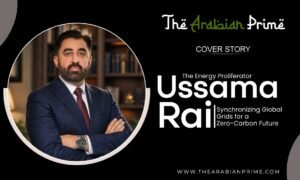
Ussama Rai brings more than two decades of engineering depth to the increasingly complex landscape of global energy systems. As Chief Technology Officer at Huawei, he operates at a pivotal moment in the transition toward cleaner, more resilient power infrastructure. His career spans diverse regions worldwide, bridging established European markets with rapidly expanding energy sectors across the Middle East, Far East, and South America.
This breadth of experience informs a distinctive perspective—one that seamlessly connects the precision of engine control systems with the scale and strategic significance of utility-grade battery storage. At the core of his work is the advancement of Battery Energy Storage Systems (BESS), which he views as critical to unlocking the full potential of renewable energy by ensuring continuity amid fluctuating generation.
Ussama oversees the entire engineering lifecycle, from concept through commissioning, with a disciplined focus on safety, efficiency, and cost optimization. His ability to lead multidisciplinary, cross-cultural teams enables him to address complex systemic challenges, positioning him at the forefront of efforts to balance national energy demands in an increasingly electrified world.
A Careful Transitioning to Green Energy
Ussama is unique because he speaks the language of both the engineer and the business leader. He works closely with sales and marketing teams to make sure the technical solutions he builds actually meet what the market needs. He knows that a great invention only changes the world if it is practical and commercially successful. His expertise covers everything from solar inverters to complex automation systems. Whether he is writing code in Python or MATLAB to model energy flows or speaking at a global conference, his goal is always the same. He wants to deliver impactful results that make the global energy market more sustainable. Beyond the hardware and software, Ussama is a voice for change in energy policy. He collaborates with partners around the world to develop strategies that encourage the use of renewable energy. He has a proven track record of assessing if a project is feasible and then building the path to make it a reality. By combining his deep knowledge of power generation with a clear vision for the future, he helps define how countries will manage their grids in the years to come. At Huawei, he continues to push for operational excellence, making sure that the transition to green energy is handled with the highest level of professional care.
Creating a Sustainable, Zero-Carbon Future
As CTO for Global Key Accounts in Huawei Digital Power, Ussama sees his role as bridging vision and execution by transforming global energy transition ambitions into scalable and bankable projects. In the PV and BESS ecosystem, this goes beyond technology leadership to orchestrating a connected value chain, aligning utilities, IPPs, EPCs, financiers, and regulators around solutions that are technically advanced, commercially viable, and rapidly deployable. His focus is on integrating digitalization, AI, and power electronics to enable grid-forming capabilities, enhanced safety, and lifecycle intelligence. His priority is to translate innovation into large-scale adoption by building strategic partnerships, de-risking investments, and tailoring solutions to diverse market needs, from mature grids to emerging economies. Ultimately, accelerating the energy transition requires both technological leadership and execution excellence, and his role is to ensure Huawei consistently delivers both while contributing to a sustainable, zero-carbon future.
Foundations of a Global Energy Career
With over two decades of cross-sector engineering experience, looking back at his journey, there have been several pivotal moments that naturally guided him toward energy innovation and leadership. He began his career deeply rooted in control systems and automation, working hands-on with Combined heat and power (CHP) systems, embedded controls, and power generation technologies. That early exposure gave him a strong engineering foundation, and importantly, an appreciation for how energy systems operate. A defining shift came when he transitioned into demand response and distributed energy systems, where he started to see the broader system-level challenges, balancing grids, integrating renewables, and unlocking flexibility. His time as head of the engineering team and delivering multi-megawatt of demand response and BESS projects across multiple countries was transformational; it moved him from purely technical execution into strategic thinking around energy markets and monetization models.
Intersection of Innovation and Market Strategy
At Huawei, he had the opportunity to operate at the intersection of technology, business strategy, and global market expansion. Leading high-level engagements and representing Huawei at international platforms fundamentally expanded his perspective from project delivery to ecosystem orchestration. Alongside this, his PhD research in smart energy grids and optimization models has reinforced his belief that the future of energy lies in intelligent, data-driven systems. These experiences have shaped his approach in blending technical expertise with commercial insight to accelerate scalable clean energy solutions.
The Future of Energy Storage Systems
Battery Energy Storage Systems (BESS) are rapidly evolving from being supportive grid assets to becoming the backbone of a fully decarbonized energy system. Over the next decade, he sees three key advancements defining this transformation. First is the transition toward grid-forming BESS, which will enable storage systems to stabilize grids with high renewable penetration, effectively replacing the inertia traditionally provided by synchronous generators. Second, safety and reliability will become central to large-scale deployment; this is where innovations in cell-to-grid architecture, integrating advanced analytics, cloud-based monitoring, AI-driven thermal management, and predictive fault diagnostics will play a critical role. Finally, he believes we will see a shift toward standardized, modular, and highly scalable BESS solutions that significantly reduce deployment timelines, unlock new revenue streams through multi-market participation, and improve bankability for utility-scale projects. The convergence of these advancements will not only accelerate renewable integration but also redefine how energy systems are planned, operated, and monetized, making BESS a cornerstone of the global energy transition.
Orchestrating a Resilient Global Energy Ecosystem
At Huawei, their approach to leading in Smart PV and BESS integration is rooted in a clear strategy, combining digital intelligence with power electronics to enable a fully connected, adaptive, and resilient energy ecosystem. They are not positioning themselves as just a technology provider, but as an enabler of large-scale energy transition, bringing together PV generation, energy storage, grid interaction, and intelligent management into a unified architecture. Their focus is on delivering end-to-end solutions that are scalable across diverse markets, whether it’s mature grids in Europe requiring advanced grid-forming capabilities, or emerging markets where reliability and rapid deployment are critical. A key differentiator for them is the integration of AI and cloud-based digital platforms into both PV and BESS systems, enabling real-time optimization, predictive maintenance, and multi-market participation. From a global perspective, they leverage their experience across multiple regions to localize solutions, aligning with regulatory frameworks, grid codes, and market dynamics.
Tailoring Strategies to Diverse Global Realities
Having worked across Europe, Asia-Pacific, Africa, and the Middle East, Ussama has learned that there is no one-size-fits-all approach to the energy transition. Each region presents a unique combination of grid maturity, regulatory frameworks, resource availability, and investment appetite. This diversity fundamentally shaped his strategic approach. In mature markets like Europe, the focus is on grid stability, advanced ancillary services, and maximizing asset value through sophisticated BESS applications. In contrast, in regions across Africa, South America, and the Asia-Pacific, the priority is often energy access, reliability, and rapid deployment, where hybrid PV plus BESS solutions can leapfrog traditional infrastructure. At Huawei, they translate these regional nuances into tailored solutions by aligning technology with local market needs, regulations, and commercial realities. His role is to ensure their strategies remain flexible, delivering bankable, compliant solutions across diverse energy ecosystems.
The Convergence of AI and Digital Power Intelligence
Digitalization and AI are fundamentally redefining how they design, operate, and monetize energy systems, particularly across storage, grid resilience, and demand response. In the context of BESS, AI enables real-time optimization of charge-discharge cycles based on market signals, grid conditions, and asset health, significantly improving both performance and revenue generation. It also enhances safety through predictive analytics, detecting anomalies at the cell, pack, rack, and system level before they escalate, which is critical for utility-scale deployments. When it comes to grid resilience, digitalization allows us to move from reactive to proactive grid management. AI-driven forecasting of load, generation, and grid-forming technologies supported by intelligent controls enables operators to stabilize networks with higher renewable penetration. In demand response, AI aggregates and orchestrates distributed energy resources in real time, turning flexibility into a tradable asset. This convergence of digital and power technologies is unlocking new business models by making renewable-based systems not only viable, but more reliable and economically superior.
Navigating Global Challenges for Scalable Energy Storage
Scaling BESS globally requires addressing a complex mix of technical, commercial, and regulatory challenges. Technically, system safety, lifecycle performance, and grid integration are critical, particularly for large utility-scale deployments. Robust thermal management, prevention of cascading failures, and seamless operation within increasingly complex grids remain key priorities, while evolving standards and grid codes can slow deployment across regions. Commercially, uncertainty is the main barrier; unclear revenue models, shifting regulations, and challenges in achieving bankability make investment decisions difficult. Monetization pathways such as ancillary services, capacity markets, and energy arbitrage are still maturing in many markets. Overcoming these challenges demands both innovation and strong ecosystem collaboration. Leveraging AI for predictive maintenance, enhancing system safety, and enabling grid-forming capabilities are essential on the technical side. Equally, close collaboration with utilities, regulators, and financial stakeholders is needed to structure viable business models, de-risk investments, and optimize asset utilization, ultimately enabling scalable and sustainable BESS deployment worldwide.
Harmonizing Engineering Precision with Economic Value
Aligning engineering excellence with commercial viability is fundamental to delivering successful utility-scale PV and BESS projects. Ussama approaches this by designing solutions not only for technical performance but for full lifecycle value, optimizing LCOE, efficiency, reliability, and maintainability to ensure long-term investor returns. Every engineering decision must reflect market realities, including grid requirements, revenue models, and financing structures. At Huawei, they achieve this through close integration of R&D, engineering, and commercial teams, ensuring innovation is always aligned with customer needs and bankability. Standardization and scalability are equally critical. By deploying modular, pre-validated solutions, they reduce risk, accelerate delivery, and enhance cost predictability. Early engagement with stakeholders allows them to shape solutions that are both technically robust and commercially optimized. Ultimately, success lies in bridging technical capability with economic sustainability, ensuring every project delivers lasting value and supports the global transition to clean energy.
Defining Sustainability through Resilience and Performance
Sustainability, for him, goes beyond deploying renewable technologies. It’s about delivering projects that achieve lasting environmental impact while remaining economically resilient. He embeds sustainability from the design stage, optimizing system architecture for efficiency, minimal losses, and extended asset life. In utility-scale PV and BESS, this means focusing on high-efficiency conversion, intelligent energy management, and advanced lifecycle monitoring to ensure long-term performance. At Huawei, they prioritize safety and reliability as essential pillars of truly sustainable systems. Equally critical is ensuring strong economic viability. Projects must be bankable and generate stable returns, so he works closely with stakeholders to enable revenue stacking, optimize operational costs, and align with evolving market dynamics. Leveraging digitalization and AI allows continuous optimization, reduced downtime, and longer asset life. Ultimately, his goal is to deliver solutions that not only reduce carbon emissions but also create enduring value for customers, communities, and the global energy ecosystem.
Vision 2026: The Era of Decentralized Intelligence
Looking ahead to 2026 and beyond, he sees energy systems evolving into fully digitalized, decarbonized, and decentralized ecosystems where renewables and storage become foundational. Future grids will be driven by high penetration of solar PV and BESS, enabled by grid-forming technologies, AI-driven optimization, and seamless integration of distributed energy resources. This transformation will create more flexible, resilient, and self-regulating energy systems, reducing reliance on fossil fuels while ensuring energy security and affordability. From a personal perspective, his goal is to drive impact by bridging ambition and execution, helping deliver large-scale, bankable clean energy projects that create lasting environmental and economic value. He is equally committed to mentoring talent, fostering cross-industry collaboration, and shaping best practices. Ultimately, his legacy is defined by enabling a sustainable, intelligent energy future at a global scale.