
The Global Economic Impact and Long-Term Consequences of a Rising Trade Imbalance
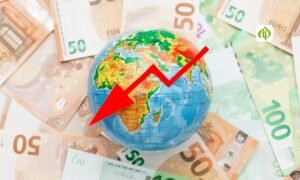
Out there, money moves through endless deals – what one place buys and sells shapes its strength. Trade tilts show up when what flows in isn’t close to what goes out. Balance hardly ever happens, yet when mismatches grow, things shift: jobs change, influence wobbles, money gains or loses worth. Watch those gaps closely – they reveal who leans on whom, how debts build, where control slips. These numbers tell more than growth charts ever could.
The Deep Causes Behind Longstanding Business Gaps
Trade gaps seldom come from just one rule or moment. They usually grow out of lasting economic shapes inside different countries. When people buy more than they set aside, imports climb because local output does not keep up. On the flip side, places that stash away income and build strong factories tend to send goods abroad since home buyers cannot take it all. What lies beneath includes what the land holds – like oil or minerals – and how well a country uses machines and know-how. These pieces shift the balance without any single push causing it.
Out of step with basic buying habits, state actions quietly shape how trade flows between nations. When homegrown businesses get financial support, their items hit overseas shelves at oddly low prices, pushing export numbers higher. Take currency tricks – some governments weaken their cash on purpose, which lifts foreign demand for what they sell yet slams the door on imported goods for locals. Though these steps claim to guard local work, they tend to spark tension abroad where others sense an uneven contest. A ripple one way pulls hard against balance elsewhere.
Navigating the Consequences for Labor Markets and Industry
When a country experiences a prolonged trade imbalance, the effects are felt most acutely within its labor market and industrial base. In deficit-running nations, the influx of cheaper foreign goods can lead to the decline of local manufacturing. When domestic factories cannot compete with the low-cost labor or subsidized production of foreign rivals, they are often forced to downsize or shutter entirely. This leads to the “hollowing out” of industrial corridors, resulting in structural unemployment that can be difficult to reverse even with aggressive retraining programs.
However, the narrative is not entirely one-sided. A trade imbalance can also provide consumers in deficit nations with access to a wider variety of affordable goods, effectively increasing their purchasing power and standard of living. In surplus nations, the focus on export-led growth can lead to rapid industrialization and wealth accumulation, but it also creates a dangerous dependency on foreign demand. If the importing nations face a recession or implement protectionist tariffs, the surplus nation’s economy can stall overnight. This interdependency means that while one nation may appear to be “winning” the commercial exchange, both parties are vulnerable to shifts in the global economic climate.
Financial Flows and the Role of National Debt
The movement of goods is only half of the story; the other half is the movement of capital. To finance a trade imbalance, a deficit nation must essentially borrow from its surplus-running partners. This is typically done through the sale of assets, such as government bonds, real estate, or corporate stocks. Consequently, a country with a large deficit often becomes a net debtor to the rest of the world. This arrangement can be sustainable for a time, especially if the borrowing nation’s currency serves as a global reserve, but it creates a long-term obligation that can limit future fiscal flexibility.
The accumulation of foreign-held debt can eventually put downward pressure on a nation’s currency. If international investors lose confidence in a country’s ability to service its obligations, they may sell off their holdings, leading to a sharp devaluation. While a weaker currency can eventually help correct a trade imbalance by making exports cheaper and imports more expensive, the transition period is often marked by high inflation and reduced consumer confidence. This cyclical nature of international finance highlights the delicate balancing act that central banks and treasury departments must perform to prevent a commercial gap from evolving into a full-scale financial crisis.
Strategic Realignment in an Interconnected World
In recent years, the rhetoric surrounding the trade imbalance has shifted from purely economic analysis to a matter of national security. Policymakers are increasingly concerned about the over-reliance on single-source suppliers for critical goods, such as semiconductors, pharmaceuticals, and energy. This has led to a movement toward “de-risking” or “friend-shoring,” where nations attempt to redirect their commercial flows toward geopolitical allies. Such moves are intended to mitigate the risks associated with a heavy trade imbalance with a strategic rival, ensuring that essential supply chains remain resilient in the face of diplomatic tension or global conflict.
Addressing a chronic trade imbalance requires a multifaceted approach that goes beyond simple tariffs. It involves investing in domestic education and infrastructure to boost productivity, encouraging higher savings rates, and negotiating more transparent international agreements. As the world continues to grapple with the aftermath of supply chain disruptions and shifting political alliances, the ability to manage these commercial disparities will define the economic leaders of the next century. Rather than viewing the exchange of goods as a zero-sum game, the goal is to foster a system where commerce is sustainable, mutually beneficial, and capable of weathering the inevitable ebbs and flows of the global marketplace.
Future Outlook on Global Market Equilibrium
The path forward involves a careful recalibration of how nations perceive their economic successes. While a trade imbalance is an inherent feature of a globalized world, its extremes can serve as a warning sign of underlying instability. By focusing on structural reforms and fostering innovation, nations can move toward a more balanced posture that supports both domestic growth and international cooperation. The evolution of digital services and the green energy transition will likely introduce new variables into this equation, potentially reshaping the traditional definitions of exports and imports. In this changing landscape, the focus must remain on creating a resilient framework that prioritizes long-term stability over short-term gains, ensuring that the global engine of commerce continues to run smoothly for all participants.