
The Resilient Narrative: How Tamara Simeunovic Challenges Institutional Bias and Elevates Disability Rights
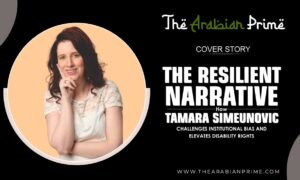
True advocacy within the healthcare landscape requires far more than cold clinical statistics. It asks for compassionate human tales—stories that challenge societal boundaries. Transforming personal adversity into creative advocacy is Tamara Simeunovic. She, whose heart told her story through the pages of her autobiography, ‘Epileptic Warrior Princess,’ actively champions the rights and societal inclusion of people living with neurological disabilities. Directly reflecting this balance is her daily routine. It often starts with peaceful woodland walks, which Tamara takes alongside her dedicated seizure alert dog, Chess. These quiet natural environments provide a vital creative contrast to her public life, allowing her to process the complex physical demands of epilepsy while gathering deep inspiration for her global literary advocacy.
Earning her a prominent recognition as the most admired woman personality to watch is this unique combination of resilience and creative expression. Tamara does not let her chronic illness restrict her professional aspirations. Rather, she uses her lived experiences to challenge and erase the widespread public stigmas. Negativity that surrounds hidden neurological conditions. Through her publishing brand, Tamara also runs a major educational platform. This endeavor of hers is proving something very important: creative literature can inform, entertain, and empower readers simultaneously. It further shows that translating such personal health victories into engaging stories can remove the vast divide between patient care and public understanding.
The Warrior Concept
Tamara’s work has introduced the world to the concept of the ‘Epileptic Warrior Princess.’ She says that living with epilepsy is one of the most restrictive conditions and disabilities to cope and live with. It affects not only yourself and your health but also those around you who care for you. For many years she says she was naive and believed and trusted in society and the government, “That they would be able to help us when we reached out for help instead of receiving cruelty and being looked down on, that we would have people in family, friends, society who understood us, employers who didn’t take advantage of us, partners who didn’t abuse us,” but that changed when she was taken advantage of and left unsupported and to fend for herself. She decided she did not want others with neurological conditions to be deceived, taken advantage of due to ignorance and arrogance, and to be treated with contempt. She decided to speak up about her condition, the restrictions epilepsy puts on every aspect of life, and the importance of believing in yourself and resilience, as well as how only you can control your own mind, power, career, and future, despite what others outside say and how they put you down. She has proved with her book writing and her knowledge, along with her advocacy, that people with disabilities should not be doormats for authorities who cannot even follow their own laws and policies, and this has shown in her mobility battle win, in her never-ending battle against being scammed, in her thoroughness with proofreading, and in her personal battles.
The Raw Reality
In her book, Tamara addresses heart-wrenching realities like drug-resistant seizures and societal bullying. It was important to be raw and real and not sugarcoat so that she could show what the reality of living with the condition was like to raise awareness and understanding. That it is not like the flu, which the DWP makes it out to be and makes you prove your condition all the time, but a serious neurological condition that restricts your independence in lots of different ways and makes life difficult. She wished to show the realness of her condition to others to show there is hope even with seizures and not to feel worthless, but to be resilient and believe in themselves even when ignorant people do not. Do not let societal bullying get to you, even when you feel like no one hears your voice. But instead to rise above it and showing that you are better than those who think so low of you and that disability does not define you nor label you. To show that people should not be judged ignorantly by their medical conditions and should be given chances and supported with their health and careers.
The Lifesaving Bond
Tamara often highlights the bond with her seizure-alert dog, Chess. She hopes to show how assistance and seizure alert dogs can play vital roles in society and employment, as well as in daily living, through sensing seizures through scent detection and bark for help so that a person nearby can call 999 for help before they happen, in order for society to implement the importance of this. It angers her that cafes are still so ignorant as to not allow Chess as her seizure alert dog when his scent detection of her seizures, for example, could save her from injury as well as others nearby should she fall and have a seizure in a cafe, for example. She believes all areas of society should allow seizure alert dogs in the same way as guide dogs for the blind and deaf, otherwise it is discriminatory.
The Institutional Battle
Tamara has spoken openly about discriminatory employment practices and navigating institutional systems like the DWP. She says it does not care about your welfare and has a history of cruelty. Learn all the legislation and their guidelines, and stick it to them where it hurts so they cannot fight back. Do not ever give up fighting, and when you go against them, they will never be on your side. Do not give up your rights for them. They always want to make you feel small and make you prove your condition for the sake of it, even with a doctor’s evidence, because they are cruel. They have no intention of following guidelines themselves unless you force it upon them. Always learn the policies of every institution and force their hands when they try to go against you. Remember: they are human just like you, and no one has the right to bully you without your consent. You do not deserve to be treated less than your worth, and their arrogance and position can be stripped just as easily, but they don’t want you to know this, so treat it like a game of Chess and don’t let them checkmate you without a fight.
The Authentic Leader
Tamara hopes that people see her leadership as mixture of empathy, realness, honesty, integrity, compassion and understanding for others and resilience against discrimination in a world where disabled people are treated as less than worthy and left in poverty and unable to afford treatments and care they need because of paperwork guidelines which make no sense and are too generalized for a condition as complex as epilepsy where there are several different types of epilepsy which affect everyone differently as everyone has different DNA. She wishes to help build a fairer society and lives for people with epilepsy and other neurological and neurodivergent conditions, and help people speak up on her platform and website for their health and needs, and what they believe in. This will take time as it is still in early stages, but she hopes to create a platform on her website as well as do events where people can speak up about their conditions to raise awareness and understanding to help improve lives. Living with epilepsy is Nonlinear, Accelerated, Volatile, and Interconnected. She goes for walks with Chess three times a day, she has chiro currently for her spine and neck following fractures, and hopes to join a yoga class after and build up again to zumba classes. She enjoys drawing Disney characters, listening to symphonic metal and Latin music, and watching movies, as well as dressing up and inventing new recipes to bake. Listening to Within Temptation, Evanescence, As December Falls, and Shakira really de-stresses her, along with walking in woodlands with Chess and being surrounded by trees and flowers, followed by a coffee and a jam doughnut in a dog-friendly cafe. She also loves meeting up with her most trusted friends and doing an art group with them.
The Corporate Transformation
Tamara aims to move epilepsy from a misunderstood condition to a catalyst for community strength. Her vision as a leader is to change workplace mentality from judging people based solely on application forms to making more flexible job specifications to allow a higher percentage of disabled, especially epileptics, to get into jobs, especially if they have a degree in it. She intends to put HR through empathy and disability inclusion and awareness training so that they learn to treat disabled applicants with respect instead of immediate rejection. She also hopes to educate CEOs and ministers on disability awareness, as currently they have an approach that is too restrictive for people with disabilities, and a ‘let’s take the easy route’ when the easy route just makes lives harder for people with disabilities. Not once do they think that they can develop a disability and lose their great wealth and be restricted on benefits- she intends on changing that mentality and making everyone, regardless of position, treat everyone equally and with the respect they deserve. After all, homes were not built by one CEO, but by hardworking workers who deserve to be shown appreciation for their hard work. CEOs, managers, and HR, especially, should appreciate workers instead of being arrogant in responses and in denial when complaints or questions are asked with fairness instead of discrimination, knowing how hard it is for the disabled to get help. She intends as a leader and as her leadership grows, to create affordable help, especially medical and legal help, for people with disabilities, and platforms where their voices and concerns can be heard and listened to.
The Human Foundation
In a technology-first world, there is a push for ‘insane speed.’ But Tamara believes one must balance the need to be a productive ‘personality to watch’ with the physical necessity of rest, recovery, “and setting boundaries that protect our wellbeing.” She also believes in not being at a computer the whole day. She doesn’t use AI to write her books. Her books are all written by hand and through real-life experience. She does not believe in quick fixes. She believes that regular walks, a healthy diet, and spending time with people you love during breaks can result in much less stress and anxiety than having pressured deadlines forced upon you like a robot. And if she feels pressured by someone to do something on their timeline when she is not fully at her best, she will explain why she cannot do it at that moment. Still, if they cannot prioritize the importance of life and health for others, they cannot prioritize their own health. She will refuse to work with humans who insist on treating disabled people and people in general like robots with no consideration for their physical and mental wellbeing. She will say it straight up if she is not ok with something, and she will not sugarcoat it. She is not the most diplomatic leader in the business world, and she will not be the most diplomatic, but she will be empathic, gentle, and compassionate, and always honest and factual with the intent of improving lives through experience. Her honesty has led to housing trusts merging in her road after she proved that conflicting housing policies do not work, and it is not the job of tenants to show HR how to do their job and what policy needs following, as well as why teamwork, passion, honesty, and communication are important.
The Mindset Revolution
As a woman leader in 2026, Tamara believes that in order for policies that work to be invented, the mindset and hearts of individuals need to be changed through awareness, understanding, and training, especially within workplaces and authorities. Otherwise, people will be stuck in the same ignorant mindset, and nothing will change. She is focused on raising awareness and understanding through letters, speeches, book-writing and writing to authorities to underline the importance of understanding invisible disabilities such as epilepsy and including the training, such as seizure first aid, everywhere, including assistance dogs, changing the mindset of employers and companies that it takes time to recover from a seizure and to be understanding instead of expecting immediate recovery like a cold.
The Future Legacy
Tamara says that when she looks back five years from now, she would like every person with an invisible disability to believe in themselves and say to themselves, “I am worth more than my disability. I am more than what people think, and I can achieve my goals even if the path is not as straightforward for me as for non-disabled people. I care about others and will inspire others by showing what I can do. I will show I am talented and intelligent despite my disability and should not be overlooked or undermined. My voice should be heard as much, if not more, than that of non-disabled.”
The Global Impact
Tamara wishes for her legacy to leave a mark of global awareness of people understanding epilepsy and how it cannot always be cured, but stays for life with the person, but that it does not define you, respecting disabled people and their carers, and to never give up on what they believe in and wish to achieve. She would like five years from now, hopefully her global awareness also leads to faster medical research for anti-epileptic medication without really bad side effects, such as sudden mood changes, and where society eases restrictions for people with epilepsy, especially employers who still are in the mindset of ‘oh! people with epilepsy are too unreliable and risky to employ,’ and these employers need training and changing mindset in order for lives and lifestyles to improve.