
The Foundational Power of Invisible Control: Samah Moustafa’s Blueprint for Scalable Humanity in Healthcare 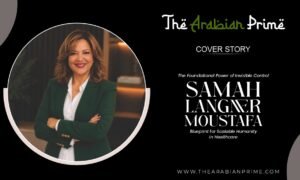
In the vast, shifting economic landscape of the Arabian Peninsula, where the future of business is being written in real time, a new type of financial leader is emerging. Among the names gaining significant attention in 2026 is Samah Moustafa. As the Group Chief Financial Officer(CFO) for Go Behavioral LLC, Samah is not your typical executive focused only on balance sheets and quarterly reports. She views finance as the heartbeat of a much larger machine. Her approach is built on the idea that for a company to grow, it must have a foundation that is as strong as its ambitions.
Samah operates in the high-stakes world of healthcare, specifically in behavioral health and autism services. This field is about how well things work behind the scenes. The better the systems, the better the care. With this belief, Samah started working at Go Behavioral. Really changed things. She took a team and turned it into a big organization with lots of employees in many states. This level of scaling required more than just capital. It required a vision for how people, processes, and technology work together across borders.
Samah is a visionary financial leader. She knows how to make sense of tricky, intricate, and difficult situations. Most leaders focus on what they can see, but not Samah. She looks at the things that you can’t see that make everything work. She works hard to set up systems for things like paying employees, managing staff, and following rules. She thinks a company can only do well if its inner workings make sense and are easy to use. The systems have to be good for the company to move fast. For her, financial strategy is not a separate department. It is a thread that runs through every part of the operation, from the way a new clinic is opened to how an employee is supported on their first day.
Working between Germany and the United States has given her a unique view of international business. She knows how to deal with a lot of rules and laws, and at the same time, she always keeps her eyes on making the company grow in a way that is good for everyone. This experience working around the world is one reason people in the Arabian Peninsula are paying close attention to her. As the region works to make its economy stronger and build good healthcare systems, it needs leaders who can make big companies work well and do it precisely.
Samah is particularly moved by the impact her work has on families. Every system she builds is ultimately designed to support better outcomes for patients. She feels really good about making sure the business is doing well, so doctors and nurses can focus on helping people. She does not think of herself as the person who decides how money is spent. As someone who makes new things possible. International business and healthcare are important to her. She loves behavioral health services. This is why she is always looking for ways to make these services easier to get and more efficient, and this is what drives her to make healthcare better.
Foundations of Discipline: From Egypt to Germany
A financial leader across Germany and the United States, Samah’s journey in finance started long before executive titles or international leadership responsibilities. She began her career in Egypt in the late 1990s, at a time when the finance profession was highly demanding and often dominated by traditional expectations. She learned very early that credibility is not given automatically; it is earned through consistency, discipline, and the ability to solve problems under pressure. Those early years shaped her mentality profoundly. She worked in accounting, financial reporting, auditing environments, and operational finance, where details mattered, and accountability was non-negotiable. Later, moving to Germany introduced an entirely different professional culture, one centered around precision, systems, structure, compliance, and operational discipline. Adapting to that environment strengthened her understanding of international financial governance and taught her how operational efficiency directly influences organizational stability.
The Architecture of Healthcare Scaling
One of the most defining experiences in her career came when Samah became involved in scaling organizations within behavioral healthcare. Healthcare finance is fundamentally different from many industries because every operational decision affects human lives. The challenge is not only profitability, but it is also sustainability, continuity of care, and building systems that allow organizations to grow without compromising quality. When she joined the leadership structure supporting Go Behavioral and related organizations, they were operating with a much smaller infrastructure. Scaling into multi-location operations with hundreds of employees required more than financial management. It required operational architecture, leadership alignment, compliance frameworks, process automation, and a culture capable of sustaining rapid growth. That experience transformed her philosophy completely. She realized modern leadership is not about controlling people, it is about designing systems that reduce chaos, improve decisions, and allow teams to perform effectively.
Redefining the Role: The Non-Traditional CFO
That mindset became the foundation of her leadership approach across both Germany and the United States. Samah is “not a traditional CFO” and emphasizes building systems beyond finance. Traditionally, CFOs were viewed primarily as guardians of budgets, reports, and financial controls. While those responsibilities remain essential, the modern CFO must operate far beyond accounting functions. Today’s CFO is deeply connected to operations, technology, people management, compliance, scalability, and strategic transformation. She often says that numbers are only the visible result of invisible systems. If an organization struggles operationally, the financial reports will eventually reflect that reality. Because of this, her role naturally expanded beyond finance into workflow design, payroll structures, operational controls, onboarding systems, reporting architecture, and performance management.
The Interconnected Future of Financial Leadership
A modern CFO must understand how every department connects. Financial leadership today requires visibility across operations, HR, compliance, scheduling, workforce efficiency, technology adoption, and communication infrastructure. She believes you cannot scale an organization successfully while finance remains isolated from operations. One of her core beliefs is that control should not feel punitive. Strong organizations are built when controls are designed intelligently into workflows. Teams should not feel restricted by systems; they should feel supported by them. The purpose of financial leadership is to create clarity, accountability, and stability, not fear. In high-growth environments, operational confusion can become more dangerous than financial limitations. Businesses rarely collapse because people are not working hard. They collapse because systems fail to support sustainable decision-making. That is why she focuses heavily on building structures that continue functioning even during periods of rapid expansion. The CFO of the future must therefore become a strategic architect, not only a financial reviewer.
Disciplined Sequencing and Sustainable Growth
As Group CFO, scaling organizations successfully requires disciplined sequencing. Many companies grow too quickly without building the operational infrastructure necessary to support that growth. In healthcare, especially, expansion without operational readiness creates significant risks. One of the most important decisions she and her team made was investing heavily in operational systems early. They focused on building standardized processes across payroll, scheduling, onboarding, compliance monitoring, documentation management, reporting structures, and communication channels. Without operational consistency, scaling becomes chaotic very quickly. Another critical factor was visibility. Leadership cannot make strong decisions when information is fragmented across departments. She worked extensively on improving reporting accuracy, centralizing workflows, and creating clearer accountability structures across teams.
The Synergy of Technology and Culture
Technology also played a major role. Implementing integrated operational systems allowed Samah and her team to improve efficiency, reduce administrative errors, and create more scalable processes across multiple locations and teams. However, systems alone are not enough. Growth requires cultural alignment. As organizations expand, communication gaps naturally increase. One of the most valuable lessons she learned is that leadership must continuously reinforce clarity, expectations, and operational discipline while still maintaining humanity and empathy. Financial discipline was equally important. Rapid growth often creates pressure to spend aggressively. Instead, she focused on sustainable scaling, ensuring that operational expansion remained financially healthy and strategically aligned. In many ways, scaling is less about speed and more about stability. Sustainable organizations are built through infrastructure, consistency, and operational maturity.
Navigating Complexity in Cross-Border Leadership
Often coming with complexity, from regulatory differences to cultural expectations, cross-border leadership requires flexibility without compromising standards. Samah understands that Germany and the United States operate with very different regulatory environments, workplace cultures, and operational expectations. Successfully navigating both requires her to understand not only the regulations themselves, but also the mindset behind them. Germany places strong emphasis on structure, process discipline, documentation, and long-term operational stability. The U.S., particularly in high-growth healthcare environments, often moves with greater speed and adaptability. Both approaches offer valuable strengths. Her role involves balancing those perspectives. She believes organizations benefit when they combine operational discipline with innovation and agility. Governance should never become bureaucracy for its own sake, but speed should also never replace accountability.
The Blueprint of Operational Architecture
One of the most important aspects of cross-border leadership for Samah is standardization. Organizations need clear frameworks, policies, reporting expectations, and operational procedures that remain consistent regardless of location. At the same time, leadership must remain culturally aware and flexible enough to adapt implementation strategies when necessary. Communication also becomes extremely important. She knows misalignment across countries can create operational inefficiencies very quickly. She focuses heavily on transparency, documentation, and creating systems that reduce ambiguity. Ultimately, successful international leadership is about building trust through consistency. Teams perform best when expectations are clear, and leadership remains dependable regardless of geography. Her work extends into payroll, HR, compliance, and workflow design. And she feels that operational architecture is one of the most underestimated drivers of business success.
Engineering Stability and Long-Term Sustainability
Many organizations focus heavily on external growth while neglecting internal structure. Eventually, that imbalance creates operational stress, employee frustration, inefficiency, and financial instability. She approaches operational architecture the same way engineers approach infrastructure. Strong foundations determine long-term sustainability. If workflows are unclear, reporting is inconsistent, or accountability structures are weak, organizations eventually experience operational breakdowns regardless of revenue growth. Her approach begins with identifying friction points. Where are delays happening? Where are errors repeated? Which processes rely too heavily on individual memory rather than structured systems? Once those areas are identified, the goal becomes simplifying workflows while strengthening accountability. She strongly believes that operational excellence should reduce stress, not increase it. Well-designed systems create clarity for employees and allow leadership to focus on strategic growth rather than constant crisis management.
Mission-Driven Leadership and Social Impact
In healthcare organizations, especially, the operational structure directly affects service quality. Efficient systems improve communication, reduce delays, strengthen compliance, and ultimately support better outcomes for families and patients. This philosophy also influenced her broader leadership vision. One initiative particularly close to her heart involved supporting autism awareness efforts that extended beyond traditional healthcare discussions. Through public awareness initiatives connected to Dr. Deena Moustafa’s vision, including projects involving public figures and collaborations connected to artist Hamada Helal, the goal was to bring autism awareness into broader social conversations in a more human and culturally relatable way. Leadership should not only improve organizations internally; it should create meaningful impact externally as well. Healthcare and behavioral health are industries where financial decisions directly impact human lives. So, balancing commercial performance with mission-driven leadership is imperative. And this balance is extremely important to her.
Protecting the Mission through Financial Discipline
Financial sustainability and mission-driven leadership should never be viewed as opposites. In healthcare, sustainable operations are what allow organizations to continue serving families effectively over the long term. She believes strong financial leadership creates stability for employees, continuity for families, and long-term growth opportunities for organizations. Financial discipline is not about restricting impact; it is about protecting it. In behavioral health specifically, operational pressure can become intense very quickly. Staffing, compliance, scheduling, clinical coordination, insurance requirements, and administrative complexity all intersect simultaneously. Without strong financial and operational leadership, organizations struggle to maintain consistency. Her goal is always to create systems where operational excellence supports compassionate care. The two should reinforce each other, not compete. Mission-driven leadership also requires long-term thinking. Quick decisions that improve short-term numbers but damage organizational culture or service quality are rarely sustainable. Real leadership means protecting the organization’s future while continuing to support the people it serves.
Resilience and Authenticity in Global Finance
Women in global finance leadership continue to break barriers while navigating unique challenges. Her journey taught her that resilience is built quietly over time. It comes from showing up consistently, solving difficult problems, maintaining professionalism under pressure, and continuing to move forward even when circumstances are challenging. As a woman in finance leadership, credibility often must be demonstrated repeatedly. Early in her career, she learned that confidence alone is not enough. Expertise, preparation, consistency, and operational understanding create lasting credibility. Leadership presence is also misunderstood sometimes. It is not about being the loudest person in the room. Strong leadership presence comes from clarity, decisiveness, emotional control, and the ability to create stability during uncertainty. One lesson she values deeply is that leadership should remain authentic. She never wanted to imitate someone else’s leadership style simply because it was considered traditional or expected. She focused instead on becoming highly effective, disciplined, and solution-oriented while maintaining empathy and humanity. She also believes women bring unique strengths into executive leadership, particularly in communication, operational awareness, adaptability, and long-term organizational thinking. The future of leadership will increasingly reward those capabilities.
The Future CFO: A Synergy of Tech and Strategy
With AI, automation, and digital transformation reshaping finance functions, Samah thinks the future CFO must combine financial expertise with technological fluency, operational intelligence, and strategic thinking. AI and automation will continue transforming reporting, forecasting, compliance monitoring, payroll processing, and operational analytics. She believes leaders who resist that transformation risk becoming operationally outdated. However, technology alone will never replace leadership judgment. Automation can improve efficiency, but it cannot replace critical thinking, ethical decision-making, emotional intelligence, or strategic vision. Tomorrow’s leaders must therefore develop adaptability. They must become comfortable learning continuously, navigating uncertainty, and integrating technology without losing operational control.
Systems Thinking and Data-Driven Action
Data interpretation will also become increasingly important. Organizations already generate enormous amounts of information, but Samah notes that information alone has no value unless leadership can translate it into actionable decisions. Most importantly, future leaders must understand systems thinking. Every department influences another. Finance no longer operates independently; it functions as part of a larger operational ecosystem. At this stage of her leadership journey, what makes her proudest is not a title or financial milestone. It is helping build organizational structures that continue creating stability, opportunities, and meaningful impact for people. Watching organizations evolve from smaller operations into scalable infrastructures capable of supporting hundreds of employees and countless families has been incredibly meaningful to her.
Stability, Humanity, and Sustainable Impact
Knowing that operational systems, financial frameworks, and strategic decisions contributed to that growth gives purpose to her work. She is also proud of helping create environments where accountability and humanity coexist. Strong systems should not eliminate compassion; they should strengthen it. Ultimately, leadership legacy is not measured only by revenue growth. It is measured by whether organizations become stronger, healthier, more sustainable, and more impactful because of the systems leaders helped build. As someone passionate about building infrastructure that creates real impact in behavioral health and autism services, she hopes her leadership contributes to changing how people view operational leadership itself.
The Invisible Foundation of Meaningful Legacy
Operations, finance, compliance, and structure are often seen as administrative functions, but in reality, she views them as the invisible foundation that allows organizations to create meaningful impact at scale. Samah wants her legacy to reflect that strong systems create stronger organizations, and stronger organizations create greater human impact. She also hopes to continue contributing to innovation within behavioral health and autism services by supporting scalable infrastructures that improve accessibility, operational quality, and long-term sustainability. Most importantly, she hopes future leaders understand that leadership is not about control through authority. It is about designing environments where people, systems, and missions can succeed together. That is the kind of leadership she continues striving to build every day.