
The Talent Strategist: Ara Arakelian’s Regional Blueprint for Process Automation and Organizational Excellence
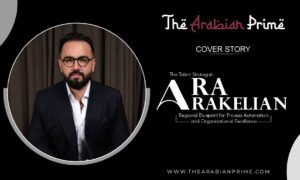
Ara Arakelian strongly believes that it is high time for the modern human resources sector to become every organization’s dynamic growth engine by empowering people rather than only managing personnel. Ara, the Regional HR Head of a leading cybersecurity company covering the Middle East, Turkey, and Africa (META) does exactly that by aligning talent strategy with corporate goals. To do that, this visionary leader uses his nearly a decade of rich experience across reputable private and government organizations in the UAE. His human-resources development approach is that of an enthusiastic executive and result-minded expert.
He further believes in continuous positive change when it comes to every strategy, each hire, and all the frameworks. According to him, everything must add clear, measurable value to the organization’s success. With his complete focus on efficiency and execution, Ara has been transforming the HR departments into modern hubs shining with organizational excellence.
The Evolution from Operations to Strategy
Ara’s journey into regional HR leadership has been shaped by operating at the intersection of complexity, scale, and business transformation, with a consistent focus on aligning people strategy with measurable business outcomes. Early in his career, he was heavily involved in the operational side of HR. Then gradually, he led and contributed to large-scale HR initiatives that went beyond traditional HR delivery. Driving employee engagement programs that improved satisfaction metrics, optimizing recruitment processes to reduce time-to-hire, and enhancing performance management frameworks that elevated overall workforce productivity were pivotal in shaping his approach. These experiences shifted his mindset from transactional HR to a results-driven, business-impact function, where every people initiative is directly linked to performance, efficiency, and growth.
Building Infrastructure in Emerging Markets
A defining milestone was leading the establishment of HR infrastructure in new markets like Saudi Arabia and Africa. Building from the ground up required analyzing the new market, the new business strategies, the culture, along with designing compliant policies, setting up governance frameworks, and enabling business operations in a highly regulated environment.
This experience strengthened his ability to operate in ambiguity, manage risk, and simultaneously drive speed and structure, capabilities that are critical in regional leadership roles. As he progressed into regional leadership, his role expanded to partnering closely with executive leadership on organizational design, workforce strategy, and talent investment decisions across multiple markets. By leveraging people analytics and workforce insights, he contributed to improving employee retention and strengthening leadership pipelines through structured succession planning. This transition marked a pivotal shift, from executing HR processes to shaping business strategy, positioning HR as a core driver of organizational performance, scalability, and long-term value creation, across diverse markets like the Middle East, Turkey, and Africa.
Building Systems and Automated Frameworks
Throughout his career, Ara has mastered the complexities of workforce scaling and legal compliance. His expertise spans all major aspects of human resources management, from workforce planning and talent retention to performance management and employee benefits. He demonstrates proven competence in developing and implementing HR systems, processes, policies, and guidelines from the ground up while keeping close human interactions with employees/stakeholder and understanding their needs.
To keep pace with rapid digital change, Ara actively leads HR process automation initiatives. He designs these automated workflows to match industry best practices and statutory frameworks, reducing repetitive administrative tasks so his teams can focus on strategic growth.
Collaborative Leadership and Stakeholder Alignment
Ara thrives in diverse corporate environments that require strong communication and quick problem-solving. He regularly collaborates with multiple stakeholders to ensure that human resources initiatives support the overarching business strategy. Deft in leading diverse teams, he elicits superior performances by setting clear metrics and fostering a strong work ethic. Ara treats leadership as a collaborative effort, building a culture of integrity and transparency where employees feel motivated to contribute. His strong planning and decision-making skills allow him to navigate complex organizational transitions without losing sight of employee engagement.
The Three Dimensions of Transformational HR
Transformational HR leadership today is about becoming a true business partner that drives measurable impact. It is no longer sufficient for HR to operate as a support function; it must actively shape organizational direction. He defines transformational HR leadership through three dimensions: strategic alignment, data-driven decision-making, and human-centric leadership. It requires the ability to connect people strategies directly to business outcomes while fostering an environment where individuals can thrive and perform at their best. In a rapidly changing world, HR leaders must lead transformation not only through systems and processes, but through mindset shifts, cultural evolution, and leadership capability development. Across diverse markets like the Middle East, Turkey, and Africa, Transformational HR leadership today is about becoming a true business partner that drives measurable impact. It is no longer sufficient for HR to operate as a support function; it must actively shape organizational direction.
He defines transformational HR leadership through three dimensions: strategic alignment, data-driven decision-making, and human-centric leadership. It requires the ability to connect people strategies directly to business outcomes while fostering an environment where individuals can thrive and perform at their best. In a rapidly changing world, HR leaders must lead transformation not only through systems and processes, but through mindset shifts, cultural evolution, and leadership capability development. His vision for organizational excellence is rooted in the ability to balance global consistency with local relevance. In a region as diverse as META, this balance is critical. It involves building unified cultural frameworks that are anchored in strong values while allowing flexibility to respect local nuances. It also requires scalable HR systems that can be applied consistently across markets, yet remain adaptable to different regulatory and economic contexts. Ultimately, diversity should be seen as a strength. When effectively harnessed, it becomes a powerful driver of innovation, collaboration, and sustainable performance.
Aligning Workforce Strategies and Earning Trust
When it comes to aligning HR strategies with business objectives in a global organization, it begins with a deep understanding of the business, its strategy, growth ambitions, and operational challenges. From there, HR strategies must be designed to directly support these priorities. This includes workforce planning aligned with expansion goals, leadership development to build future capability, and talent strategies that address evolving skill requirements. A critical enabler of this alignment is the use of data and analytics. By leveraging workforce insights, HR can anticipate needs, mitigate risks, and contribute meaningfully to strategic decision-making. Having led HR business partnering across multiple regions, one of the most important insights he gained is that HR must speak the language of business. This means understanding financial drivers, market dynamics, and operational realities, and translating them into impactful people strategies that directly support growth, performance, and scalability.
Another key insight is the importance of agility. Organizations must continuously adapt to changing environments, and HR plays a central role in enabling this through organizational design, workforce planning, and effective change management. A critical reality he has encountered is that, in some cases, the business may underestimate or challenge the value of HR, often viewing it as a support function rather than a strategic driver. Overcoming this requires HR to consistently demonstrate impact through data, business outcomes, and proactive problem-solving. Strategic HR leaders must build credibility by bringing solutions, not just policies, leveraging analytics, anticipating risks, and influencing decisions at the leadership level. It is about earning a seat at the table by delivering measurable value and positioning HR as an enabler of business success. Finally, trust is fundamental. Being a credible advisor requires consistency, transparency, and the ability to balance employee needs with business priorities, while maintaining the confidence of both leadership and the workforce.
The Drivers of Retention and Automated HR Systems
In his experience, employee engagement and retention are driven by a combination of purpose, leadership, and experience. Employees need to feel connected to a meaningful purpose, supported by strong and empathetic leadership, and provided with opportunities for growth and development. Recognition, fairness, and wellbeing also play a crucial role. In multicultural environments, this requires a nuanced approach: understanding diverse expectations while maintaining a cohesive culture. Engagement is not a one-time initiative but a continuous effort to create an environment where people feel valued and motivated. With his strong expertise in HRIS and process automation, he can see that technology is fundamentally transforming HR from an administrative function into a strategic enabler. HR systems and automation improve efficiency, accuracy, and scalability, allowing HR teams to focus on higher-value activities. More importantly, they provide real-time insights that support informed decision-making. At a regional level, technology ensures consistency across markets while enabling flexibility to adapt to local requirements. It is essential in managing complexity and driving operational excellence.
Data Insights, Pipelines, and Regulatory Agility
Data-driven HR plays a critical role in modern organizations. It enables leaders to move beyond intuition and make decisions based on evidence and insights. Through data, organizations can predict talent gaps, identify performance trends, and optimize workforce structures. It also enhances the ability to design targeted interventions that improve engagement, productivity, and retention. Ultimately, data strengthens HR’s role as a strategic partner by providing clarity and direction in decision-making. In rapidly evolving markets, leadership development and succession planning must be proactive and aligned with future business needs. This involves identifying high-potential talent early, providing them with targeted development opportunities, and preparing them for critical roles. Structured frameworks, mentorship, and exposure to strategic initiatives are key components of this approach. In dynamic markets, the ability to build strong internal leadership pipelines is essential for ensuring continuity and long-term success. Also, one must ensure HR policies remain both agile and aligned with regulatory frameworks. In that sense, ensuring compliance across multiple jurisdictions requires a strong governance framework combined with agility. This involves staying closely aligned with legal developments, designing policies that meet both global standards and local requirements, and continuously reviewing and adapting practices as needed. The objective is to create a balance where organizations remain compliant while retaining the flexibility to operate efficiently and respond to change.
Culture, Collaboration, and Future Workforce Horizons
Fostering collaboration across regions requires intentional leadership and strong communication. Clear alignment on goals, investment in leadership capability, and creating a sense of belonging are essential. Ultimately, culture is shaped by leadership behavior. By consistently reinforcing values and expectations, organizations can build environments that support both collaboration and high performance. Looking ahead, the future of HR will be shaped by several transformative trends, including artificial intelligence, skills-based organizations, and evolving employee expectations. A key focus will be on the adaptability of the new generation workforce, which brings different expectations around flexibility, purpose, and career growth. Organizations will need to rethink how they engage and develop this talent to remain competitive. Diversity and inclusion will continue to be a strategic priority, not only as a cultural imperative but as a driver of innovation and performance. Building inclusive environments where diverse perspectives are valued will be essential for sustainable success. Wellbeing will also take center stage, with organizations increasingly recognizing the direct link between employee wellbeing and performance, engagement, and retention. To stay ahead, it is essential to invest in technology, strengthen leadership capability, and build agile workforce strategies. At the same time, organizations must remain focused on their core purpose, ensuring that people remain at the heart of everything they do.