
Tareq Juma: Bridging Strategy and Execution to Build Sustainable Transformation
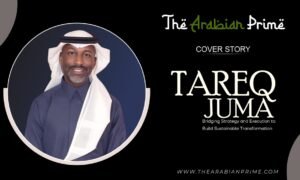
Transformation is often associated with ambitious strategies, new technologies, or large organizational programs. For Tareq Juma, however, transformation becomes meaningful only when it changes how an organization actually works.
Over more than 19 years across telecom, real estate, human capital, management consulting, and healthcare insurance, Tareq has developed a leadership philosophy centered on one practical principle: strategy creates value only when it can be translated into clear ownership, effective execution, and measurable outcomes.
Today, as Acting Director – SME Sales Management & Support at Bupa Arabia, he applies that philosophy within one of the most dynamic areas of the healthcare insurance business. His role brings together Strategy, Operations, Development, and Customer Centricity, with more than 40 employees supporting an SME sales organization of over 250 professionals across multiple channels and regions.
For Tareq, the challenge is not simply managing several functions. It is ensuring that they operate as an interconnected system supporting the same business priorities.
A Career Built Across Different Perspectives
Tareq’s career has not followed a single-industry path.
His early years in telecom established a strong foundation in technology, systems, customer service, and operational discipline. His subsequent experience across real estate and human-capital organizations expanded his perspective into business analysis, process improvement, technology enablement, and organizational requirements.
His move into management consulting marked another important stage. During his years with PwC, he worked across business solutions and transformation, strengthening his capabilities in strategy, operating models, governance, digital transformation, business architecture, and complex execution.
Consulting also exposed him to different organizations, leadership teams, and transformation challenges. It reinforced an important lesson: a framework that looks strong on paper is not necessarily one that will work in practice.
When he later joined healthcare insurance, those experiences came together in a more commercially driven and customer-focused environment.
“Over time, I became much more interested in the connection between strategy and execution,” Tareq explains. “Transformation becomes real when people understand the direction, ownership is clear, and the change becomes part of everyday work.”
Redefining Sales Enablement
At Bupa Arabia, Tareq’s current mandate extends across four interconnected areas: Strategy, Operations, Development, and Customer Centricity.
Rather than viewing these functions purely as support activities, his approach is to position enablement as an important part of business performance.
Strategy helps clarify where the organization is going. Operations translates that direction into effective ways of working. Development strengthens organizational and people capabilities. Customer Centricity ensures that decisions remain connected to the experience being delivered.
The challenge is making all four work together.
This has involved strengthening the SME business planning process, evolving the operating model, improving performance management and reporting, developing clearer governance, strengthening customer-lifecycle processes, and standardizing key ways of working.
One of Tareq’s priorities has been making the front line easier to support rather than creating additional complexity behind it.
“Enablement should make the sales organization simpler, clearer, and more effective,” he says. “It should help people understand where to focus, what they own, and how their work connects with the broader business.”
Turning Strategy into an Operating Model
A major focus of Tareq’s recent work has been translating strategic priorities into a practical SME operating environment.
This includes aligning business plans with channel priorities, clarifying roles and responsibilities, strengthening process ownership, improving cross-functional coordination, and developing governance mechanisms that allow issues to be addressed before they grow.
The work is particularly important in an SME environment where multiple sales channels, geographic regions, operational teams, and support functions interact throughout the customer lifecycle.
Tareq believes this is where many transformation efforts become difficult.
Organizations may agree on strategic objectives while different functions interpret execution differently. His approach is therefore to spend significant attention on the connections between functions not only the individual functions themselves.
“Alignment is not achieved just because everyone attended the same meeting,” he says. “It comes when people have the same understanding of the priority, their role in it, and what happens next.”
Creating Better Performance Visibility
Another important part of the transformation journey has been improving management visibility through the SME Control Tower and associated performance-reporting practices.
The thinking behind the Control Tower was relatively simple: leadership needed a clearer, more consolidated view of business performance.
In a large organization, information can be available across several systems, reports, and teams. The challenge is often not a lack of data, but determining which information matters most and turning it into management action.
The Control Tower therefore brings together critical performance perspectives including sales performance, funnel health, forecasts, business priorities, initiatives, and other management indicators to support more focused leadership discussions.
Tareq is careful not to describe dashboards as a replacement for management judgment.
“Data should improve the quality of the conversation,” he explains. “Instead of spending most of our time establishing what happened, we should be discussing why it happened, what requires intervention, and who owns the next action.”
That distinction between reporting information and enabling decisions is central to his approach.
Designing KPIs That Influence Behavior
The same thinking applies to performance management.
For Tareq, a KPI is useful only if people understand the behavior and business outcome behind it.
Commercial growth is naturally important, but looking at growth in isolation can produce an incomplete picture. Sustainable performance also requires attention to retention, funnel quality, productivity, execution, and customer experience.
He therefore favors balanced KPI frameworks that create visibility without overwhelming teams with excessive measurement.
“A KPI can be technically correct and still encourage the wrong behavior,” he says. “The starting point should always be understanding what behavior and outcome we want to create.”
This requires clarity in how measures are defined, how ownership is cascaded, and how results are discussed.
Good KPIs, in his view, create focus. Too many create noise.
Governance Without Bureaucracy
Governance is another recurring theme in Tareq’s leadership approach.
With hundreds of sales professionals and multiple management and support functions, some level of structured cadence is essential. However, he strongly differentiates governance from bureaucracy.
Periodic performance reviews serve different purposes depending on the decision horizon. More frequent discussions focus on execution, immediate risks, and actions. Broader management reviews examine trends, priorities, dependencies, and strategic direction.
His principle is straightforward:
Good governance should create a decision, an action, or clarity
If meetings continually produce none of these, he believes leaders should reconsider their purpose.
The objective is not to create more forums but to improve decision quality and organizational speed.
Scaling Through People, Not Only Processes
Managing a team of more than 40 people supporting over 250 sales professionals has also influenced Tareq’s personal leadership style.
One lesson has become increasingly clear: leadership cannot scale if every decision continues to depend on the person at the top.
His focus has therefore shifted toward developing leaders, clarifying expectations, strengthening accountability, and giving people the space to take ownership.
At the same time, he believes senior leaders should remain connected with employees beyond their direct management layers.
Recently, this has meant placing greater emphasis on structured one-to-one conversations and direct team engagement. These discussions provide a different form of organizational insight one that cannot always be obtained from dashboards or formal reporting.
“Leadership at scale is not about being involved in every decision,” Tareq says. “It is about creating capable people and systems that can make good decisions without depending on you every time.”
He also considers listening an increasingly important leadership capability.
“The more senior you become, the easier it is to become separated from day-to-day reality. Staying close to people helps keep your leadership grounded.”
Digital Enablement with a Practical Purpose
Tareq’s background in technology and digital transformation continues to influence his approach.
Within SME sales enablement, the direction has increasingly moved toward structured dashboards, reporting automation, stronger use of data, and better integration of digital tools into management routines.
But he does not view digital transformation as simply producing more dashboards or introducing new technology.
The purpose is to remove unnecessary manual work, provide better information, accelerate decisions, and allow employees to spend more time on higher-value activity.
“The next stage is not about having more data,” he says. “It is about using the right data intelligently.”
For sales teams, this can help determine where attention should be focused. For leaders, it enables earlier intervention. For customers, better internal processes can translate into faster and more consistent experiences.
Customer Centricity Starts Inside the Organization
Customer centricity is another area where Tareq takes a broader view.
He does not consider it the responsibility of one function.
If an organization has unclear ownership, disconnected processes, or excessive internal complexity, that complexity will eventually be experienced by the customer.
This is why customer experience is increasingly connected to the way operating models, processes, KPIs, and governance are designed.
“A better customer experience often starts by creating a better way of working internally,” he explains.
For Tareq, high-performing, customer-centric organizations therefore require both strong processes and the right leadership behaviors: clarity, adaptability, emotional intelligence, courage, consistency, and humility.
Transformation in the Context of Vision 2030
Tareq also sees his professional journey within the broader transformation taking place across Saudi Arabia.
His experience has allowed him to observe this transformation from different perspectives previously as a consultant supporting organizations through change, and today as an executive working from inside the healthcare insurance sector.
He believes Vision 2030 is ultimately implemented through thousands of practical improvements across organizations: stronger capabilities, greater productivity, better customer experiences, digital adoption, sustainable business models, and stronger leadership.
SMEs themselves are an important component of the Kingdom’s economic development. Supporting a sustainable SME healthcare insurance ecosystem therefore connects business performance with a broader economic context.
His own contribution, he believes, is primarily about building organizations and people that are better equipped for this future.
Building Something That Can Last
Looking beyond 2026, Tareq expects SME sales transformation to become increasingly integrated, automated, and data-driven.
Sales, service, operations, and customer experience will become more connected. Analytics will increasingly help organizations anticipate performance rather than only explain historical results. Automation will continue removing administrative work, while human judgment and leadership will remain essential.
His personal definition of legacy, however, is considerably simpler.
He wants to leave behind stronger people, clearer systems, and a culture of ownership.
“If a process continues to work after I move on, if someone I supported develops into a stronger leader, or if a team becomes capable of solving problems without waiting for instructions, that means something to me.”
For someone whose career has revolved around transformation, his view of leadership has become progressively less complicated.
Projects change. Organizations evolve. Titles eventually change.
What remains is whether the systems became stronger, the people became more capable, and the organization was better prepared for what came next.
Suggested Quotes for Print & Design
“Transformation becomes real when strategy is translated into clear ownership, practical execution, and measurable outcomes.”
“Enablement should make the front line simpler, clearer, and more effective.”
“Good governance should create a decision, an action, or clarity.”
“Leadership at scale is not about being involved in every decision. It is about building people and systems that can perform without depending on you every time.”